• About the Author
  • The Thorns Series
  • Short Stories/Poetry
  • Standalone Novels/Novellas
  • Content Warnings
  • Media/Reviews
  • Contact

Amanda M. Blake

~ Of fairy tales and tentacles

Amanda M. Blake

Tag Archives: horror

Resolute (3)

11 Monday Jan 2021

Posted by amandamblake in A Few Thoughts, Writing

≈ Leave a comment

Tags

2020, 2021, bluebirds, crooked house, deep down, depression, drift, goals, horror, indie, novel, resolutions, self-publishing, the thorns series, undead anonymous

Photo by freestocks.org on Pexels.com

What a year.

What a terrible, horrible, no good, very bad year.

Sure, my dayjob discovered we all could, in fact, work from home because a vast majority of my job is digital anyway, and our industry is a 24/7 industry, so I wasn’t furloughed. Both of these are good things. I had a steady stream of income when other people still don’t know when they’re going to have one of those again. Also, I know I’m not the only one who has benefited from a tiny extra bit of sleep and no commute.

But something we thought would only affect us for a few months ballooned into something that might not end at all because of incompetence, ignorance, and belligerence as well as deliberate misinformation. I have a job, but it’s hard to believe that our landscape will ever look different or that my world will expand beyond my backyard.

That’s another way in which I recognize that I am fortunate. I was already living with my parents, so I’m not completely alone, and it’s a house in which all three of us have our own spaces. We have a large backyard, so our small world is still spacious. I also recognize that my extreme introversion works in my favor as well, although even introverts require some social interaction. My friend and I meet in our backyard to safely watch horror movies on our television out there. Yet another luxury.

I’ve had moments of claustrophobia, usually followed by agoraphobia that I’m not sure will subside when we’re told to go back to work in an office, so like most people, I’m uncertain what the future is going to look like. Hopefully that oft-mocked interview question ‘Where do you see yourself in five years?’ goes the way of the dodo. Things haven’t gone so badly for me personally, but God, the amount of pain going on outside of my world… I feel, I mourn, I cry, I fear. Even if my surface is calm, the kids are not all right.

As with most creatives, I’ve had some issues with productivity, although I’ve pushed myself through the anxiety-, depression-, and fear-induced slumps, because I’ve had years to learn this kind of discipline, to write without motivation, going all the way back to 2012. I had a few unmentioned writing projects, and in addition, I strove to achieve the goals set out during last year’s recap.

It was my hope to publish DEEP DOWN, DRIFT, and BLUEBIRDS (T3). I managed to accomplish two out of three. BLUEBIRDS (T3) publication has been pushed out to next month, because I haven’t even gotten to the professional and beta edits. It’s disappointing, but I had a few things interrupt my big writing block from September to now, so that pushed me into this month. I’m still prolific, just not as fast as my internal book clock wants me to be. I’m not even kidding about that. After about a month of my writing pace, I’m ready to be done, which doesn’t really work for the longer novels. DEEP DOWN and DRIFT were so satisfying because I completed both in roughly three weeks each, but that was 2019, so alas.

Too bad I didn’t have a short book on the docket in 2020. From mid-September to mid-January (which I’m counting as part of 2020, because it makes things less complicated for my goals), I wrote CROOKED HOUSE (T5), finished it halfway through NaNoWriMo, started UNDEAD ANONYMOUS, and finished that last Sunday.

CROOKED HOUSE (T5) (fairy tale remix): 158,634 words
UNDEAD ANONYMOUS (horror standalone): 151,749 words
Total: 310,383 words

For the Thorns series, CROOKED HOUSE is actually short, to contrast with PUPPETEER in 2019, which was obscenely long at over 220K words. But hey, I’m a big believer in stories being as long as they need to be, and refuse to break up a novel into two parts for length rather than story reasons unless someone else requires it, and in self-publishing, I make my own rules. As long as it’s over 120K words after edits, it should be fine on a shelf.

UNDEAD ANONYMOUS’s length is a bit unfortunate, because I’d hoped that I could use it to try to break into traditional publishing. Even after extensive edits, I think it’ll be too long for a debut novel, especially in horror. However, I’ll still give it a try once I do my edits, and if it doesn’t go anywhere, I’ll just move on to the next appropriate trunk novel.

I didn’t meet my song-writing goal of an average of a song per month, but that’s all right. The few I wrote hit all the relevant points and expressed my feelings about this year of not a lot happening where I am but a hell of a lot happening elsewhere. I also didn’t meet my horror movie review goal. Like 2019, my schedule was just too tight.

I lost a significant amount of weight again, although it was harder this time, so I don’t know how much more I’ll be able to lose without making some significant sacrifices on everyday food, which is the hard part for me because it’s also the least sustainable change. But unlike last year, it finally made a dent in my wardrobe, which was FUCKING AMAZING, although my body isn’t the same as it was the last time I was this weight. In addition, all my blood test numbers were also FUCKING AMAZING, which means my doctor recommended that we try halving some of my medication, which was the primary goal, so GOAL MET.

Yes, I’m yelling, but I’ve devoted a giant chunk of my time when I’m not writing to aerobic exercising for my heart health, so seeing some objective success in my results warrants excitement on my part. I’m hoping that the halving of my prescriptions proves to be justified in my next set of blood tests and that maybe I can get rid of some of them altogether. I’m hoping to lose another chunk of weight as well, but like I said, that might be more difficult this year, and the percentage of weight loss I’ve had is already higher than average for sustainable loss, so believe it or not, that doesn’t bode well. The science of body weight is a far more complicated thing than we’d like to believe, which is why I try to be careful with weight goals. Sometimes, no matter what you want, you have to be realistic. Which bleeds into my next point.

I pushed all the way through 2020, burning myself out multiple times along the way, with the promise that I would be easier on myself in 2021. Which is where we are now.

I haven’t set up a 2021 writing schedule. Other than fulfilling last year’s goal of putting out BLUEBIRDS, I’m not planning on self-publishing anything unless I find myself craving a good round of edits instead of another writing project and the edits go better than planned and I can get something in to my editors. I haven’t blocked out my writing and editing like I did for the last two years. I’m not holding myself accountable for anything.

2021 is going to be the year when I let myself rest. That doesn’t mean I won’t work, but I’m going to allow myself more substantial breaks between work. I work because I like to do it, because I need the mental stimulation of creativity. Starting on a project and not letting up until I’m finished is just part of the process, but if I need to take a month off afterward, that’s what I’m going to do. If I want to take a few weeks off to reacquaint myself with the piano or teach myself calligraphy or return to sketching or jewelry-making, then I’ll do it. I don’t like being bored, and I love creating. But sometimes a girl also just needs to binge-watch something that’s more than a limited series during the three days she can’t exercise because she’s sloughing, and I’m super behind on my watch list.

Among the more concrete plans I do have for 2021, there’s a DRACULA retelling, because I’ve wanted to do one since I first read the illustrated and highly abridged version in fourth grade. I devoured versions of the story ever since, and inspiration finally hit for a concept I think will be tremendous fun. I also have a rewrite of YA near-future dystopia WAR HOUSE, which I wrote for NaNoWriMo back in…gosh, years ago, but that needs some serious alterations to work. I also have a list of assorted short stories and novellas (primarily horror) to choose from that I hope will be less stressful on me than my usual long-form writing. Even if they end up novel-length, they should still stay relatively short. That might give me some additional fodder for breaking into traditional publishing–or more fodder for my self-publishing backlist. I’m aiming to be a hybrid author, because after this year, I’m quite comfortable with self-publishing, but it’s expensive as hell, and my accountant keeps giving me side-eye.

For all five of you following the Thorns series, PUPPETEER (T4) and CROOKED HOUSE (T5) are written, but I’ll probably only give them one intensive edit each this year instead of my preparatory double edit, and I won’t publish PUPPETEER until next year. I also intend to take a break from writing the Thorns series by postponing OTHERWORLD (T6) until next year as well so I can get some more standalones under my belt. To be honest, I have pieces of that story in my head but no real plot. That isn’t unusual. I’m hoping to have a eureka moment at some point.

I’ll admit, I didn’t have much hope for this year, and everything that’s happened since has done nothing to change that hopelessness. I fear everything is going to blow up. I fear my brain is a fragile thing that’s going to shatter at any moment, and that I’ve teetered on the edge a few times and almost want myself to break to give myself permission to just fucking SLEEP for a month.

Writing is one of the few things I can control and one of the few things I’m actually good at, so I cling to what I can. I make the worlds in which I can escape. That’s no mean feat.

Also, I mentioned that I’m always behind on things. I finally jumped on a few social media trains–which are already square, but I’m enjoying them anyway. You can find me now on Instagram, and third time’s the charm on Twitter, where I finally feel I’m connecting with a community.

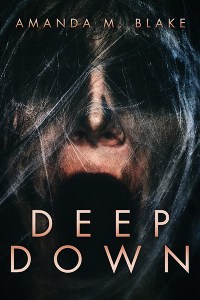
My vanity shelf is growing apace. I’m quite pleased with it.

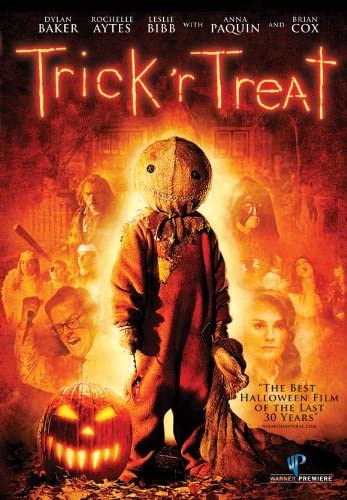
REVIEW: Trick ‘r Treat Watchalong

31 Saturday Oct 2020

Posted by amandamblake in Movie Reviews

≈ 1 Comment

Tags

cult classic, gore, halloween, horror, movie review, review, sam, samhain, trick 'r treat, watchalong

For Halloween, I thought I’d put on a staple and enjoy the heck out of watchalong commentary in lieu of a straight review. Trick ‘r Treat is a perfect watchalong review, because it’s 1) timely, 2) fun as hell, and 3) an anthology, so it’s already broken into pretty little pieces. Like Creepshow, it’s a throwback to the cheesy, joyous, gruesome horror comics like Tales of the Crypt, as evidenced in the comicization of the opening credits and the closing frame. As anthologies go, it’s more interconnected than most, which works much better as a standalone feature film than most anthology shows, which tend to be strung-together shorts like a standard short story collection.

It’s a delightfully gory, gross, scary, charming horror movie that’s developed a sizable cult following (is it a cult following if it’s sizable?) and a place in the Seasonal Watching lineup for Halloween, especially since Carpenter’s Halloween isn’t necessarily my favorite movie (just personal preference) and I have to be in the right headspace to watch Zombie’s Halloween remake.

This watchalong review is designed for those who have already watched the movie, as most of my reviews are, so there will be twisty spoilers here. It’s hard to properly review the movie without addressing the twists, since anthology parts are too short not to mention their endings, and I’ve seen it so many times that I’m not sure how to write as though I haven’t seen it before. I’m just in it for the flaky layers, people–like a bloody croissant.

I may pop in and out of the scene line-up rather than going completely scene by scene, because the movie cuts from one to another story in a way that ramps up the tension really well and feels organic rather than choppy.

1) Don’t Blow Out the Jack-o-lantern, a.k.a. Meet Sam

The introduction to the anthology creates the first side of the bookend that will eventually weave all the stories together. You see characters from all of the stories passing through the frame, although we don’t know that yet, and we’re at the end of the Halloween festivities instead of the beginning. Everything’s winding down, Tahmoh’s character is silly drunk, and Leslie Bibb is done with the whole holiday.

For someone who isn’t crazy about Halloween, Emma certainly went all out for the yard decorations, I must say (as a person who loves Halloween and doesn’t decorate the yard at all… well, I did put out a really adorable Grim Reaper this year).

It’s not the most exciting of the stories, but it packs a hell of a punch at the end, with our first look at Sam and the first gruesome slaying of the one who breaks a Halloween rule, setting the tone for the rest. After Scream, you know that when someone in a horror movie mentions the rules, you gotta sit up and pay attention.

Michael Dougherty and Bryan Singer really pull no punches with their gore and gross-out, applying them with a sense of whimsy and undeniable fun for the genre, which is why I think this movie’s so well-loved in the genre. When the cast and crew are having fun, the audience can tell, and Trick ‘r Treat is just plain fun.

There’s also a nice homage to the movie Halloween in this segment.

I didn’t even know that keeping Jack-o-lanterns lit all night was a rule. Fire hazard much? If you have a plug-in or electric tea light and just keep it lit that way, does it count?

2) Always Wear a Costume, a.k.a. Peeping Tommy

The boy in the adorable bear costume also played Sam–except for the stunt work, of course.

Anna Paquin is one of those actresses I have mixed feelings about. On the one hand, I really like her. I think she’s just interesting to watch on screen. She has a presence and stature, and she’s memorable even when her characters aren’t. On the other hand, she always sounds like she’s not really passing in whatever accent she uses, including her own, and it’s distracting.

We set up the story with all the fairy tale references we can find, from Cinderella to Snow White to the seminal Little Red Riding Hood costume of the reluctant Laurie (Paquin). Could it possibly be relevant to the story? What about Sheep’s Meadow?

I’m awash in references.

Those are some amazing last-minute store-bought costumes, though. I mean, when was the last time Party City had something that fit that well and didn’t look like it was going to fall apart by Day of the Dead?

Cue the endless stream of sexual innuendos. They keep using them because they keep working. Nudge nudge, wink wink. No regrets.

3) Always Check Your Candy and Only Take One Piece on the Honor System, a.k.a. Barf Bag

I have to close my ears on this one every time. Vomit is right on the edge of being a hard limit for me, and this has one of the most graphic vomit scenes I’ve seen. The sounds as much as the visuals do it for me, and thank you, I’m not interested in sympathetic vomiting tonight. (Honorable mentions include the bulimia scene in Tamara and the weight loss scene in Wishmaster 3.)

But Dylan Baker, as always, is phenomenal as the serial killer, because as Wednesday Addams famously said, they look like everyone else, and no one looks more like a serial killer who looks like everyone else than Dylan Baker. He kills it (pun intended, of course) with his comedic timing in dealing with the foibles and pitfalls of being a single father to an adorable moppet who just wants to spend time with his father and trying to successfully bury the bodies without his asshole neighbor finding out. No one has suffered how he suffers.

WHY ARE ALL YOUR KNIVES DULL, PRINCIPAL WILKINS? WHY?

But Wilkins really stabs into the heart of Trick ‘r Treat like the Grinch puts the spirit into Christmas. We have all these traditions, all the rules, to protect us from evil, but no one respects the old traditions anymore and therefore must die. Seems like that escalated quickly, but hey, this is Halloween, this is Halloween, Halloween, Halloween… Wrong movie.

I’m not drunk. It’s just been a long week, and next week is going to be just as long.

Trusty Sam is here to make sure people keep the Sam in Samhain and to remind people why we have these traditions. Sam doesn’t want to carve you up, everyone. He just wants his trick ‘r treat candy.

Is little Billy an homage to Chucky? Because although he’s not wearing a Good Guy costume, his overalls and striped shirt with his mop of ginger hair really harken back to the doll.

4) Halloween Pranks are Fine, but Save Sadism for When You’re Older, a.k.a. Halloween Queen

Those kids really capture the horror of seeing your teachers outside the classroom context. Talk about a rude awakening.

Right up there with the whimsical gore, Trick ‘r Treat doesn’t hold back on child endangerment and death. No one is safe, even if your frontal lobes aren’t fully developed yet. Sam’s just a child, too. An ancient child, but a child nonetheless, and age won’t spare you if you break the rules and disrespect the holiday. No one messes with a Rhonda’s special interest, from which we get that it’s pronounced Sow-en, not Sam-hine, so we all learned something today to lord over everyone else.

Ms. Henderson briefly turns up at Sheep’s Hollow–you see her rolling the horny hot dog toward the fire.

Rhonda’s witch costume and Jack-o-lantern game is strong. I’m still getting serious fire hazard vibes, though.

5) Don’t Wander Off Alone, a.k.a. Watch Out for Monsters

Mysterious dark stranger in a mask and a cloak. The whole scene is sexy as hell, which makes who the stranger is such a twist, because that girl’s he’s got is a total ten.

I want to know where he got his vamp teeth, though, because they’re sharp enough that she didn’t notice she was being bitten and good enough to bite through skin without breaking.

Laurie searches for the man she wants to be her First. She just wants it to be special. But everyone’s already paired up, leaving her to walk through the parade all by her lonesome. Her big sister tries to hook her up with a man dressed in a baby costume–the same guy who played the the Great Child in Th13teen Ghosts!

The mysterious dark stranger intrigues, as mysterious dark strangers do.

6) Halloween Pranks cont.

The story of the kids from the school bus is just sad, sick, cruel, and I don’t know whether it crosses a line or not, because as shown in psych ward horror as well, we as human beings have historically been terrible people to the vulnerable.

Continuing the tradition on Rhonda, the Halloween Queen, is also sad, sick, cruel. Sam ensures that vigilante justice is served with julienne fries.

The vintage masks on those kids are the creepiest, especially the paper bag mask. I love cheap thrills.

Is Rhonda’s pumpkin carving of Freddy Krueger or Tom Waits? I’m thoroughly amused that I can’t tell.

If you’re a nineties girl, you had a pair of shoes like Rhonda’s. You just did.

You made Rhonda cry, and you snuffed out the last Jack-o-lantern. For that–mostly for Rhonda–you must pay.

7) Don’t Wander cont.

Little Red Riding Hood walking alone through the woods. A little on the nose, but shorts don’t really have time for subtlety, and the twist, while somewhat predictable, makes the bludgeon of the fairy tale work, because if there’s anything I love more than a fairy tale trope, it’s a subverted one. Bonus if it’s horror.

The mysterious stranger appears again to prey upon the lost little girl. Then the stranger’s body abruptly drops in Sheep’s Hollow, his leg broken. And the best twist of all, he’s ordinary serial killer Principal Steven Wilkins, who gets to be Laurie’s first.

Her first kill, that is.

Little Red Riding Hood is secretly the wolf. All of the women in Sheep’s Hollow are. Predictable, yes. Delicious, still.

Marilyn Manson’s “Sweet Dreams” cover is a polarizing one. It’s almost definitely overused, but like She Wants Revenge’s “Tear You Apart,” it’s overused because it’s so damn cinematically effective. I could listen to both of them over and over and over again. And “Sweet Dreams” provides the perfect soundtrack for one of the better werewolf transformation sequences in cinema. First the girls take off their clothes, then they take off their skins. It’s bloody fantastic.

8) Always Give Out Candy, a.k.a. Razors in the Chocolate

At my house, we don’t get a lot of trick-or-treaters, and now that we have a dog heavily into guarding, it’s just better for everyone if we turn off the porch lights and don’t give out candy, even when we aren’t in the middle of a pandemic. So I’ve broken many of these rules and I’m still here. Except now I’ve put it out into the world that I break the rules, so maybe my luck won’t hold out.

The candy Kreeg takes from the trick-or-treaters he scares from his house is from Principal Wilkins. The first candy bar he eats is the poisoned one that kills the first kid, which is why he puts it down in disgust. The one Sam uses as a box cutter because of the razor blade inside is also from Wilkins. And the pumpkins Sam conjures to Kreeg’s house are Rhonda’s.

In spite of the best Easter eggs, this is my least favorite story, in spite of the presence of Brian Cox and the longest sequence with Sam in it. It took me a while to realize it was because it feels too familiar.

It’s basically Home Alone, but Halloween.

9) The End

Now we have context for all the interconnections that converge before Emma gets it.

There are lots of other interconnections throughout the movie, of course, but we end where we begin.

Thus ends another Halloween.

Hope you enjoyed yourself!

Time for NaNoWriMo. No rest for the wicked.

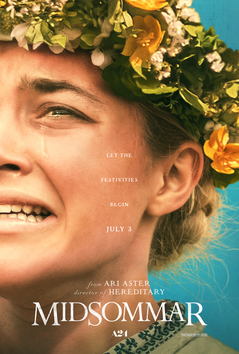
REVIEW: Midsommar

07 Monday Sep 2020

Posted by amandamblake in Movie Reviews

≈ Leave a comment

Tags

ari aster, empathy, folk horror, horror, isolation, midsommar, movie review

I rewatched Midsommar last week for the first time, and it was just as glorious as I remembered.

Ari Aster considers this his first horror movie rather than Hereditary, but I might be inclined to switch that around, if I had to. Hereditary was built almost like a haunted house story within the family home—with the family naturally being more haunted than the house—and a few nice jump scares. Plenty of people responded to Midsommar by saying it wasn’t scary, just because it didn’t have any notable scares, forgetting that not all horror is built that way. I’m a huge fan of slow-burn horror that unsettles more than scares, and if you like slow burn awash in sunlight, Midsommar should please.

If anything, though, Midsommar actually has some nice nods to classic horror, such as playing with slasher tropes in its punishing of young (American) tourists doing what they shouldn’t; the use of the Blood Eagle, which is a Viking method of execution, but Americans might be familiar with it from Silence of the Lambs; even Dani’s blanket, which seems to be a nod to carpet design The Shining, but I might be reading too much into that, which isn’t to dismiss the parallel descent into a kind of madness; and of course, The Wicker Man. Possibly The Serpent and the Rainbow, but I haven’t seen that one yet.

Midsommar took the emerging (re-emerging?) subgenre of folk horror and asked itself whether it could make a horror movie with nothing concealed, in full sunlight for most of the movie, because it takes place during the Midsommar festival of the Halga community. The answer is to whether you can make a horror film in sunlight is yes, but part of the side effect is that the result is trippier than scary. But it’s not the kind of horror that requires darkness, really. Supernatural horror, with monsters of the human and creature variety, depends on darkness to hide the monstrousness, but there are no real monsters in Midsommar. Folk horror, instead, often depends on the in-full-view nature of culture shock. Isolated communities have nothing to hide, but their profound differences from the prevailing culture of the audience causes the disorientation that can be so effective as a horror device—not to mention the literal mushrooms everyone’s taking.

The way that Midsommar ultimately works is in Ari Aster’s commitment to nonjudgment of the Halga community, which is aided by the fact that he wrote the script himself. While there’s a little contempt for the three ‘new blood’ male American visitors to the Halga, there was actually very little external judgment going into the story.

Except Christian. The eventual punishment may not have fit the perceived crime, but everyone agrees that Christian is a grade-A douchebag.

But although the Midsommar ceremony gets more and more horrifying as the movie progresses, Aster is careful to show how seductive the community is in spite of it, what it offers to an outsider like the protagonist, Dani, what void from the audience culture that it fills. It’s not too dissimilar to the intimacy void that most other cults claim to fill, except it goes to a less orgastic extreme, the delightfully odd sex scene notwithstanding.

The movie opens with profound disconnection between Florence Pugh’s Dani and Jack Reynor’s Christian. Within the film’s first act, we’re given every indication that this is a relationship that Does Not Work. They’re not communicating, Dani is minimizing her emotions so much that she feels like she needs to isolate in order to have them, and Christian has apparently been checked out for over a year by the time tragedy strikes Dani and he feels he can’t abandon her at that point. It would seem a kind act, except he was already so passive in the relationship, and it’s a lot easier to keep it going than take a stand and let it go. He’s ghosting her while still her boyfriend, in addition to subtle gaslighting and just outright ignoring her. Dani wants connection; Christian wants out, but not enough to shake a status quo that he understands.

Really, I could write for hours about how Aster sets the stage with the isolation experienced by all the characters:

– Dani’s sister commits suicide because, in her words, ‘everything’s black,’ and murders her parents with her, the ultimate attempt to quell the alienation and isolation that depression can cause.

– About ninety percent of the shots of Christian show him through a mirror, turned away in three-quarters profile from the camera, or parts of him cut off—subtle camera storytelling to indicate how disconnected he is from Dani and his friends but also to distance him from the audience.

– Christian’s friends pretend to be friendly with Dani, but she brings down the whole dynamic of the male bond between the five men—not that the friendships are warm and intimate to begin with, given the stiff way the boys sit with each other and eventually go off to do their own thing while Dani speaks with Pele, the foreign exchange student to the Anthropology Department.

In the beginning, that’s the only real moment of warmth, although it’s broken when Dani has to walk away to deal with her grief alone. Who’s she going to share it with? Her dead family, her sister whose emotional extremes led to the murder-suicide? Her boyfriend, who held her during her initial sobs but who showed the audience his thousand-yard stare of despair at being trapped in the relationship due to Dani’s grief? Every time, she walks away to be alone as she struggles to hold tears back. Which Florence Pugh is really good at, by the way. Kind of like Robin Tunney in The Craft, Pugh spends a good portion of the movie in a near or complete breakdown state, which isn’t emotionally easy at all.

This is something that hits me hard every time it happens in the movie, because I’m sure I’m not the only one to bottle up a powerful emotion until I can get to a place of relative isolation. People don’t know what to do with grief, sadness, frustration, anger, because in an aggressively optimistic culture, these feelings—all of which are quite normal—are seen as aberrations to be hidden and excised as soon as possible, weaknesses that must be shored up with a brittle smile. Our culture (although not ours alone) has no idea what to do with these emotions except scold them into submission, thus enhancing this sense of isolation with others and discouraging empathy or even just sympathy.

Which is why the Halga community offers something so tempting to someone from the outside. They don’t just forge intimacy through sexuality but through extreme empathy for the people they live with and through their connection to nature, which is the entire foundation of the movie. They’re a collectivistic rather than individualistic society, a family of sisters, brothers, fathers, mothers, grandmothers, grandfathers, with defined roles for everyone. Really, aside from the Blood Eagle and human compost, what’s not to like? The way Pele immediately latched onto her as needing the community the most, because she’d lost her family and had no one with whom to share the load of her grief, the way they accepted Dani both in her quiet horror at the suicide ritual and as the community’s May Queen to bless their crops, ultimately to when the girls refuse to let her go off alone in her grief and instead cry with her, not just mockery but making themselves feel her pain… Because in the Halga community, no one has to be alone. The emotional turning point of the movie is when Pele says to Dani about Christian, “He’s my good friend and I like him, but… Dani, do you feel held by him? Does he feel like home to you?”

From what I can tell, Midsommar was Florence Pugh’s breakout role, and well-deserved, although she got another chance in something more mainstream with Gerwig’s Little Women. I’d apparently seen her in two other horror(ish) movies—Malevolent and The Falling—although I didn’t recognize has as someone I’d already seen when I saw her in Midsommar. Pugh is a master at withheld emotion, containing, pushing down behind her unique face, then finally letting it show.

I swear, she got this role on the strength of her almost exaggerated frown, needed to show the transition from her grief and loneliness to the moment she finally feels free and held by the community, laden with wildflowers.

At what cost? Aster doesn’t judge, but although Christian, Josh, and Mark all trespass in some way, the reason for the deaths of the UK couple seems a little less clear. The way I interpreted it was that Ingemar was punishing Connie for choosing Simon over him, which isn’t so much of a trespass as a personal vendetta. Perhaps their trespass was Simon’s far more vocal reaction to the suicide ritual. Or perhaps there wasn’t a slasher trespass at all and they were just bodies for the final ritual, which is far more disturbing and I can sit with that for a while.

Because of how slow-burn Ari Aster is with his movies, I’m a little afraid that executive permissiveness might lead to him making bad editorial choices in the future. But after Hereditary, it was a helluva thing to produce a sophomore movie just as masterfully disturbing as the freshman outing. I have no doubt he’ll be held up with Mike Flanagan and James Wan as one of the great horror directors of this era, and Hereditary and Midsommar remembered for the same artistry as The Shining, but with more heart.

REVIEW: Green Room

10 Monday Aug 2020

Posted by amandamblake in Movie Reviews

≈ Leave a comment

Tags

anton yelchin, green room, horror, indie, patrick stewart, review, thriller

Green_Room_(film)_POSTERIt’s difficult to begin a review of Green Room without mentioning the tragedy of Anton Yelchin’s death. Green Room was Yelchin’s last theatrical release prior to his death. For those, like me, who fell in love with him as the youthful Chekhov on the Star Trek movie reboot or perhaps as the disturbed teen with homicidal OCD on Criminal Minds, we lost a quietly charming, sharp-featured talent far too soon.

What I liked about this movie was that, although Yelchin’s character could be called the protagonist, the story didn’t rest on him, nor did he have to carry it. Yelchin is quite comfortable taking a humbler place, and it’s part of what allows him to blend in wherever he’s cast. He’s not a chameleon, but he’s undemanding, which really lets a story shine through whatever star power he could have if he wanted it.

Imogen Poots has horror cred, but Patrick Stewart was the real name in this movie. Yet not even Stewart overpowers the movie. The director’s use of him was smart, his choices more understated than the usual warmth and gravitas that he brings to a screen. In fact, it’s a completely unexpected choice. It’s hard to believe that we live in a universe in which Stewart plays a neo-Nazi leader, but not making him a scene-chewing villain saved this movie from being something forgettable.

Instead, our actors just play people. The band is completely out of their depth, with the strongest of them among the first to get cut down, because authority issues and a background in school wrestling aren’t that effective against fighting dogs and shotguns. Yelchin is just a pale, skinny cinnamon roll who is woefully out of his depth in a fight situation, which is a point he makes in a really good monologue peptalk about paintball (that was apparently based on a real event that the director experienced). And Stewart and the other neo-Nazis are utterly banal evil, their matter-of-fact racism an armor for greed. The kills are vicious and extreme but without fanfare, and unlike slashers, senseless.

Green Room is a stark, smart, tight, intense, realistic indie horror thriller. Completely recommend.

REVIEW: The Forest

22 Wednesday Jul 2020

Posted by amandamblake in Movie Reviews

≈ Leave a comment

Tags

aokigahara, horror, movie review, natalie dormer, suicide, the forest

the forest movie(Not to be confused with The Woods. Different horror movie entirely.)

Being good can forgive a multitude of sins. Unfortunately, The Forest can never be forgiven. The only virtue in this movie is that I got to spend some time in the company of Natalie Dormer, who is quite pleasant to spend time with. Too bad it was in such a forgettable dud.

The Forest endured some well-deserved controversy for exploiting the real tragedies of the actual Aokigahara forest in Japan. Suicide, especially in highly ritualized places, has context, context that shouldn’t just be transformed into ‘the bad ghosts made them do it’ and that’s the end of it—sort of how ‘because they’re crazy’ shouldn’t be the end of the conversation.

There are a few other horror movies that tread a problematic line but recover—sometimes shakily—because they respect that line yet still tell a good story. If you’re going to exploit real people’s tragedies, you sure as hell better do a good job, or else you wasted everyone’s time and money AND pissed a lot of people off. Congratulations.

The Forest, however, brings absolutely nothing new to the horror table—just twin magic (the movie establishes that the main character is a twin multiple times over in the first thirty minutes, as though the first five times just weren’t emphatic enough), a series of jump scares that we’ve all seen before, getting lost in a forest that was much more unsettling when Blair Witch did it, Japanese demon makeup that we’ve seen done better, (American) tourists making bad choices, and no real understanding for why Aokigahara is a suicide forest in the first place.

I’m not going to belabor the point. The horror elements of this movie failed so hard that it really isn’t worth the effort.

Here’s what they could have done to make it better:

Scrap the Japanese suicide forest idea. The Grudge remake with Sarah Michelle Gellar did a decent job showing the disorientation of being in a different country, but The Forest barely addressed its setting except in the most sweeping, simplistic, inaccurate, and sometimes insulting terms. Why did the twins go to Japan? Because that’s where the forest is. That’s it. So scrap Aokigahara entirely. We have forests aplenty in America, Canada, and Europe that can have just as unsettling backstories (see: the blooming Folk Horror subgenre). You can make shit up and still say it’s ‘inspired by true events’ because Aokigahara was the springboard.

Next, respect the reasons for suicide locales. If you know the reasons why people go to specific places, and if you acknowledge cultural patterns of suicide, you’ll be able to create a richer mythology, because the tragedy will be real rather than exploitative.

Focus less on the supernatural horrors, especially if you don’t know how to do them properly. In movies like this, supernatural horror only exists to enhance the real kind. The most interesting, human part of THE FOREST was the guide who led the journalist (Taylor Kinney, if it matters to you) and Dormer into Aokigahara on his suicide rounds, a job that he does pro bono to help dissuade people from suicide if they’re still alive or mark where the bodies are if they’re not. It’s a thankless, joyless, incredibly poignant task. That’s where the emotion is, which is where the story wants to be.

The heart of horror is often sorrow, and horror should be human before it’s monster. When studios want to make a horror movie, their biggest misstep is usually prioritizing the monster over the humans, meeting the creepy visual and jump-scare quota to justify the genre label over producing a good story, because horror audiences will watch whatever commercialized crap they put out.

I’m not saying we won’t. After all, I didn’t go to the theater for The Forest, but I caught it on Netflix, hoping it would be better than I heard it was. I’m willing to watch a lot of dreck churned out by the horror movie machines, looking for hidden gems among the rubble, but this isn’t one worth repeating. It has no staying power, no potential to become a cult classic, and ultimately needs to be forgotten.

Someone get Natalie Dormer a good horror movie. I’ll wait.

REVIEW: Silent Hill: Revelation

17 Friday Jul 2020

Posted by amandamblake in Movie Reviews

≈ Leave a comment

Tags

alessa, horror, movie review, sequel, silent hill, video game

61123974_SH_6x8_1R1After all this time, there are a number of movies I’ve wanted to write a review for, but for some reason, I went back to a sequel of one I’ve already written about, because I was craving a bit of Silent Hill. Silent Hill is one of my favorite movies, and Silent Hill soundtracks accompanied me a great deal through the editing portion of Deep Down.
Silent Hill: Revelation is not nearly as good, which doesn’t seem to be all that important, because I’ve watched it more times than I should watch bad movies, so there must be something bringing me back, other than familiarity. Like most bad movies I watch regularly, I think what draws me is potential. Underneath all the roughness, there’s a gem, even if the people responsible for mining and shaping it utterly mangled the job.

Part of the problem was the same thing that drew Silent Hill down, which was the shoehorning in of men where they didn’t need to be. Sean Bean once again plays the part of Sharon’s father, and he technically has more screen time, but his role doesn’t really get any more useful. Then we see a young Kit Harington, youthful and a bit too Raphaelite for the setting, intended as a love interest of sorts, but Laurie Holden and Radha Mitchell had more chemistry without actually being love interests. But goshdarnit, we gotta have a man in here. And if Sharon’s going to be eighteen, goshdarnit, she’s gotta have a love interest. (Why it has to be Kit Harington, only the casting director knows.) Then throw in a PI and two cops who seem to belong to other movies altogether and disappear after the first part of the movie, completely irrelevant to the story. Malcolm McDowell has a notable cameo, but he was criminally underused in an attempt to bank on his horror legacy.

Perhaps I’m looking at it all wrong. Perhaps I should be encouraged that, although there’s more testosterone on the soundstage, they’re taking on roles typically saved for women—the husband waiting at home, taking care of the kid; the father getting kidnapped and held hostage; the stale, two-dimensional love interest that doesn’t rise beyond a few flat notes.

But frankly, the women aren’t much better. Whereas the original featured a strong core of complicated, fleshed-out female characters, here we have Deborah Unger reprising her role as Alessa’s mother in a far less necessary expositional cutscene. She literally brings nothing new to the table, and the makeup budget didn’t support putting her in her full original get-up, so I don’t even know why she was brought in at all.

Then we have Carrie-Anne Moss, whose motivations are all over the place and who’s more interesting when she’s the Missionary (i.e. Less Carrie-Anne Moss) (parenthetical #2: Not that the Missionary made much sense). Her brand of underacting doesn’t lend itself to the dramatics that the role required of her. I got strong hints of her channeling Miranda Richardson from Sleepy Hollow, but frankly, Richardson might have been a better fit. The role itself, however, was thankless and criminally under-considered, because an undeveloped villain gives our hero no real foil.

Adelaide Clemens, as grown-up Sharon, does a passable, committed job, although I wouldn’t call it a breakout. Clemens’ vulnerable strength and eerie similarity to Radha Mitchell make her an adequate inheritor of the lead adventurer’s role. (True, Sharon was adopted, but children often grow to look like their family anyway, biological or not.) She and Bean are the anchors in this otherwise churned-out, effects-driven money-grab.

The beginning stumbles, even more awkward than the original, with EX-PO-SI-TION! as tell-y rather than show-y as it gets. It felt like a cutscene from a video game, but the original Silent Hill worked best when it nodded to the games rather than tried too hard to fit into them. If an audience needs that much explanation for things to make sense, your story is in desperate need of some doctoring. Conversations through mirrors, special symbols on a secret box, half an arcane seal… Not even Bean could make this dialogue less cringe-y. You ever get the feeling the script was written in a day and never edited? There’s even a part where we’re EX-PO-SI-TIONED! that Silent Hill was built on ancient Indian burial ground. Seriously? Seriously?!

When a movie goes this spectacularly wrong, in spite of a wealth of potential built by the first movie and a squandered budget, I like to look at what could have been done to make it better. I think, for all the deviations from the story set up in the original (most notably, the ending), a sequel would have been better served by being a completely different story with completely different main characters. Then we wouldn’t need so much freaking explanation to try to fit it into movie- and game-universe at the same time. However, if they absolutely had to bring Sharon and her dad into the story, they would have benefited by not going back to Silent Hill, but instead focusing on how Sharon brings Silent Hill wherever she goes, because (spoiler) Alessa came out with Sharon at the end of the first movie.

The school scenes had some interesting elements and could have been even better with alterations. For instance, I couldn’t tell why Sharon’s outfit was any different than the rest of her classmates enough for the requisite popular kid to deride her for it. I mean, I’m not much into fashion, but Sharon was rocking trendy layers, so I’m not sure where the loss in translation happened. Chalk another one up to the cringe-tastic bad script and a wardrobe mismatch?

But there was something about the school scenes, especially with the disorientation within the windowless halls, as well as the mall scenes that reminded me of Nightmare on Elm Street. They really could have played up her hallucinations to show us how Silent Hill is just beneath the veneer of reality and Sharon/Alessa makes the barrier between them weaker. Rather than the Missionary as the primary antagonist, I would have her be the secondary, trying to destroy Alessa or possess her for her own power, while Alessa herself was Sharon’s primary antagonist—Sharon’s personal reality crumbling and bringing the rest of the world with her. It would have been far more interesting to see Silent Hill bleed into the real world than just go back to the town, which was somehow the same Silent Hill and another version of Silent Hill at the same time. The filmmakers couldn’t agree on that, so it ended up not working as either one.

If they were going to make it the same Silent Hill, they should have made it feel more like the original and less haunted carnival/underground cult/insane asylum. If they were going to make it different, they should have committed to that. Not going one way or the other led to disjointed filtering and a complete annihilation of anything approaching reality rules. Also, with so many versions of Silent Hill represented, the filmmakers never got to focus on any one, so the creepy creatures felt just as throwaway and disjointed as the characters and setting.

The original Silent Hill worked because it knew what its world was and what its rules were. If it had creatures, it focused on ones that had a specific, unsettling purpose to each scene—a kind of burned, decayed, mummified poetic justice, even if we didn’t know what it all meant at the time. Three-dimensional characters had a purpose at every part of the story, and the filmmakers took their time to show rather than tell.

The sequel, on the other hand, tried to be too many things and succeeded at none of them and couldn’t ground itself in any theme or plot line. It lurched from element to element, performing back-breaking gymnastics to try to fit them together, and left me nothing but good music, a few good visuals, and a serious hunger for better.

DEEP DOWN Available

03 Friday Apr 2020

Posted by amandamblake in Novels

≈ Leave a comment

Tags

apocalypse, cave, deep down, horror, novel, self-publishing, short, Writing

Edge smDeep Down is available as a 99c e-book at Amazon! I still need to proof and publish the paperback, but here’s the link to the ebooks:
Amazon
All other vendors

If you’re not a fan of horror, it’s not your thing, and that’s okay. Just putting it out there for those who might.


The world is ending. His family is dead. And it’s all the man’s fault.

There’s no reason for him to go on.

But he promised his eldest son that they’d explore the mountain cave near their home. They never got around to it, never enough time, always something in the way—work, school, other responsibilities, things that don’t matter anymore. Now the man has all the time in the world, because everyone’s out of time.

Of all the broken promises, this is the one he is determined to keep.

Along with the family dog, who he can’t bear to leave behind, the man ventures into the cave.

Though he doesn’t expect or plan for either of them to live very long, the man still struggles to keep himself and the dog alive, struggles to survive one more day, just one more day. Yet the deeper into the mountain they go, the stranger and more dangerous the cave becomes.

But that’s the only thing left to do—go deeper.

Seeking Solace at the End of the World

29 Sunday Mar 2020

Posted by amandamblake in Novels, Writing

≈ Leave a comment

Tags

anxiety, apocalypse, deep down, depression, horror, novel, paranoia, self-publishing

Edge smI’ve said before that I conceived of DEEP DOWN in a bad place, and it’s a bad place that I’ve returned to a lot over the last four years, but during this current plague, I’m returning far more often. All I want to do is hide in my closet with the lights off and never come out. It’s a place of despair, but it’s somewhere I can’t get sick, a place where nothing can hurt me except myself–and I’m all too used to that.

Social distancing/quarantine appeals to an alarming tendency inside of me toward agoraphobia. On a daily basis, I once made myself leave the house, get in my death trap (aka, the car), to be around people, which is good even for this extreme introvert. I was a productive member of society, because I had to be. I am compelled to be useful, because I don’t have a lot else that I can do for this world.

But now I’m afraid of people more than usual (I suffer from a fairly mild paranoia that has only slipped from neurotic to psychotic once, and I’d rather never relive that experience), because everyone’s a potential carrier, and I’m not sure under what circumstances I would feel safe entering my death trap just to walk into a few more on a regular basis. I’m concerned about whether I’ll ever trust the end of this nightmare. I was lucky enough to keep my dayjob, because I can telecommute and it’s a 24/7 business even during a pandemic. Would that accommodation continue indefinitely? Or would I just accept my fate as a red shirt, like I always do, accept the risk because I’m cosmic cannon fodder and know it?

I’m scared, because I have things I still want to do, things I want to finish, and I don’t trust that I will make it out of this. Because I wouldn’t be that lucky.

So this is a perfect time to be preparing DEEP DOWN, my utterly bleak apocalypse novel, for publication. I submerge myself in that place on purpose every day to make it better. In a way, it’s wallowing. In a way, it’s therapeutic. Because I’m in that place all day and all night now, I can recognize the feelings that the story invokes, appreciate that I achieved such a reflective translation into fiction, because it doesn’t feel enough like fiction to me while I’m in it.

I’ve been listening to THE RING and SILENT HILL soundtracks on repeat all during the editing/proofreading process.

I’m insanely pleased with DEEP DOWN on so many levels. I’m proud that I managed to write a short novel when I didn’t think I was capable of it, worried that I was, in fact, too wordy. I’m proud that I tried a new style of writing. It’s completely mine, of course, not a mimicry–I still recognize my narrative voice, no question. But I’m a fan of form following function, and DEEP DOWN was a different kind of novel than I’d written before, different feel, so the form of it needed to change. As terrible and unrelenting as the subject matter is, I’m proud that I faced it without compromise. I’m a coward at heart. Writing is as close as I get to brave, even if it’s not an uplifting outcome.

It’s not a contagion horror story, but it’s an apocalypse, and perhaps this isn’t the right moment, if anyone’s listening or watching or interested. But DEEP DOWN is coming soon, hopefully within the next week. You don’t have to enter that world now. You can save it for when the lion’s out of the room again. I still have trouble making that distinction.

A man and his dog enter a cave to die.

Enter with them, but I make no bones about what kind of story this is. Know where you’re going, and enter freely. It’s good–or at least I think it is–but it is what it is. I can only think of one person in my vast circle of family, friends, and acquaintances (I exaggerate) who wants or would want to read it. Do as you will.

Pretty

25 Saturday Jan 2020

Posted by amandamblake in Music, Poetry

≈ Leave a comment

Tags

horror, humor, lyrics, not a poet, poem, songwriting

black beetle in macro photography

Photo by Egor Kamelev on Pexels.com

I had a lot of fun writing this one, because it made me giggle and it doesn’t go the direction you think it will.

PRETTY

Do you think I’m pretty?
I don’t trust a mirror to tell me the truth
Do you think I’m pretty?
I don’t trust mirrors, but I’ll trust you.

My hair gleams so glossy
I scrubbed my skin till it shines
They’re both blacker than onyx
You’ll find no onyx stone finer than mine.

Do you think I’m pretty?
When I ask others, they all run
Do you think I’m pretty?
With the others gone, call me your only one.

I can smile for days
You’ll never find sharper teeth whiter than mine
I smile at you from ear to ear
To the back of my head, to the back of my spine.

Do you think I’m pretty?
My heart rests on your reply
Do you think I’m pretty?
If you don’t love me, someone will have to die.

Maybe me… Maybe you…

Have you ever seen a body like this?
Where others are lines, I’m all curves
Segmented, hard, and perfectly formed
Open your mouth and I’ll open mine. Dinner is served.

Do you think I’m pretty?
I cannot control the hand I’m dealt
Do you think I’m pretty?
My heart breaks the same as everyone else.

Do you think I’m pretty? (4x, deeper and growlier each time)

The Smiling Man

28 Wednesday Aug 2019

Posted by amandamblake in Music, Poetry

≈ Leave a comment

Tags

creepypasta, horror, lyrics, monsters, Music, not a poet, poem, songwriting, urban legend

horror crime death psychopath

Photo by Tookapic on Pexels.com

I know it’s been quiet here for a while. I actually wrote three songs in the interim, but they were part of DRIFT, and I haven’t decided what to do with them there yet or whether to share them here before putting DRIFT out there.

But I did manage to throw together a little something over the last few days.

I love writing horror songs, because it really forces me to focus on atmosphere instead of plot, and they require a great economy of words – which is not my strength. 🙂

“The Smiling Man” is old Internet creepypasta that’s based on a number of urban legends about demons and monsters that interrupt your evening walk home.

Not the kind of thing I expected to write a song about, but the chorus kind of happened to me. I’m really pleased with the bridge, too.

THE SMILING MAN

On a starless night
Under yellow streetlights
Walking home in the cold
Shivering
Been thinking about
Lying down, getting warm
Wrapped up tight.

From a block away
A man dressed in gray
Strolling along in the dark
Whistling
A cold distant tune
Something grim and alive
Slips inside to stay.

Chorus:
He’s smiling
Smiling
Smiling
With his teeth
And no lips
With his tongue
Down to his wrists
He’s smiling
His whole head around
He’s smiling
Blinking
Sinking
Smiling you down.

You step and stumble back
But his song’s in the black
Following you and he comes
Dancing
To his music, to his smile
Closer still, close enough to attack.

No matter how you run
The man shadows the sun
Surrounding you, drowning you
Smiling
Until he opens his mouth
To feed upon what’s already gone.

Bridge:
It’s a merry old song
A gentleman’s smile
Whistle it with me
Through the night for a while.
And smile with me
Smile with me
Because everyone loves a good smile.

Chorus:
He’s smiling
Smiling
Smiling
With his teeth
And no lips
With his tongue
Down to his wrists
He’s smiling
His whole head around
He’s smiling
Blinking
Sinking
Smiling you down.

← Older posts
Newer posts →

Enter your email address to follow this blog and receive notifications of new posts by email.

NOW AVAILABLE

WHERE IT ALL BEGINS

TINGLE YOUR SPINE

Website Built with WordPress.com.

  • Subscribe Subscribed
    • Amanda M. Blake
    • Join 139 other subscribers
    • Already have a WordPress.com account? Log in now.
    • Amanda M. Blake
    • Subscribe Subscribed
    • Sign up
    • Log in
    • Report this content
    • View site in Reader
    • Manage subscriptions
    • Collapse this bar
Loading Comments...