• About the Author
  • The Thorns Series
  • Short Stories/Poetry
  • Standalone Novels/Novellas
  • Content Warnings
  • Media/Reviews
  • Contact

Amanda M. Blake

~ Of fairy tales and tentacles

Amanda M. Blake

Tag Archives: horror

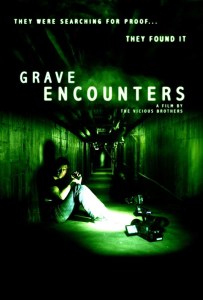
REVIEW: Grave Encounters

14 Sunday Apr 2019

Posted by amandamblake in Movie Reviews

≈ Leave a comment

Tags

found-footage, grave encounters, haunting, horror, movie review, psych ward

grave encounters[Warning: Here there be spoilers.]

I’ve been going in and out of wanting to write a review for this movie. I’m not entirely sure what I’m afraid of. That it’s not as good as I still think it is? That the review won’t do it justice? (Entirely possible. I’m still new at this.) I mean, it’s not perfect or anything, but I do get intimidated by good horror movies more than I do by explaining what’s wrong with the not-so-good ones.

For people with found-footage fatigue, I’m sure movies like GRAVE ENCOUNTERS don’t really help that, but I first saw GRAVE ENCOUNTERS when I opened my Netflix account, so I hadn’t watched nearly enough bad found-footage at the time to make me weary of the subgenre. And frankly, I have a fondness for that kind of low-budget horror, because it usually forces the film-makers to get creative with effects or eliminate them completely.

It’s worth noting that the effects of GRAVE ENCOUNTERS are its weakest points. They reference the obviously computer-generated effects in the sequel (please, miss that one—it offers nothing new, plus a dose of juvenile humor it didn’t need). They’re disappointing on every level, because in video that’s supposed to look real—kind of the whole conceit—the worst thing you can possibly do is show something that doesn’t look real. In the slight fuzziness and filter of movies, you can get away with minor CGI effects that you simply can’t in found-footage. It doesn’t matter how good the cameras are that they’re using. The slightest whiff of CGI ends up reading as fake, which takes a viewer out of the moment. If you’re going to use CGI, you’ve got to be dead careful. And the makers of GRAVE ENCOUNTERS were not. They would have benefited much more from judicious makeup, props, and unsettling acting rather than pay a small fortune on a small budget to get bad CGI.

But when they’re not stumbling in the computer-generated arena, GRAVE ENCOUNTERS is a solid offering in the found-footage arena, and it doesn’t—in my opinion—suffer from the same ending malady as most found-footage. And frankly, most horror.

Before even starting, GRAVE ENCOUNTERS ticks off a number of boxes that guarantee I’m more likely to enjoy it. For one, it got in my queue early, which means more things get compared to it instead of the other way around. I’d already watched a ton of horror movies by this time, between my college-days movie buying and back when FearNet was streaming, so I didn’t approach it in a vacuum. But other than BLAIR WITCH PROJECT and possibly PARANORMAL ACTIVITY (can’t really remember the timing), I hadn’t seen a ton of found-footage at the time. That gives it an automatic leg-up over its competition. But it’s stood up over time in spite of everything I’ve watched since.

Another point in its favor is the setting. I’m a sucker for psych ward horror, even though it’s often bad and ableist as hell. But being a person with mental illness who processes things through fiction, I’m entitled to like what I like. There are a lot of horrifying things about mental illness and a lot of horrifying things about what people have done to people with mental illness. GRAVE ENCOUNTERS has a few problematic moments, but it’s mostly about what was done to the people who were kept there rather than the mentally ill themselves being the monsters, and the movie makes everything more about setting, the building itself more the monster that keeps haunted people.

Abandoned buildings are amazing in general. If you haven’t seen Abandoned America’s photographs, I recommend checking them out. The movie probably only uses about three hallways and changes them just enough to make it seem like the gigantic building we see it is on the outside, but they also manage to convey a sense of claustrophobia and that disorienting feeling when you get lost—or worse, when things aren’t where they should be. Probably one of the more effective scenes is where they break down the front door, and there’s just more hallway. Then when they’re trying to get to the roof, and there’s just a wall halfway up the last set of stairs. This is why I like to emphasize practical effects. All they needed was a freaking wall to creep me the fuck out. If you’ve ever been lost, you know what that panic feels like. It’s one of the worst feelings in the world. Like that feeling you left your wallet or purse somewhere, but it doesn’t go away.

I feel like the movie really used its set to its full advantage, as simple as it was. And at its best, the scares themselves were simple. In found-footage, those work because of the conceit that everything is actually happening. A window opening by itself. Someone you don’t see pushing you down the stairs. A wheelchair rolling by itself. Blood in a bathtub. Waking up to patient ID bracelets on your wrists. Fog rolling in and people disappearing when it rolls out. Keep it simple in found-footage, and you’ll get a lot more mileage than a cheap-looking eye-and-mouth effects.

Like good found-footage, the cast doesn’t actually distinguish itself much. They’re a cast of regular people, the kind you would see on any reality TV show. The only one who feels polished is the lead, and since he’s the lead of a television show and needs a certain amount of charisma, that wouldn’t be unusual. Everyone’s slightly annoying at different times, but again, we’re watching footage of a television show that wouldn’t have actually made it onto the show.

When people get legitimately scared, they do get shrill. When people are legitimately exhausted, they do get emotional and snappish. And when they freak out, they do lash out. There wasn’t a moment in the movie when I felt the reactions weren’t real. They may not have been attractive or cultivated like in most other movies, but they were real, which is the best you can ask from found-footage.

One of my favorite moments is near the end, when Lance and Sasha are trying to look for a way out in the tunnels below the hospital. Sasha was sick, which being constantly scared, not sleeping enough, and not eating enough only exacerbated. She falls to the ground, vomiting blood, and just wails, “I want my mom!” It’s a striking scene in the movie, because the blood wasn’t CGI. You know she’s dying slowly and painfully and she’s scared and miserable, and you feel it. My heart aches every time she cries like that, because come on, if you’re honest with yourself, you’d probably say the exact same thing (unless your mom sucked, in which case I’m sorry—choose your own loved one).

Now, I said that the ending didn’t suffer from the usual dissatisfaction malady of other found-footage and horror movies, and it doesn’t. It’s vague. I’ll say that. But I didn’t find myself wanting more from it. I thought it was exactly the ending it needed. And how often do I say that about horror? (Answer: Rarely.)

So if you’re looking for some good found-footage horror in the midst of an oversaturated subgenre, GRAVE ENCOUNTERS really is worth your time. If you forgive it for the bad CGI and stay for the creepy building, you’ll likely leave satisfied.

Am I ill?

09 Saturday Mar 2019

Posted by amandamblake in Writing

≈ Leave a comment

Tags

deep down, horror, novel, novella, process, Writing

1159420_96550296

I started a pure horror story near the end of February (I classify NOCTURNE as horror, but it has a serious supernatural fantasy vibe in addition to the horror elements). I wrote the first ten thousand words last year, back when I had downtime at work to longhand (what is downtime?). I started out last month with transcription, then tackled new words. That’s difficult for me to do, come back to an old project, but this one hasn’t been hard to sink into. I guess it’s stayed on my mind all this time.

Any problems I’ve had have been because dayjob has been going through a months-long transition, and that’s required a near manic level of energy from me, but also more time than I like giving. I’m a perfectionist and pathologically terrified of disapproval, so I do what I do and don’t have enough time or energy to write as much as I’d like. Still doing it, though. Because when I don’t, my mental health plummets to dangerous places.

How strange that such a dark, bleak, sad story that I developed during the surfacing  fatalism after the last election would become a haven of sorts. So it’s moving more slowly than I’d like, but it’s moving.

I’ve hit roughly twenty-eight thousand words on the manuscript so far. And based on my outline and rough word goal of sixty thousand words, I’m about halfway through. Now, usually I give myself a word goal, then end up twenty thousand words or more above it. I’m notoriously terrible at figuring out how long things take or, in the case of novels, how long they’re going to be, even when I adjust for knowing how terrible I am at it.

But for DEEP DOWN (working title), I’m looking at fifty to sixty thousand words of a novel. As planned. Before edits. I’m actually writing a short novel, possibly a *gasp* novella.

You have to understand, in addition to being terrible at gauging how long things take, I really tend toward longer novels. I think I average around 120,000 words. It’s not necessarily a bad thing, and I’m really good at cutting my starting word count, paring a novel to its necessary words. That 120K novel was probably 140-150K to start out with. THORNS started out at a whopping 195K and ended up 155K.

A fifty-thousand-word novel is unthinkable to me. I’m literally looking at that word count and wondering whether something’s wrong with me. Or the story.

But I think it’s because it’s a single story line, no subplots, and a spare cast. I’m usually working with a more complex plot and multiple characters whose arcs need tending. DEEP DOWN has a very simple premise. A lot of good horror is minimalistic, and that’s what I wanted to try here.

I guess it’s working.

It’s still weird.


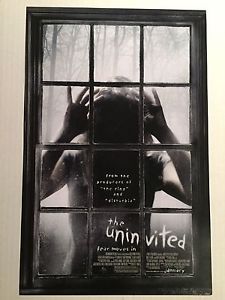
REVIEW: The Uninvited

23 Saturday Feb 2019

Posted by amandamblake in Movie Reviews

≈ Leave a comment

Tags

asian horror, horror, movie review, paranoia, remake, the uninvited

the uninvitedTHE UNINVITED is a strange animal in my collection. I saw the South Korean movie it was based on, A TALE OF TWO SISTERS, a few years before it, and I wish I hadn’t. Knowing the twist affects how you view a movie that depends on its twists. I had to watch UNINVITED again with my horror friend to determine whether the twist was sufficiently twisty. He didn’t predict the ending, by the way, which means he really wouldn’t have figured out the twist to TWO SISTERS, because TWO SISTERS is more twisted, which is why I wish I had seen it afterward. Because as a result, THE UNINVITED suffers a bit from comparison.

On the other hand, while I have a handful of Japanese and South Korean horror that I like, I’m afraid most of it leaves me rather cold. While culture shock plays a role, I think the primary reason is that they follow a different kind of storytelling and film making. To this American viewer, it feels disjointed and difficult to follow timelines. Angles and framing are different. Editing doesn’t feel like it has enough segue. The horror stories feel more dreamlike, impressional rather than literal. This isn’t a bad thing, but I don’t respond to it as well as I do American/European structures and standards, which feel less jarring in a hundred little ways. This is why I don’t mind when Hollywood remakes Asian films. When they’re bad, they’re still bad, but I tend to respond better to the method. Hard to apologize for that.

TWO SISTERS was twisted as hell, and it was R-rated for a good reason, while UNINVITED stays a pretty tame PG-13, but TWO SISTERS also had that trippy quality that’s sometimes hard for me to follow, so while I liked the movie, it’s not one that inspired repeated viewing, while I’ve watched UNINVITED multiple times over.

Here’s the thing: THE UNINVITED is perfectly serviceable horror. Do I wish it had gone a little farther and hit the R rating? Yeah, I kind of do. Because I think Emily Browning, Elizabeth Banks, and Arielle Kebbel would have had a field day going all the way with it, and the cast could have killed it, particularly Browning and Banks, on whose performances the movie really rests. I’m big fans of both of them. I think Elizabeth Banks, in particular, tends to get overlooked because she’s so reliable of an actress that she doesn’t stand out. She’s a total ensemble player, and I appreciate her work in everything she’s in because of it.

Emily Browning brought her usual china-doll delicate strength to the screen. Not going to lie, she’s almost painfully pretty, but she brings a lot of soul into her face – like Angelina Jolie with more innocence – and without it, I might not respect her as much as an actress. But even at eighteen, which was her age during filming, she’s a rock-solid, grounded performer. If the movie itself is a little weak, a good cast made it stronger than it had any right to be, because by the nature of the twist, they had to play the movie multiple ways at once – just like any good mystery, multiple possibilities need to be plausible until the ending is inevitable. That’s not an easy game to play, but they all manage to accomplish it.

Moreover, while some of the scares were lifted directly from TWO SISTERS, there were a handful that were legitimately creepy in spite of the rating, and gems like that are valuable in any horror movie. So much goes into a good scare that doesn’t depend on surprise or screeching violins, and even though they only last a little while, if it gets my heart racing, I gotta give them credit.

It’s a solid, respectable movie, good if you’re a fan of the PG-13 Asian horror remakes but also decent even if you aren’t. The psychological thriller/paranoia aspects make up for some of the weaknesses in the horror, and the legitimate scares make up for a somewhat weaker thriller ending than I would have liked. Even if the story gets slightly tired in places, the performances are so emotionally nuanced that you don’t mind. It doesn’t reach the quality of THE RING or even THE GRUDGE, which makes sense, because THE UNINVITED was made to try to profit off their trend, and the staleness shows. But the actors aren’t acting like it’s stale, and if you haven’t seen TWO SISTERS, UNINVITED might be a decent popcorn flick for some Saturday evening alone, and might even make better viewing the second time through. You might also follow it up with TWO SISTERS later – don’t worry, there are more than enough twists to go around.

House of Windows

22 Friday Feb 2019

Posted by amandamblake in Music, Poetry

≈ 1 Comment

Tags

ghosts, haunted house, haunting, horror, lyrics, not a poet, poem, songwriting

brown concrete castle

Photo by Jack Gittoes on Pexels.com

Because I’m between major writing projects (transcription isn’t a major project), I was finally able to start THE HAUNTING OF HILL HOUSE on Netflix. No spoilers, please, but I think it’s amazing. Episodic horror doesn’t always deliver – I think it’s a pacing thing, and in the case of what I’ve seen on AHS and other Ryan Murphy shows, a matter of being too clever to be scary.

Anyway, it seems like a good time to share my haunted house song I wrote last month, which totally has a Shirley Jackson vibe to it.

HOUSE OF WINDOWS

It’s a whole wide world out there
A fine, varied, full-bodied thoroughfare
Hundreds of thousands breathe the same air
Footsteps thunder over same streets, same stairs.

The house is gated, silent, and still
Its statues, a marble gleam atop the shadowed hill
They peer from stone eyes, listen with stone ears
Let all with eyes see, let all with ears hear.

Chorus:
The house has many windows
Curtains trembling with ghosts
Moths have made away with all the clothes
The dead inside don’t sleep but doze
It’s a house with many windows
But the windows are closed.

Statues at the gate, statues in the rooms
Inhale stale air, filter in the gloom
Every creaking floorboard, memory of previous doom
A house of many windows, a house of many tombs.

Visitors come to view the walls in awe
Priceless paintings behind drapes only the dead get to draw
Guests all leave unsure how to say what they saw
Any moment a knock on the door, any moment a monkey’s paw.

Chorus

In the deep dark garden, the roses have died
Whatever the tenants tell you, the dead likely lie
From skylights come the gray of stormier skies
A house of many windows, a house of many eyes.

Let all who wish to join us enter in
Remember all your failures, remember all your sins
Death chills the halls, creeps under your skin
The house offers rest, yet restlessness within.

Bridge:
Is life just waiting for death? Is that how it goes?
Am I a house, or am I already a ghost?

Chorus


REVIEW: The Wolfman (2010)

31 Monday Dec 2018

Posted by amandamblake in Movie Reviews

≈ Leave a comment

Tags

beasts, benicio del toro, horror, id, jekyll/hyde, monsters, movie, review, werewolf, wolfman

wolfman coverWOLFMAN, the remake with Benicio del Toro, is one of those movies I keep watching in hopes that I’ll like it more. And to be honest, I do like it better than the first viewing, which is often the case for movies I enter into with expectations. There are certain things I want from a werewolf movie, and I’ve thus far been pretty disappointed with most of them.

Perhaps because werewolves don’t really seem to translate well on screen. I think the best I’ve seen so far were from UNDERWORLD, which in itself is a fun and pretty but not very good movie. But the werewolves were ones I believed, and in my opinion they were appropriately bestial and intimidating. In movies I’ve seen where the wolves were just giant wolves (like the TWILIGHT series), they suffer from being noticeably CGI or noticeably puppets. In movies where they’ve been more anthropomorphic and built around a human form, they just aren’t that frightening to look at. I’m not sure what it is. Is it the wet nose? I’m just not sure what it takes to make werewolves frightening to me, so maybe the answer to that is they should stop trying. As werewolf movies go, THE HOWLING is probably best, disjointed though the editing is. It really encapsulates the horror of the transformation and animalistic nature of the beast, and it covers how becoming a werewolf might bleed into the human life.

But I suspect that, despite all the fairly standard sex that seems to fill our screens in R-rated movies, we’re still quite shy about sex, and a person giving into their id just makes our Puritan little hearts nervous. You can’t turn a man into a beast and then cut his balls off and expect us to be intimidated by what he’s become–and more importantly, what’s in all of us. Which is supposed to be the real horror, I suspect: the Beast in us all. But where most books seem happy to detail the daily depravity we’re capable of in werebeast and human form, movies skirt around the worst of it whenever the id has to take shape. I think they worry we’ll be too shocked, I tell you, shocked, and they want a broader audience to make a broader amount of money. But that’s neutering the beast, and it just ends up not working quite the way it should.

THE WOLFMAN is no exception, although the cast is fantastic and the devotion to detail in setting, costume, and atmosphere admirable. The movie is awash in fur coats and stuffed beasts from the elder Talbot’s hunting days. The Blackmoor manor is strewn with leaves and shadows as though the wilderness is slowly taking over its palatial splendor. The palate runs a respectable moorland gray, and the movie isn’t lacking in bright red for the R rating.

But the movie suffers from a lack of identity, although del Toro takes on the Talbot role with the same bushy-browed, soft-featured intensity of Lon Chaney, Jr., in the original that would likely have made him proud. Anthony Hopkins is a delight in every mediocre role he takes. The first few viewings, I was sure he was phoning it in like he did in THE RITE, but subsequent viewings give me a chance to take in his more subtle choices. He latches onto every line with a sometimes quiet and sometimes growling ferocity. He commands every scene he’s in, which is why the man is an international treasure, despite the less than adequate meat in this movie to chew off the bone.

Emily Blunt, I believe, is the actor most ill used by a movie that doesn’t know whether it wants to be tragedy or horror. (WOLFMAN mostly goes with tragedy with bloody dashes of horror, but the joke’s on them, because good horror makes tragedy all the more intense.) Blunt is too good for the role, put into the movie as a shining beacon of perfect Victorian femininity, a bastion of purity that no beast should sully, a love more romantic from afar, an ideal rather than a woman. It’s disgusting in such a male-heavy movie to make the only woman such a representation of an abstract. Ideals are all well and good, but what people in a society ever really live up to them, especially in private? We wouldn’t need such strict rules and chaperones if people weren’t trying to break those rules at every turn.

At the beginning, Talbot calls a man’s character “a shiftable thing,” a statement clearly intended for the dramatic irony, but the sheer fact of the matter is that THE WOLFMAN doesn’t work because Talbot’s character doesn’t shift enough. It barely seems challenged by new appetites. He’s briefly distracted by Blunt’s bare neck (honestly, who wouldn’t be?), and dreams about a naked back. So salty. So animalistic. So…tame. Talbot mostly remains the mild-mannered man except when he is beast, when the point is supposed to be that Edward Hyde is Dr. Jekyll. Jekyll/Hyde stories tend to do werewolf better than werewolf movies – the Spencer Tracy version is superb and is one of the movies to better show Hyde’s glee, but it really plays up the good vs. evil that isn’t what the original story set out to tell. Instead, for an excellent werewolf tale, I actually recommend Jekyll/Hyde movie MARY REILLY with Julia Roberts and John Malkovich, which is a criminally underrated movie, if not necessarily a masterpiece (really, if you ignore the bad accents, it’s quite good). Like Bruce Banner said, he’s the Hulk because he’s always angry.

If the beast doesn’t exact the worst impulses of the man and if the man doesn’t exhibit the worst impulses of the beast, what’s the point of a werewolf movie? What the point of the blood and drama and confusion? If the presence of a werewolf doesn’t strip away the patina of respectability of all around him, you’ve missed the point.

I’m not saying I needed a Talbot/Conliffe sex scene to satisfy my own worst impulses (although I wouldn’t say no). But Talbot shows early nods to resentments, a festering anger from his childhood against the town, against his father, and a desire for his brother’s fiancee, none of which I feel come to a head in any real way once the transformation occurs. Was he supposed to seem virtuous for retaining his self-control? Is it to contrast with his father, who is, in his own words, more comfortable in the skin he is in, while Lawrence makes a living pretending to be other people? We get the glimpse of the wicked in Lawrence’s father, his willingness to allow himself to feel his baser nature rather than repress it, although he still retains some self-control while a man.

I just wish there was some transformation on the character level for Talbot to parallel the transformation on a supernatural level, that he didn’t only give in to the beast when the moon was full, that it infected his personal life in more interesting ways. Instead of the beast being an extension of him made manifest, it remains distant, the actions that of an animal rather than an id. I don’t think he would have seemed less tragic for the loss of control of his impulses–after all, he didn’t choose to be bitten, to have to fight harder against those impulses. He was paying for the sins of the father, which is never fair. Del Toro is perfectly capable of treading that line. In the one moment where the beast threatens to overtake Talbot in the presence of Conliffe, though he doesn’t do much, he’s frightening and alluring at the same time, wonderfully intimidating, and Blunt plays off that with a quintessentially Victorian response belied by the scared intrigue in her eyes. That moment is the closest I have to what I want from their dynamic, and it’s delicious. But it pulls away too quickly and never again treads near the same level of tension between man/woman and the beast in both, though brought to shallower waters in the man.

More than anything, the restraint shown by the script and the direction seems more a product of the idealization of the love interest, the sole female presence in the film–although the ghost of Talbot’s mother seems to hover over everything. As though a woman’s own red tides of anger, frustration, fear, grief, and lust would somehow mar her if it cracked her pretty portrait of a face. Moreover, I believe there’s a genuine fear underneath most werewolf movies of the beast that exists within women as well. Not just the female villains (most masculinized or hypersexualized or both into unrecognizability of what women experience every day). Not just the disposable, nameless, dehumanized prostitutes that we keep killing off like so many victims of so many Jack the Rippers. The Beast in us all.

I’ve seen one movie that didn’t seem afraid of freed, unfettered female sexuality. The remake of DRACULA (also with Hopkins, in a role he seemed to have much more fun in) may have just been Francis Ford Coppola’s feverish wet dream for most of it, but it’s one of the few movies I know of that seem to unapologetically acknowledge women’s lust in supernatural situations. Yes, much of it is downright shocking for this generations-removed Puritan, but quite refreshing as well when set against a slew of horror movies that are unapologetic in the amount of boobs they show yet somehow afraid of a woman actually enjoying herself in the midst of a fairly rigid social expectation that they don’t. If that’s the excuse why they kept Miss Conliffe the Victorian ideal, I’m pretty sure Lucy Westenra spits on that. If the point of werewolves is that there’s a beast in us all, the refusal to believe there’s a beast in Miss Conliffe seems the worst kind of oversight. It may have been unintentional, but it’s frustrating nonetheless.

If THE WOLFMAN is soft on sex, it certainly isn’t on violence, which is one of the movie’s only saving graces, although I would have preferred more substance and less flash to the chase scene in London. CGI is supposed to be a friend, not a lover, and it doesn’t work nearly as well as studios depend it will. But I have to say, the level of detail applied to the transformation scenes was professional as hell and believable, even if the final product loses some of that believability they put into the shifting. Still, the werewolf’s attacks are vicious, merciless, that of an angry mother grizzly, and it’s pretty spectacular as it’s happening.

But in the places between the transformations, the movie just seems unsure what it wants to do and where it wants to go. It’s the movie version of telling rather than showing, and though I’m inexcusably fond of asylum horror, THE WOLFMAN doesn’t linger there long enough for me to care as much as I want to about the hubris of doctors. It brings to mind DRACULA again (see Jack Seward’s asylum). WOLFMAN fails in almost every comparison with its classic Universal monster movie counterpart, even that of the beasts that the eponymous monsters become. The only place where it seems to shine more than DRACULA is in the sets and the cinematography, which is more a product of when the movies were made than a failing on Coppola’s part in his DRACULA.

It’s really a shame, because I want to like this movie, and like THE LAZARUS EFFECT, I think I keep watching it for the movie it could have been. It’s occasionally a decent script, and del Toro, Hopkins, Blunt, and a somewhat typecast but still devoted Hugo Weaving make the best of where the script weakens.

I just have Thoughts about what werewolves are in the pantheon of horror monsters, and I feel like the movie makers really missed the boat on this one, as they usually do with this particular monster. Almost as though they’re afraid to look into a mirror and really see themselves. They tend to do well with vampires, but with vampires, they don’t have to see their reflections.

A Night Witch’s Eve

24 Monday Dec 2018

Posted by amandamblake in Music, Poetry

≈ Leave a comment

Tags

christmas, holiday, horror, lyrics, not a poet, pagan, poem, songwriting, winter, witch

black metal balustrade with string lights

Photo by Francesco Paggiaro on Pexels.com

I’m actually quite happy with this one. I don’t do simple very well (all of you know I’m a wordy mf’er), but when it happens, I’m pleased with how clean it can be.

The musical style should be somewhat close to “Silent Night,” but with more of a minor key, and actually meant for a soprano sound, the classical diva you might sometimes have in a symphonic metal song. Merry Christmas Eve, all!

A NIGHT WITCH’S EVE

Silent night
Silent cold
Everyone’s sleeping
The season grows old

Silent night
Silent snow
Concealing the traces
Where night witches go

Silent night
Silent dreams
Awake and aware
Through sobs and through screams

The midnight is anything but holy
Magic pierces the sky too bright and too boldly

Silent night
Silent sighs
We place silver coins
In everyone’s eyes

Silent night
Silent snow
Concealing the traces
Where night witches go

REVIEW: Silent Hill

31 Wednesday Oct 2018

Posted by amandamblake in Movie Reviews

≈ Leave a comment

Tags

alice krige, female-led, halloween, hellscape, horror, jodelle ferland, laurie holden, movie review, radha mitchell, sean bean, silent hill, video game

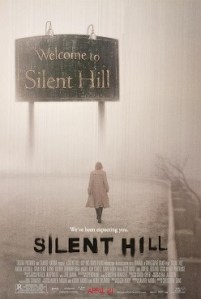
Silent_Hill_film_poster[Warning: Here there be spoilers]

I agonized over what movie I would review for Halloween. I wanted it to be one of my favorites, one I really liked. The Descent? A 1408/Oculus double feature (because yes, they go together)? American Mary? Candyman? I ultimately decided on Silent Hill, one of the first movies I saw during my freshman year of college, when I started watching R-rated horror and really got on the horror train. (Yes, I waited until I was seventeen. Yes, I am that person.)

In the interest of full disclosure, I’m prone to really like my early introductions to things, because that’s before I get jaded. But despite the fact it’s not a perfect film, Silent Hill was surprisingly good, especially for a video game to movie adaptation. Although from what I hear, if you’re going to do a VG2M horror adaptation, Silent Hill is the one to go to. I’ve never played the games myself. I’m too prone to habitual behavior for me to trust myself around video games. So I don’t have any expectations of someone who’s played the game, but the movie pushes so many of my personal buttons. It wasn’t a critical darling, and I can tell why. It’s monster-dense, melodramatic, and as stories go, not very original. But for me it’s less about originality (although that’s nice, too) and more about execution. It may be derivative, but is it a good story? Am I entertained for the night? Am I satisfied? Can I watch it over and over and over again and never get tired of it? Silent Hill is one of those films for me.

This is as much a contemplative retrospective as it is a review. Okay, it’s just me rewatching the movie and geeking out. Bear with me.

One of the most wonderful things about this movie is that the cast was originally so woman-heavy, they had to give Sean Bean a somewhat extraneous side plot just to make men feel included. And it’s one of those rare Sean Bean roles in which he doesn’t die, so… But the movie is a powerhouse of female roles with actresses known for genre films. There is absolutely nothing wrong with this.

Despite being a generally misogynistic genre, horror also historically has these huge, powerful roles for women, especially with the Final Girl trope. But Silent Hill and The Descent, both movies with a majority female cast, are both in my top ten list of favorite movies, with layered, nuanced characters and all different kinds of strength. What’s more, while many of these women are sexy and beautiful, because Hollywood, the movies and their strength don’t derive from those qualities. Or rather, to me, the sexiness comes from the fact their strength isn’t from sex but from character and determination, if that makes sense.

We begin with Radha Mitchell, who is a wonderful, solid leading lady. One of the things you might keep an eye on in subsequent viewings is how her main outfit changes over the course of the movie. It’s supposed to be the same outfit, but the colors subtly change from scene to scene to fit the hue and mood and transitions during the movie. Props to the costume department for coming up with so many forms of the same outfit and making it feel seamless. (Another trivia side note, this is supposed to take place in West Virginia, but it was shot in Canada, which means a certain percentage of the cast needs to be local, so there are all these Canadian accents here and there. It’s a little hilarious, especially when the script has more regional dialogue.)

Mitchell’s character, Rose, and Bean’s character, Christopher, are searching for their daughter Sharon, who’s sleepwalked far from home, screaming “Silent Hill!” when they try to wake her up. This prompts Rose’s research into her adoptive daughter’s origin in the ghost town Silent Hill–a former coal town rendered uninhabitable by a fire–and her plan to secretly take Sharon to Silent Hill to see why she has these terrible night terrors and somnambulism episodes.

Seems like a wonderful plan.

Sharon is played by at-the-time child actress Jodelle Ferland, who’d already dipped her toes into horror by the time she did something as mainstream and big budget as Silent Hill. She was around ten or eleven during filming, and she was still a small girl, but some of her lines suggest that she was supposed to be playing younger, and it doesn’t always land well, maybe because she’s using a little girl voice in her higher register to contrast with the lower Alessa voice. She’s a convincing kid, but there’s a maturity to her that doesn’t really fit the age I felt she was playing. It works when she’s Alessa but not always as Sharon. Still, there’s a reason this girl keeps playing the devil. She’s very good at old-young, which is part of the reason she’s one of the inspirations behind my Snow White character, though she’d now be too old for the role. Nevertheless, her work in Silent Hill has led to me watching her career, and I’m rooting for her as she transitions into adult roles.

But I’m getting ahead of myself. One semi-abduction, police car chase, and car crash later, Rose wakes up on the edge of Silent Hill, surrounded by dense fog and ash floating from the sky like snow. Since I’m not familiar with the games, a lot of these atmospheric elements are new to me, and extremely effective. It’s a beautiful, muted visual. I’m a sucker for pretty horror, and Silent Hill has a lot of pretty and ugly-pretty horror for my needy little eyes. Among all the ash, Sharon is nowhere to be found, thus beginning the scavenger hunt portion of the movie.

I’m being flippant, but it’s actually a good conflict–mother seeking daughter and willing to do anything to find her and keep her safe–and that conflict plus a lot of what follows pays plenty of homage to the video games without feeling too much like one. Finding what’s lost is a classic video game device, and it works just as well in more linear storytelling. It’s basically an ‘into the woods’ quest, with all kinds of monsters and allies along the way.

Once in Silent Hill, Rose quickly discovers that this town is not normal. In Ash Mode, it’s just haunting, unsettling. But Rose follows what she thinks is Sharon into a warehouse. That’s when the emergency siren goes off, and the Ash world flakes away to reveal a hellish interior. It’s a pretty, darn good effect, and I’m not usually a fan of CGI. In Hell Mode (or Rust Mode), that’s when the monsters really come out to play. In the warehouse, it’s the Gray Children, which look like misshapen burning babies. Here’s where the CGI loses it a bit for me. People should be people whenever possible, because anything less than the best motion capture doesn’t move like living things actually move. In the special features of the DVD, I watched the green screen where a small female contortionist donned her Gray Child costume and moved around in it, and that’s honestly creepier for me. Upon another viewing, I think it’s because the proportion of the Gray Children to Rose keeps changing, which jars me out of the suspension of disbelief. However, the Gray Child was my least favorite CGI monster in the movie. All the others are better.

(When the Gray Children scene ends with everything flaking back into Ash Mode, Johnny Cash’s “Ring of Fire” plays on a jukebox in the bowling alley. Everyone in the original theater laughed; good release of tension, and the only funny bit in the movie.)

After the more neutral Ash Mode (I’m sure there’s an actual name for these modes in the video game, but I don’t want to look them up at the moment) returns, Rose runs into Dahlia, a Miss Havisham-meets-Cassandra type character in the movies, although I understand she’s more of an antagonist in the games. Here, she’s the sorrowful mother, a broken woman heavy with cobwebs, dust, and regret, played by the gently altoed Deborah Kara Unger. She chews the scenery in a wonderfully maudlin way and gives us the first bit of exposition about Alessa, the child that was taken from her. When Rose shows her a locket with Sharon’s picture, Dahlia becomes agitated and insists it’s Alessa, her own child.

As Rose continues to look for Sharon and for a way out of Silent Hill, which seems completely cut off from the rest of the world–literally, with the streets out of town broken away and nothing but an abyss on every side–she runs into the cop that chased her into the town, Sybil Bennett, played by genre royalty Laurie Holden.

From what I can tell, people either love her or find her annoying. Silent Hill was my first introduction to her, and I won’t lie. When she first pulled off her helmet and started shooting at the Armless Man (much creepier than the Gray Child), I developed a serious crush on this woman, hardass cop notwithstanding. Sure, it seems ridiculous to us for Cybil to handcuff Rose with everything that’s happening, but as far as Cybil knows, she’s followed a parent kidnapper into Silent Hill, and it wouldn’t be the first (which is a nod to one of the games, apparently).

At this point, the Sean Bean side plot makes it perfectly clear that the ashy Silent Hill isn’t just cut off, it’s a completely different dimension existing parallel to the real Silent Hill, where it’s pouring down rain and police are searching for Rose, Sharon, and Cybil. Through the inspector on the case, we’re given a little more exposition about what happened to Alessa and to the town. But on their side, it’s just a normal ghost town–singed, smoky, dangerous due to the coal fires still burning and sending fumes up to the surface, but otherwise normal. When Rose is at her most distressed, Christopher senses her, which leads to a so-close-yet-so-far moment that I think played pretty well. Extraneous though it may be, I feel like the side plot does provide a much-needed atmosphere respite from the fantasy-horror Silent Hill world. The doses of reality offer enough of a contrast that the hellscape seems all the more hellish.

Rose follows the clues left behind for her by the child she keeps thinking is Sharon running away from her, all the way to a school marked by a curious-looking cross. Inside, there’s evidence that Alessa was decried as a witch even by the children and that something obscene happened to her by a janitor named Colin, given what this hell universe tends to do to the people who hurt her. Colin is dead, wrapped and contorted with barbed wire, and in his mouth is something Rose needed to find, a hotel key. But before Rose can leave, she discovers men in coal miner gear outside the bathroom. Their canary goes crazy right before the emergency siren goes off and Hell Mode returns, bringing Colin’s dead, desecrated body to life.

This is one of those cases where practical effects really paid off, and it’s no wonder that the same man who plays Colin is also the one who played Pyramid Head. He does amazing pantomime work, conveying so much with body language in roles where he doesn’t speak. Just as Pyramid Head is a pretty undeniable symbol of uniquely male violence (noticeable especially within a majority female cast), his Colin is a tortured obscenity. The artistry in his dual performances is a pleasure to watch.

With the cockroach-like Creepers and Pyramid Head after her in the rusty, bloody hellscape, Rose finally meets up with Cybil again, who can’t deny there’s something rotten in the state of Silent Hill. As soon as Ash Mode returns and most of the monster danger is gone, they continue following the clues the girl who looks like Sharon left behind, all the way to a hotel. The music they use on their way reminds me that I love the soundtrack of the movie, which borrows themes from a number of the games. It’s a great industrial sound that translates well to the movie.

At the hotel, we finally get a good look at Alessa, who’s the spitting image of Sharon except for the dark hair and school uniform. And we meet one of the first fundamentalists left over from the fire. They’re a sect off of Christianity, with theology built around witch-burning and maintaining purity in the community. In the case of Anna and most of the other members of the congregation, this is where the story tends to turn overwrought and overly simplistic. The only grounding influence is the cult leader Christabella, played by the wonderfully hypnotic Alice Krige, another member of genre royalty. Have I mentioned how stellar this cast is?

And how unique is it that this fundamentalist cult is run by a soft-spoken, steely woman instead of a charismatic man? What could have turned into something laughable is given a more solid foundation by Christabella, who is clearly a true believer of her own religion (also unusual in cult movies, where the man is clearly a con using his charisma to gain power and respect). She may be an antagonist and an evil person, but I respect true believers more than cons, and she has no reason to believe she’s wrong–after all, their people have remained safe, and the church remains a refuge from the darkness whenever Hell Mode settles over the town.

This fact alone raises a number of questions for me that are never answered. It’s clear that if Alessa hadn’t been burned as a witch, Silent Hill would never have been sucked into a hellscape by the demon that Alessa accepted inside of her, so Christabella is clearly the author of her own people’s destruction. But it’s curious that people portrayed as evil, as those who have twisted faith into something ugly and vicious, can still keep the demon at bay in their church. It’s curious that the church is still a sanctuary from the darkness. Demon!Alessa calls it ‘blind conviction’ that keeps her from entering, but is it really? Or does their ugly faith come with enough good intentions that it affords them some protection? Why would a demon not be able to enter everywhere in her own hell? Is their illusion of protection as much a part of the hellscape as their illusion of righteousness? They certainly don’t seem to be happy with either.

So many questions unanswered, but I’m not one to think that something a plot hole just because it doesn’t have an answer. I’d like to think that things are more complicated than good and evil, even in heaven and hell.

Once in the church, Rose and Cybil are questioned by Christabella, but despite some reservations and suspicion on both sides, Christabella agrees to take them to where the demon waits and might have answers about how to find Sharon. However, when Christabella discovers that Sharon looks like Alessa, she tries to stop the two women. Cybil sacrifices herself to the fanatics to let Rose continue down into the center of the hellscape, where we encounter the sexiest of the monsters, the iconic Dark Nurses. This is one of the places where the movie feels more like a video game, but it doesn’t suffer from comparison. Instead, it helps build the tension, and the fact that all the nurses are made-up people really helps bring the realism to the moment that too much CGI would have destroyed.

Then we enter the realm of pure exposition where we learn the full story behind Alessa, Sharon, and what happened to Silent Hill. We still have questions: Why does the inspector look the same thirty years ago as today? Who’s Alessa’s father? Why was some of Silent Hill sucked into hell and not everyone? How much of what the demon says can we believe? And again, why can’t the demon enter the church without being brought in? What caused Silent Hill to become a ghost town–the fire that burned Alessa or the demon sucking most of Silent Hill down into its hell? Because I originally thought it was the fire, but Alessa was put into a Silent Hill hospital. Ghost towns don’t happen overnight, but if the fire caused the coal mines to burn, one would think it would have been pretty quick. Maybe these answers were lost in editing. They’re ultimately irrelevant to the story, but curious minds still want to know.

The story reaches the climax back at the church, where the fundamentalists–miserable, judgmental murderers that they are–receive what seems like just deserts. The only quibble I have is Christabella’s fate, which seems gratuitously sexual to me. Don’t get me wrong, the whole movie is graphically violent, sometimes beautifully so. Brutal beatings, a woman skinned alive, torture totems, the burning of Alessa and Cybil, the Dark Nurses… I just felt that Christabella’s fate could have been more poetry and less rape. Please.

The weakest parts of even good horror movies tend to fall at the end. Sometimes I like Silent Hill‘s ending and sometimes I don’t. Ambiguity is a horror movie maker’s friend, but it often leads to a frustrated audience. Then again, a solid, safe ending can hit a supernatural rather than a horror note, which can be a bit jarring, and a dark ending can be kind of despairing. It’s really difficult for horror movies to win.

TL;DR: Silent Hill is a badass, female-dominated, visually horrific and stunning movie–far from a masterpiece, but in my opinion, a solid offering and one I don’t mind rewatching on the regular. The sequel, Silent Hill: Revelation, is a hot mess. I enjoy it and it has some good moments, but it’s a mess. I feel like a good Silent Hill sequel could be made, but I doubt it ever will. The original manages to stand strong, strange, and horrifying all on its own.
Would You Rather

25 Thursday Oct 2018

Posted by amandamblake in Music, Poetry

≈ Leave a comment

Tags

beasts, horror, lyrics, monsters, nightmare, not a poet, poem, rock, songwriting

light landscape sky sunset

Photo by Pixabay on Pexels.com

Wrote something loosely inspired by NOCTURNE for Halloween, because I love writing horror songs. It’s another rock piece that I wouldn’t know how to do myself, but it’s got a nice beat in my head.

WOULD YOU RATHER

The dark of the night doesn’t scare me
Unseen eyes stare at me
Teeth bare at me
But they don’t scare me.

Beasts of the night are what they are
Each tear and each scar
Each extinguished star
Just what beasts are.

It’s the liars and thieves that live in the light
That scare me at night
Keep the door locked tight
These monsters of light.

The monsters at night don’t try to pretend
Hunger for the end
But hold your hand like a friend
‘Cause they don’t have to pretend.

Chorus:
I live with my nightmares
I don’t close my eyes
They feed on my fears
Can’t run and can’t hide
Consuming my body
The demons inside
I’d rather live with my nightmares
Than wake up to dreams that have died.

They hide in the closet and under the bed
That’s what they said
The quick and the dead
Hide under the bed.

In shadows they creep and crawl ‘cross the floor
Desperate for more
Than daylight is for
They beg me for more.

I pull back my covers, won’t cover my head
Let them find me instead
Crawl into my bed
Might as well be dead.

But with nightmares even dead can be fun
The night’s never done
Far away from the sun
I’m always the one.

Chorus

Bridge:
Tremble and shiver
My pulse starts to quiver
Cold skin grows warm under my hand
Tooth, nail, and claw
A cavernous maw
I’d follow them down to a dark, colder land.
But they like me alive
These beasts and their knives
They sink inside
I open my eyes
And the nightmare is always alive inside
It’s the soul that has died
As their spirits reside
In the shell I denied
For their pleasure and mine.

Chorus

REVIEW: The ReZort

20 Saturday Oct 2018

Posted by amandamblake in Movie Reviews

≈ Leave a comment

Tags

horror, movie review, the rezort, zombie

The Rezort[Warning: Here there be spoilers]

THE REZORT was one of those movies I didn’t expect much from, and I ended up getting a lot more than I thought I needed. I’m not sure whether the premise of the movie is original, but if not, I’m surprised it hadn’t been done before, because it made so much sense as a concept.

Basically, JURASSIC PARK meets zombies. And it’s surprisingly decent.

Great? Not so much. There are parts of the movie that seem far-fetched, although my threshold for disbelief is a lot lower than it used to be. Whenever I tell myself there’s no way anyone’s going to let a multibillionaire build a resort on an island where people can shoot zombies, I look at the world today, and I go, “Nope. There’d be protests and marches and debates, then they’d totally let her do that.” We have game preserves and hunting trails all over the world, dead people wouldn’t legally be considered people, and it would boost a post-apocalyptic economy. You think some of the lines in the movie regarding why the ReZort was allowed to happen are kind of ridiculous until you really start to think about them. Then you realize all the rhetoric is of the kind used in a number of other controversial but totally legal practices. Zombies aren’t real, folks, but if they were, it wouldn’t be too long before something like this happened.

There are parts of the movie that play a bit rote, with a cookie-cutter selection of side characters introduced to us: the immature gamers, the long-suffering soldier who misses the war, the pacifist-activist, the loving couple, the obnoxious businessmen, the evil billionaire. And these characters are put into a predictable string of zombie situations. I mean, it’s the ReZort. It’s a zombie theme park. You know it’s going to go wrong because you’ve seen JURASSIC PARK, and you know how it’s going to go wrong because you’ve seen at least one zombie movie in your life, and with few exceptions, they’re all really similar. But the actors bite into the meat of their roles, approaching the movie as though it’s more than it is, and so they make it that way.

Our main character Melanie is played by actress Jessica de Gouw, who’s on my celebrity doppelganger list as the spitting image of Rachel McAdams. I’d call her a poor man’s Rachel McAdams, and when I first saw her in the movie, that’s what I thought I’d be getting, but her acting chops hold their own. Come on, Hollywood, there’s a long-lost twin story in there somewhere.

We come into the movie post-zombie-war, when the world has fought its way back to something approaching normal due to a policy known as Operation Brimstone. In short, they firebombed the hell out of anywhere the zombies arose, which took a lot of innocent lives along with them and left thousands upon thousands of people without homes, causing a serious refugee crisis. The movie opens with a series of maddeningly realistic news clips from partisan channels bringing us up to speed on 1) what happened and 2) where the post-zombie-war controversies are. There are a lot of traumatized people. War equals trauma, and zombies equal personal trauma. There are soldiers adjusting to civilian life, because of the aforementioned war equals trauma. There’s the refugee crisis that’s moving at a crawl.

There are also people who challenge Operation Brimstone as causing too much collateral damage and those who challenge the concept of the ReZort as being callous with the dead. As activist Sadie points out, “If this is how we treat the dead, who’s to say the living won’t be next?” It has roots in pro-life and animal rights activism, but it doesn’t firmly hang its hat with either. It’s not a stretch to imagine how dead rights activists might address the zombie issue. After all, these are people’s families and friends that they watched change, sometimes right before their eyes, and it’s a moral and ethical dilemma what to do with them (and depending on spiritual views of life after death and how to treat dead bodies, it could be a religious dilemma,too). Like I said, personal trauma.

Melanie, who’s part of a post-zombie-war grief support group, and her ex-soldier boyfriend agree to go to the ReZort, a luxury hotel and game trail for people who want revenge on the zombie virus that upended their lives and killed their family and friends. Apparently, the controlled circumstances did wonders for someone else in her group, and she thinks it might serve her PTSD to indulge in some R&R and carnage—confronting her fears, but with cocktails.

Among the other resort guests, we also have a scowly, steely-eyed Dougray Scott, who most mainstreamers know from EVER AFTER, but who’s made something of a name for himself in the horror genre as well (hello, HEMLOCK GROVE, you pretty little mess). If anyone else is a significant actor, I don’t recognize them.

Their time at the ReZort begins with evening drinks by the pool, where the billionaire creator of the ReZort comes out and addresses her crowd. She’s definitely not what you expect, not least because the person who created an island retreat for zombie hunting is a woman. She’s trim, fastidiously neat and polished, like the owner of a tropical paradise hotel rather than one with a gruesome underbelly. She contrasts strongly with the zombie woman they bring out, shackled, dirty, and decayed. They stare each other down face to face (I’m pretty sure there’s enough slack on the shackles for the zombie woman to reach her if she lunges, but whatever), and it all feels exploitative as hell, especially since the zombie still has some soul in her eyes, although she acts like an animal. Everyone else is raucously cheering—”Every apocalypse deserves to have an afterparty!”—but Melanie’s clearly uncomfortable with how human the zombie still appears to be.

There’s only one other person there who seems just as ambivalent, the pink-streaked jilted fiancee supposedly there because the tickets were nonrefundable. But during the party, Sadie sneaks away to where she doesn’t belong and downloads some files in a personnel-only part of the resort. Because if everything went as planned, it wouldn’t be much of a movie.

The point at which everything goes wrong is where the movie is at its most predictable, and where it tends to falter. I would have liked to see more ReZort amenities beyond one day shooting at herds or at zombies set up in an abandoned compound like the guests are playing a real-life video game. What other sick ways do they use the dead? But there’s a twist toward the climax that I really like, because it’s just so awful and fits right into the post-Z world they’ve created, addressing an issue that you probably figured out already. I’m terrible at predicting twist endings (I’m getting better, which of course makes movies worse, so it’s a double-edged sword), and I didn’t see this one coming. Even if you do, it’s perfect enough to work.

Like I said, THE REZORT isn’t great. But when you turn it on just expecting the usual, getting the taste of a pretty darn juicy concept might just give you the popcorn evening in you’re looking for.

Trypophobia

03 Wednesday Oct 2018

Posted by amandamblake in Music, Poetry

≈ 1 Comment

Tags

disease, fear, halloween, holes, horror, lyrics, not a poet, parasitosis, poem, songwriting, trypophobia

abstract art background bamboo

Photo by Suvan Chowdhury on Pexels.com

I’ve been saving this one for October, because it’s all about trypohobia, the fear of little holes where they shouldn’t be (see Lotus Pods, because there isn’t a photo in the free media library). There’s a theory that it arises from an atavistic fear of the visible symptoms of disease and parasites (see Delusional Parasitosis). Writing a song to invoke the discomfort of the phenomenon was a blast. I should write horror songs more often.

TRYPOPHOBIA

Thin threads hollow in the darkness
Cities and paths kept under the surface
Chewing their way through wooden bones
Insidious underneath skinful homes

Tiny pinpricks all in rows
Pulling from hundreds of little shadows
Slick long bodies and gnawing maws
The ones inside you never saw

Chorus:
Wriggle, squirm, scream, writhe
A pox upon the lotus eye
Itch and scratch, tearing cry
You never know what lies inside

Flowers and pods on riddled skin
Crawling and feeding deep within
Black eyes and mouths, open in wait
Death in moments, disease in their wake.

The hive mind, hive of the flesh
A soul decayed, mind in distress
Is prickling there or is it not?
Don’t you wish they’d stayed in the dark?

Chorus

Patterns of sick, patterns of harm
From deep within pores, from doors unarmed
Digging holes in your perception
Dare see death in your reflection.

Chorus

← Older posts
Newer posts →

Enter your email address to follow this blog and receive notifications of new posts by email.

NOW AVAILABLE

WHERE IT ALL BEGINS

TINGLE YOUR SPINE

Website Built with WordPress.com.

  • Subscribe Subscribed
    • Amanda M. Blake
    • Join 141 other subscribers
    • Already have a WordPress.com account? Log in now.
    • Amanda M. Blake
    • Subscribe Subscribed
    • Sign up
    • Log in
    • Report this content
    • View site in Reader
    • Manage subscriptions
    • Collapse this bar

Loading Comments...