I’ve been having trouble putting together this end-of-year list because of a deep sense of despair and hopelessness for this future, be it this year or five years from now. I recognize this as depression, partially situational and partially bad brain chemistry that I don’t treat with medication, just sort of learn to live with. As a result, I can build momentum without motivation, and I will proceed with plans made, but God, it’s hard to believe in myself.
2022 was the year that I finally gave up the ghost at the job I’ve been paying the bills with for eight years. My last day is next Friday, and even though it was my decision, I can’t help feeling like it’s a kind of failure that I couldn’t make it work. I suppose it’s like a bad marriage in a way. You know it’s best for everyone if you separate, but you invested all of this time that now feels like it yields nothing. And that’s where I’m mentally stuck right now, although I have general plans of pivoting industries and I have the privilege of a financial cushion.
I’ve tried to pivot before, and it didn’t go so well, so I’ve got that failure hanging over me to remind me that this may not work out. I have back-up options if that happens, but it’s still not the best personal encouragement for making such a big change.
Less depressing changes in my personal life include getting to watch my niece grow so much between turning one and turning two. She’s gone from being a baby to a little girl with opinions and personality, and being called Tía is strange and amazing.
I’ve also had a banner writing year because of a slew of poems and short stories sold, which is the kind of encouragement I needed and tells me that I’m doing something right. Between flat rates and royalties, I made over a thousand dollars, which is a milestone I’ve never reached before. Now, because of PUPPETEER professional edits, I spent significantly more, so I still haven’t made an actual profit, but getting paid pro rates on some poems and short stories is incredibly gratifying.
Because of quitting my job and having a block of unpaid months, I’m going to make it a point in 2023 to write and edit more with the aim of selling. I have a handful of longer works that need to be edited for submission, and I’m going to take my ‘sabbatical’ to do that as well as get some sleep (rest and rejuvenation).
This year didn’t produce any self-published novels because I had other deadlines to meet, but here are my stats for writing this year, not including the editing work done on those novels with an aim for self-publishing this year. Considering I never thought I could do short form or poetry well, I’m tremendously proud of my short-form writing accomplishments, if frustrated by how far behind I am on my novella/novel schedule. I also can’t thank Quill & Crow enough for seeing value and beauty in so many of my gothic and horror pieces in 2022.
– wrote at least one flash poem a day, including a 31-part long concept poem for December – wrote 15 short stories, 1 novelette – planned to finish a novel by the end of the year and start a new one, but dayjob required a lot of overtime and energy in December, so I’m almost finished but not quite – published 3 poems and 6 short stories, with more to be announced and published in 2023
Poetry:
“Goddamned,” Crow Calls: Volume 4, Quill & Crow Publishing House, June 12, 2022 “The Chase,” Crow Calls: Volume 4, Quill & Crow Publishing House, June 12, 2022 “An Empyrean Con,” Bloodless, Sliced Up Press, October 28, 2022
Short Stories:
“Resin,” Beyond the Veil, Ghost Orchid Press, February 9, 2022 “A Still and Weathered Stone,” The Crow’s Quill, Quill & Crow Publishing House, June 2022 issue “Tastes of Desperation,” Tales from Brackish Harbor, Quill & Crow Publishing House, August 13, 2022 “Lullaby,” The Crow’s Quill, Quill & Crow Publishing House, October 2022 issue “Wandering Lights,” Halloween Horrors, Black Widow Press, October 13, 2022 “Ragged,” The Crow’s Quill, Quill & Crow Publishing House, November 2022 issue
It’s my plan for 2023 to continue submitting new and trunk work to short story and poetry submission calls, but I’m going to focus more on long form this year, including completing some of my contracted novel work and wrapping up stories already slated for self-publication (with editors already paid for editing work on most of them). But anything else as yet unassigned for self-publication, I’m going to either try to submit to good indie presses (novellas and shorter novels) or find representation (longer novels). I may still self-publish for creative control, but I might not be able to afford to do it for a while because I’m saving for an associate’s degree.
Among self-published works coming out this year, I have PUPPETEER (Thorns 4); OUT OF CURIOSITY AND HUNGER (formerly THE VERY HUNGRY), a short creature feature novel; and DEAD ENDS, a collection of morbid and macabre poetry, most previously published on social media (so I can’t sell most of them), but some have never been posted before.
I’m sick to my stomach from blowing up my life with no guarantees, because I’m not a gambler and I much prefer a sure thing, but I’m going to press on anyway, because that’s just what I have to do and have always done. And I’m going to get some rest, because that’s what I need.
Here’s hoping that writing continues to be fruitful and fulfilling and that 2023 ends up better than it feels right now.
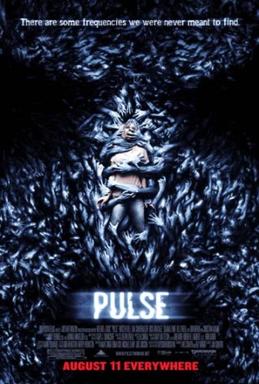
After the undeniable success of The Ring remake in American theaters, studios couldn’t get enough of Japanese and Korean horror remakes, and in usual movie-studio style trying to take advantage of a good thing until it isn’t good anymore, they wrung that trend for every dollar they could (and continue to the day, with the enraging announcement that the incomparable Korean zombie movie Train to Busan is getting an entirely unnecessary American remake). Also as usual, only the first few entries really had anything to offer. The Grudge was a decent follow-up to The Ring, even if it lacked its own identity. I would put Pulse up there as an entry that really had no right to work the way it did, because on the surface, it feels generic, like something an autobot would create, which may or may not be ironic.
Keep in mind during this review that I haven’t seen Kairo, the original Japanese move that inspired Pulse. It’s on my list of things to watch, but I simply haven’t had the opportunity. So I can’t compare the quality. I can only judge Pulse on its own merits. Also, I’ve only seen the unrated version, so I can’t speak to what elements were in the theatrical release versus what was in the unrated release.
Was Pulse great? No. Was Pulse good? Sometimes, but I wouldn’t call it particularly original. Was Pulse good enough? That’s where I would put it. Moments of interest suggest there was something more that could have been done with this movie, but I don’t think anyone was really trying for interesting. Wouldn’t be the first time I felt like studios took horror audiences for granted. However, it’s worth noting that, like Gothika, Pulse is semi-regular viewing for me.
It’s also worth noting that, unlike Gothika, the suicide trigger warning is high for this movie. Maybe that’s why I connected to it–as a nearly lifelong sufferer of depression, the suicidal impulse isn’t as far away from me as I would like, so the movie ends up reflecting something I find in myself all too often. As a consequence, though, I have to be careful about when I watch it. I don’t let myself watch it when I’m in a deeper depression and suicidal ideation is high. I think trigger warnings on horror can be a bit redundant—I’m not entirely sure what else people expect from a horror movie—but I have a strong enough reaction to Pulse if I watch it at a bad time that I feel compelled to provide the warning. The warning means that the movie works for what it intended to convey, so it’s not a bad thing. Just a preliminary flag, in case you might have the same issue.
Like I said before, Pulse really shouldn’t work as well as it does. For one thing, it presents us with highly CGI monsters–even the fact that they’re from a digital reality doesn’t really fix the way that heavy CGI doesn’t register as real enough for horror work. It’s a big no-no for me and often undercuts the work of legitimate body actors. I’ve lost count of the time that Doug Jones and Javier Botet suffer from the over-digitization of their characters. And frankly, I can’t think of a single digital effect that has scared me.
Even when they minimize the digitization effect, however, the monsters just don’t…do it for me. They’re not frightening, and the sucking the life effect isn’t scary. The closest to effect that we get is Stone’s demise, with his distinctive face distorted as he dissolves into the wall, the bulging of his eyes. The black mold bruising effect is pretty, but I’m not sure it signifies disease quite the way it could have. I guess it just felt a bit mild and underdone, visuals we’ve seen before that don’t stand out in a crowd of monsters. Generic ghosts in the machine. Just…meh. Not the reaction you want from a horror movie.
A lot of the horror movies of the new millennium aughts tended to be heavily filtered with a prevailing color that bleeds into every element of the movie. For Pulse, they chose a Matrix-y green to contrast with the bright red computer tape for a Freddy Krueger combination that was only occasionally effective. I suspect the scenes where the contrast was strongest were taken almost straight from shots in the original, but I can’t speak to that, because I haven’t seen the J-horror version. There was just something about the angle and framing of those shots that reminded me of Japanese horror that I have seen.
Unfortunately, the times it didn’t work were when the scenes were too flooded with the filter of choice, whether red or green. The Ring depended a lot on blue and blue-green filters, but that really fit rainy Seattle and the thematic water element of the movie, especially since it had its moments of color—the green of Shelter Mountain Inn and the light hitting the Japanese maple. A filter works best when it enhances the atmosphere, and I’d say that it worked really well in Josh’s apartment, where we’re given a good sense of the emotional deterioration that has led to real physical decay. But at many points in the movie, the filter becomes more saturated to distraction rather than effect.
The cast manages to take the movie seriously, even if I’m not sure the director does. We have Brad Dourif and Octavia Spencer in notable cameos, and Pulse introduced me to Rick Gonzalez, who’s one of those people who just makes me happy when I see him guest-starring now.
Ian Somerhalder as Dexter is a bit uneven, and I don’t get a good sense of why he’s there, other than Generic Love Interest and looking pretty, but you know, I’m easy and I’ll take it. He’s riding his Lost high but hasn’t entered Vampire Diaries popularity yet, so it’s a nice look at him before that.
Jonathan Tucker pads his horror cred with a memorable turn as Josh, flexing his exceptional skill at setting a mood with his own subtle body work and his quiet intensity.
The real surprise here for me is Kristen Bell as Mattie. At the time of the movie, she’s riding her own TV high from Veronica Mars and had yet to find Forgetting Sarah Marshall, Frozen, or The Good Place fame. With her fair coloring, she’s the least served by the sick green filter, because she ends up seeming like she’s spent too much time in a chlorinated pool. In addition, the makeup artist went rather Avril Lavigne with the smoky eye, but I kind of like it.
Bell usually brings this sort of cheerful snark into her work that she uses really well, but it’s not something that she can really take with her into a horror movie. And she doesn’t. Like Julia Roberts in Mary Reilly, Kristen Bell doesn’t bring any of her trademark sunny hardness to the role, barely even smiles. It’s a story about a suicide epidemic, so there’s precious little to smile about. But as a small, slight woman, Bell uses the vulnerability and persistence in her tool belt instead. It speaks to her skills that she manages to make for an unexpected horror lead. She’s not a Scream Queen, but she holds her own with her grief for the death of her boyfriend and her commitment to fighting what seems inevitable while everything falls apart around her.
The cyber element of the movie seems quite dated at this point, as most technology-based horror does. The Ring played up the obsolescence of videotape, but Pulse presents itself as tech-savvy, which means the tech ages badly, and of course the Hacker Magic element that triggered the release of the computer virus monsters is laughable, even to this profoundly tech-unsavvy viewer, so it’s a good thing they don’t dwell much on the why—because the why doesn’t really matter as much as as the ‘what now?’
What works in Pulse, as is true for most horror movies, is where the horror gets unmistakably human—in Josh’s despair when we first see him post-computer-virus-monster attack; in Mattie’s psych student grief, especially when she visits Josh’s apartment before he dies and after; in Stone’s memorable demise; in Isabelle’s monologue that basically covers how depression feels at its worst; in the way that each infected person speaks as though something’s weighing on the tongue, walks and stands as though carrying a burden on their shoulders, sometimes has trouble just convincing themselves to talk or pick up a phone. It’s a very real representation of depression, and I’m there for it.
Pulse reuses the unsettling video gimmick that implanted The Ring‘s Samara into the horror collective and has been reused many times since without much success (I’m looking at you, Slender Man and Friend Request). However, the virus here shows streams of people’s deepening despair, sometimes the moment of their suicide, with the added Internet uncertainty of whether they’re real or just a sick prank, and it feels more real than any of the other Ring imitators. At the moment that the computer downloads the virus, the images infect the viewer with the same sense of despair.
Scarily enough, suicide is, in fact, contagious, especially when it’s shared in the wrong way or when we dwell in the suicidal moment itself, which is why I do post the trigger warning, because that’s the exact moment that the virus shares, over and over and over again.
Also, although the script is terrible, especially for the light-hearted bits, and written by people who had never heard a college student in the early aughts talk, the quiet moments actually bring up some interesting thoughts about technology and communication.
Sure, the big Ghost in the Machine horror element is that we’re surrounded by technology and have integrated it into our lives so much that something destructive within it would destroy us in a matter of days. That’s pretty much a given and the reason real AI can be a terrifying prospect. It also makes some hackneyed comments on how the Young People These Days are lost in their tech—the same argument being made in Ghost in the Machine horror today, with the same eye-roll from the audience. The truth is, the problem isn’t what technology we use. The problem is in how we communicate and relate with one another—or the ways we don’t communicate or relate. It’s not the tech that’s gotten in the way of our communicating with each other. Tech is just the tool, and like any tool, it’s fairly neutral—what matters is how it’s used. If you think the loners who spend all their time online would be social butterflies if WoW had never been invented and that influencers would be less addicted to what people think of them, maybe you’ve forgotten what it was really like to be in a world without Internet.
In the movie, we see how technology helps forge emotional connections—a phone call between friends, chatrooms to deal with grief. And we see how tech is used in miscommunication or lack of communication, with Mattie ghosting Josh, Josh not calling Mattie back, the phone call between Mattie and Stone when Stone isn’t saying what he’s feeling…for all of these things, the communication issue is because of the people, not the tech. Perhaps the biggest example is in Mattie’s mother trying to call her and Mattie rejecting the call, then Mattie having trouble getting in touch with her mother when she finally needs the emotional connection—with technology allowing Mattie to keep her mother at a distance and the tragedy of missed connection.
The biggest weakness in Pulse, other than the fact that the remake conceit is already tired in 2006, is the ending. Horror endings are notorious for falling short of the build-up. Screenings show that at least part of the reaction to an ending is cultural (see the American v. the British ending of The Descent), but it’s also very much a pitfall of the horror genre in general. It’s such a delicate business, giving horror a satisfying ending, and it doesn’t happen very often, even among the greats.
But the writers (one of whom was Wes Craven, but everyone agrees they just wanted his name on the film to bolster it) wrote themselves into a corner and hit their nose squarely in that corner when they tried to wrap everything up at the climactic scene. And then we’re given an epilogue that feels tacked on as an afterthought—perhaps in response to unfavorable reactions to the original ending in screenings. And it includes a voice-over explanation. Ew.
I don’t think all voice narrations are a bad thing. It can mimic the effect of first-person storytelling when used correctly (on Veronica Mars, for instance). But when it’s used as a prologue or epilogue or throughout the movie or show in order to explain things along the way, congratulations, you just broke the show-don’t-tell rule by Telling Everything. And all it does is scream in neon letters that the studio doesn’t trust the audience to understand what’s going on, so instead of making it clearer, they just Tell Them.
The voice-over epilogue was completely unnecessary. I think the epilogue still would have felt tacked on without it, but it might have been more effective just by removing the voice-over.
Pulse is not good. But Pulse should have been bad. It doesn’t know whether it’s a throwaway young-person horror movie or an interesting, apocalyptic, depression-contagion horror movie that I feel they should have gone with instead. When you strip away the generic horror elements and some bad dialogue, though, it’s surprisingly decent. Just gauge whether your depression meter can handle a suicide epidemic before you nuke the popcorn for this one.
What a terrible, horrible, no good, very bad year.
Sure, my dayjob discovered we all could, in fact, work from home because a vast majority of my job is digital anyway, and our industry is a 24/7 industry, so I wasn’t furloughed. Both of these are good things. I had a steady stream of income when other people still don’t know when they’re going to have one of those again. Also, I know I’m not the only one who has benefited from a tiny extra bit of sleep and no commute.
But something we thought would only affect us for a few months ballooned into something that might not end at all because of incompetence, ignorance, and belligerence as well as deliberate misinformation. I have a job, but it’s hard to believe that our landscape will ever look different or that my world will expand beyond my backyard.
That’s another way in which I recognize that I am fortunate. I was already living with my parents, so I’m not completely alone, and it’s a house in which all three of us have our own spaces. We have a large backyard, so our small world is still spacious. I also recognize that my extreme introversion works in my favor as well, although even introverts require some social interaction. My friend and I meet in our backyard to safely watch horror movies on our television out there. Yet another luxury.
I’ve had moments of claustrophobia, usually followed by agoraphobia that I’m not sure will subside when we’re told to go back to work in an office, so like most people, I’m uncertain what the future is going to look like. Hopefully that oft-mocked interview question ‘Where do you see yourself in five years?’ goes the way of the dodo. Things haven’t gone so badly for me personally, but God, the amount of pain going on outside of my world… I feel, I mourn, I cry, I fear. Even if my surface is calm, the kids are not all right.
As with most creatives, I’ve had some issues with productivity, although I’ve pushed myself through the anxiety-, depression-, and fear-induced slumps, because I’ve had years to learn this kind of discipline, to write without motivation, going all the way back to 2012. I had a few unmentioned writing projects, and in addition, I strove to achieve the goals set out during last year’s recap.
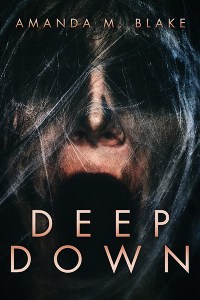
It was my hope to publish DEEP DOWN, DRIFT, and BLUEBIRDS (T3). I managed to accomplish two out of three. BLUEBIRDS (T3) publication has been pushed out to next month, because I haven’t even gotten to the professional and beta edits. It’s disappointing, but I had a few things interrupt my big writing block from September to now, so that pushed me into this month. I’m still prolific, just not as fast as my internal book clock wants me to be. I’m not even kidding about that. After about a month of my writing pace, I’m ready to be done, which doesn’t really work for the longer novels. DEEP DOWN and DRIFT were so satisfying because I completed both in roughly three weeks each, but that was 2019, so alas.
Too bad I didn’t have a short book on the docket in 2020. From mid-September to mid-January (which I’m counting as part of 2020, because it makes things less complicated for my goals), I wrote CROOKED HOUSE (T5), finished it halfway through NaNoWriMo, started UNDEAD ANONYMOUS, and finished that last Sunday.
CROOKED HOUSE (T5) (fairy tale remix): 158,634 words UNDEAD ANONYMOUS (horror standalone): 151,749 words Total: 310,383 words
For the Thorns series, CROOKED HOUSE is actually short, to contrast with PUPPETEER in 2019, which was obscenely long at over 220K words. But hey, I’m a big believer in stories being as long as they need to be, and refuse to break up a novel into two parts for length rather than story reasons unless someone else requires it, and in self-publishing, I make my own rules. As long as it’s over 120K words after edits, it should be fine on a shelf.
UNDEAD ANONYMOUS’s length is a bit unfortunate, because I’d hoped that I could use it to try to break into traditional publishing. Even after extensive edits, I think it’ll be too long for a debut novel, especially in horror. However, I’ll still give it a try once I do my edits, and if it doesn’t go anywhere, I’ll just move on to the next appropriate trunk novel.
I didn’t meet my song-writing goal of an average of a song per month, but that’s all right. The few I wrote hit all the relevant points and expressed my feelings about this year of not a lot happening where I am but a hell of a lot happening elsewhere. I also didn’t meet my horror movie review goal. Like 2019, my schedule was just too tight.
I lost a significant amount of weight again, although it was harder this time, so I don’t know how much more I’ll be able to lose without making some significant sacrifices on everyday food, which is the hard part for me because it’s also the least sustainable change. But unlike last year, it finally made a dent in my wardrobe, which was FUCKING AMAZING, although my body isn’t the same as it was the last time I was this weight. In addition, all my blood test numbers were also FUCKING AMAZING, which means my doctor recommended that we try halving some of my medication, which was the primary goal, so GOAL MET.
Yes, I’m yelling, but I’ve devoted a giant chunk of my time when I’m not writing to aerobic exercising for my heart health, so seeing some objective success in my results warrants excitement on my part. I’m hoping that the halving of my prescriptions proves to be justified in my next set of blood tests and that maybe I can get rid of some of them altogether. I’m hoping to lose another chunk of weight as well, but like I said, that might be more difficult this year, and the percentage of weight loss I’ve had is already higher than average for sustainable loss, so believe it or not, that doesn’t bode well. The science of body weight is a far more complicated thing than we’d like to believe, which is why I try to be careful with weight goals. Sometimes, no matter what you want, you have to be realistic. Which bleeds into my next point.
I pushed all the way through 2020, burning myself out multiple times along the way, with the promise that I would be easier on myself in 2021. Which is where we are now.
I haven’t set up a 2021 writing schedule. Other than fulfilling last year’s goal of putting out BLUEBIRDS, I’m not planning on self-publishing anything unless I find myself craving a good round of edits instead of another writing project and the edits go better than planned and I can get something in to my editors. I haven’t blocked out my writing and editing like I did for the last two years. I’m not holding myself accountable for anything.
2021 is going to be the year when I let myself rest. That doesn’t mean I won’t work, but I’m going to allow myself more substantial breaks between work. I work because I like to do it, because I need the mental stimulation of creativity. Starting on a project and not letting up until I’m finished is just part of the process, but if I need to take a month off afterward, that’s what I’m going to do. If I want to take a few weeks off to reacquaint myself with the piano or teach myself calligraphy or return to sketching or jewelry-making, then I’ll do it. I don’t like being bored, and I love creating. But sometimes a girl also just needs to binge-watch something that’s more than a limited series during the three days she can’t exercise because she’s sloughing, and I’m super behind on my watch list.
Among the more concrete plans I do have for 2021, there’s a DRACULA retelling, because I’ve wanted to do one since I first read the illustrated and highly abridged version in fourth grade. I devoured versions of the story ever since, and inspiration finally hit for a concept I think will be tremendous fun. I also have a rewrite of YA near-future dystopia WAR HOUSE, which I wrote for NaNoWriMo back in…gosh, years ago, but that needs some serious alterations to work. I also have a list of assorted short stories and novellas (primarily horror) to choose from that I hope will be less stressful on me than my usual long-form writing. Even if they end up novel-length, they should still stay relatively short. That might give me some additional fodder for breaking into traditional publishing–or more fodder for my self-publishing backlist. I’m aiming to be a hybrid author, because after this year, I’m quite comfortable with self-publishing, but it’s expensive as hell, and my accountant keeps giving me side-eye.
For all five of you following the Thorns series, PUPPETEER (T4) and CROOKED HOUSE (T5) are written, but I’ll probably only give them one intensive edit each this year instead of my preparatory double edit, and I won’t publish PUPPETEER until next year. I also intend to take a break from writing the Thorns series by postponing OTHERWORLD (T6) until next year as well so I can get some more standalones under my belt. To be honest, I have pieces of that story in my head but no real plot. That isn’t unusual. I’m hoping to have a eureka moment at some point.
I’ll admit, I didn’t have much hope for this year, and everything that’s happened since has done nothing to change that hopelessness. I fear everything is going to blow up. I fear my brain is a fragile thing that’s going to shatter at any moment, and that I’ve teetered on the edge a few times and almost want myself to break to give myself permission to just fucking SLEEP for a month.
Writing is one of the few things I can control and one of the few things I’m actually good at, so I cling to what I can. I make the worlds in which I can escape. That’s no mean feat.
Also, I mentioned that I’m always behind on things. I finally jumped on a few social media trains–which are already square, but I’m enjoying them anyway. You can find me now on Instagram, and third time’s the charm on Twitter, where I finally feel I’m connecting with a community.
My vanity shelf is growing apace. I’m quite pleased with it.
I’ve said before that I conceived of DEEP DOWN in a bad place, and it’s a bad place that I’ve returned to a lot over the last four years, but during this current plague, I’m returning far more often. All I want to do is hide in my closet with the lights off and never come out. It’s a place of despair, but it’s somewhere I can’t get sick, a place where nothing can hurt me except myself–and I’m all too used to that.
Social distancing/quarantine appeals to an alarming tendency inside of me toward agoraphobia. On a daily basis, I once made myself leave the house, get in my death trap (aka, the car), to be around people, which is good even for this extreme introvert. I was a productive member of society, because I had to be. I am compelled to be useful, because I don’t have a lot else that I can do for this world.
But now I’m afraid of people more than usual (I suffer from a fairly mild paranoia that has only slipped from neurotic to psychotic once, and I’d rather never relive that experience), because everyone’s a potential carrier, and I’m not sure under what circumstances I would feel safe entering my death trap just to walk into a few more on a regular basis. I’m concerned about whether I’ll ever trust the end of this nightmare. I was lucky enough to keep my dayjob, because I can telecommute and it’s a 24/7 business even during a pandemic. Would that accommodation continue indefinitely? Or would I just accept my fate as a red shirt, like I always do, accept the risk because I’m cosmic cannon fodder and know it?
I’m scared, because I have things I still want to do, things I want to finish, and I don’t trust that I will make it out of this. Because I wouldn’t be that lucky.
So this is a perfect time to be preparing DEEP DOWN, my utterly bleak apocalypse novel, for publication. I submerge myself in that place on purpose every day to make it better. In a way, it’s wallowing. In a way, it’s therapeutic. Because I’m in that place all day and all night now, I can recognize the feelings that the story invokes, appreciate that I achieved such a reflective translation into fiction, because it doesn’t feel enough like fiction to me while I’m in it.
I’ve been listening to THE RING and SILENT HILL soundtracks on repeat all during the editing/proofreading process.
I’m insanely pleased with DEEP DOWN on so many levels. I’m proud that I managed to write a short novel when I didn’t think I was capable of it, worried that I was, in fact, too wordy. I’m proud that I tried a new style of writing. It’s completely mine, of course, not a mimicry–I still recognize my narrative voice, no question. But I’m a fan of form following function, and DEEP DOWN was a different kind of novel than I’d written before, different feel, so the form of it needed to change. As terrible and unrelenting as the subject matter is, I’m proud that I faced it without compromise. I’m a coward at heart. Writing is as close as I get to brave, even if it’s not an uplifting outcome.
It’s not a contagion horror story, but it’s an apocalypse, and perhaps this isn’t the right moment, if anyone’s listening or watching or interested. But DEEP DOWN is coming soon, hopefully within the next week. You don’t have to enter that world now. You can save it for when the lion’s out of the room again. I still have trouble making that distinction.
A man and his dog enter a cave to die.
Enter with them, but I make no bones about what kind of story this is. Know where you’re going, and enter freely. It’s good–or at least I think it is–but it is what it is. I can only think of one person in my vast circle of family, friends, and acquaintances (I exaggerate) who wants or would want to read it. Do as you will.
I think ghost stories are particularly difficult to make scary. They’re generally filed under the umbrella of horror monsters, but they’re more often tragic than frightening. That’s why there are so many ghost horror movies that depend on the jump scare—because that’s sometimes the only kinds of scares they offer. Let’s face it – the more you get to know them, the more lost spirits seem sad rather than scary (SIXTH SENSE kind of covers this phenomenon, and I’d consider SIXTH SENSE one of the better ghost horror movies). I think this is the reason a lot of movie hauntings have transitioned from the human spirits to the demonic. Ghost stories are extremely difficult to do well, especially when trying to find the right balance of tragedy and horror.
THE AWAKENING is one of my favorite ghost stories, but it is, without question, a better tragedy than it is a horror movie. I would say the closest comparison to the movie in tone, palette, and time period is THE OTHERS, which is also one of the better ghost horror movies. However, while THE AWAKENING has a few jump scares, it’s really shot as a drama rather than a horror movie most of the way through, which is good, because aside from some good tension here and there, it functions much better as a supernatural period drama.
I love the opening to THE AWAKENING. It begins with a quote from the main character’s book challenging the spiritualism movement prevalent at the beginning of the 20th by placing it in historical context. Between the Spanish flu and World War I, so many had lost people close to them under terrible circumstances. In the midst of survivor’s guilt, lack of closure, and an excess of grief. Florence Cathcart rightly points out, “This is a time for ghosts.”
The opening transitions into a classic seance, with the supernatural element rising higher and higher…only for Florence to interrupt the proceedings by exposing the spiritualist charlatans for what they are. Instead of being outraged at being taken advantage of, a woman who lost her young daughter – presumably to influenza – slaps Florence and asks whether she has any children. “No, of course you haven’t,” she replies with disdain, because a woman with children would know why a false dream was better than nothing. She questions whether Florence’s grief for the young soldier whose photograph she brought to the seance was even real. But as the mother leaves, we see Florence—played by the wonderful Rebecca Hall with arch strength and vulnerability—deflate. Her commanding, energetic presence dissipates. She appears weighed down, barely able to take another step.
In her own words, “This is a time for ghosts.” And it’s clear within the first fifteen minutes that, though Florence devotes herself to disproving hauntings and exposing frauds, she’s desperately seeking ghosts of her own. It gives her no pleasure at all to debunk the supernatural. Quite the contrary.
This entire movie offers some of the best depictions of depression and grief from a number of the characters that I think I’ve ever seen in a movie. The way it weighs you down and you sometimes don’t even want to move. The way it makes people lash out. The way you have to put on a mask, the way you lie to others and yourself, the way it takes over your life and cycles through your thoughts, the guilt, hopelessness, and self-destruction it can cause.
From the wonderful opening, AWAKENING moves into the main plot, with Robert Mallory—played by Dominic West as an attractive but caustic ex-soldier—an instructor from a boy’s boarding school, visiting Cathcart and requesting her help to put to rest rumors of a ghost boy haunting the school, after the death of one of the students. Usually the man would be the skeptic and the woman the believer, but like Mulder and Scully, AWAKENING switches that expectation on its head. Mallory believes in ghosts, but he’s also a firm realist, and he only wants the truth and to keep the kids safe, and the prim but earnest school matron, Maud, is a devotee of Cathcart’s work and recommended her.
At first, Cathcart is reluctant to engage in another investigation, weary as she is with her depression and needing a break, but Mallory throws her own words from her book back into her face, about how she was a fearful child and cannot abide children being made to live in fear – another point that resonates through the movie.
The boys’ school to which Mallory brings Florence is appropriately gothic, a looming, gray structure in the middle of nowhere, gloomy and forbidding, with energetic but somewhat melancholy students and a severe administration. With her, Florence brings the various accoutrements of her trade—a delightful look into the early twentieth century versions of our modern ghost-hunting gizmos, with all the scientific rigor of pre-WWII CSI. The dark manor at night provides some decent spookiness, but it’s pretty clear with the first tripped bell wire and footprints on the floor that the ghost boy traversing through the halls at that late hour is not so dead, and the tension dissipates…until something’s there that shouldn’t be.
And thus begins the slow unraveling of Ms. Cathcart. The most held-together characters of the movie lose their masks, exposing not ghosts but shells, broken survivors of any number of tragedies who must learn how to live with the ghosts of the people who passed on without them, and beyond the fear of mortality so keenly felt at a time that wrought the need for ghosts.
To be honest, the supernatural elements are sometimes the worst parts of the movie – the swirly face ghost is actually the worst effect, which is a shame, because that’s one of the few things you’re supposed to be afraid of.
The human elements – shattering perceptions and confronting fears – are by far the most interesting parts. I feel like I see something new every time I watch it. It’s a beautiful film and a beautiful, tragic story, and I do encourage you to give it a try on that merit rather than the horror.
I wrote this on the same day as “Music Box” and was strongly influenced by Anthony Bourdain’s death for both.
“Sleepwalker” feels closer to the soft alt sound of Svrcina and Fleurie to me, but harsh it a little and you get Christina Perri, I think.
SLEEPWALKER
Give you all my time.
Give you heart and soul
My attention on the line
Every part and every whole
My last stitch of spirit
Until tapestry unwinds
Threads fringe and split
Wrap into the ties that bind
Chorus:
Running in place, sinking under high tide
Masks on my face, I’m living inside
Making up stories and worlds in my head
Because the world’s running wild and hard
And I’d rather be in my world instead
I’m never present, always away
Go where I’m sent, do whatever they say
They call me sleepwalker, the day’s living dead
Because the world’s running wild and hard
And I’d rather be in my world instead.
Go to bed, sleep awake
Mornings wake up weary
I offer the devil my soul to take
But pay the piper too dearly.
Waiting between work
Life’s a series of lines
Living dark to dark
Time’s slow but life flies.
Chorus
Bridge:
We fill ourselves empty, health ourselves sick
Tear out foundations, brick by dead brick
Swear on our tomes we’ve not even read
Unable to speak until we have bled.
We give up our freedom, small sacrifice
We give up our virtues for taste of a vice
Running around without any heads
We lie on the train tracks, making our beds.
I’ve had a few horror movie reviews I’ve wanted to do, and things are slowly happening to make Nocturne and Thorns happen, but I’m in the process of fighting my diet and my attachment to caffeine and wondering why all the things have to tire me out so much, even though I’m getting more sleep than ever.
I’m also fighting my innate phobia of apocalypses on the regular, because it’s been seeming less irrational lately. Makes a person wonder why she’s fighting at all. The urge to duck and cover is overwhelming, but until I make that decision, I still have to go to work and be productive with my writing projects as though I’ll actually have a chance to write the next six or seven Thorns novels.
I hate feeling like this. I hate that people have put me in a position to feel like this, where hope’s a weak and failing creature. And the ones supposed to protect us from this are the ones getting us into the mess. May the rest of your days be filled with crazy ants and honey, you smug bastards.
When I saw that David Sandberg’s amazing short was going to be made into a full-length movie, I was wary, especially since the trailers underwhelmed. But horror trailers often do, and the same director of the short would direct the full-length. I heard mixed reviews from friends, but as easy an audience as I am, I thought I’d give it a try.
I’ll start out by saying that the original short film is a hundred times better. WATCH IT. It accomplishes more in two minutes and thirty seconds than the full-length accomplishes in eighty minutes.
The film shares a lot of beats with another short-to-full-length movie that wasn’t as good as I wanted it to be—MAMA (which I’ve grown to like much better as magical realism rather than horror)—but it tries more to compare itself to THE BABADOOK (also short-to-full-length), with its dark, Nosferatu-fingered nemesis and mental illness analogies. However, everywhere BABADOOK succeeds, LIGHTS OUT sadly fails, suffering all the more from the comparison. Maria Bello and especially Billy Burke were poorly used in a movie with such uncertain footing and logic potholes. All actors did their best, but the material proved too shallow and on-the-nose for them to do much.
Let’s begin with the logic potholes: If there’s one thing that writers of magic learn, it’s that you can make up your rules, but there still have to be rules. There has to be an internal logic to the supernatural, or else you’re cheating. There were plenty of problems with the logic to Diana’s character. If she was a manifestation of depression, why introduce us to her life prior to the mental institution to challenge that? SPOILER Given that Diana’s father killing himself didn’t remove Diana’s influence, was it the fact she was a ghost that allowed it to work this time? Which makes no sense whatsoever, since she’s dead and even more likely to go on attaching to people? And if she wasn’t dead and just transfigured, that still doesn’t explain why Maria Bello’s Sophie could shoot herself and destroy Diana in the process when it didn’t work for Diana’s father.
The movie had no clue as to whether Diana was a physical being who couldn’t exist in the light, which hurt her, and could move fast enough to avoid it or whether she was an apparition who disappeared in the light. She was one, then the other, and it just didn’t work. Figure out your rules, people, and work from there.
The best scene in the movie was the opening one, which most closely resembled the original short, and of course it borrowed the original actress, which was a nice nod, plus Billy Burke. After his unfortunate encounter with Diana, the movie deteriorates from there.
We’re introduced to supposedly-wayward-girl Becca and her boy-toy-who-wants-more boyfriend Lucas, plus young-boy-taking-on-too-much-as-child-of-mentally-ill-mother Martin. We don’t get much more than those hyphenations, unfortunately, and while Teresa Palmer tries so hard to play disaffected, troubled teen sister, Jessica Chastain did it much better as an adult in MAMA. The movie rests on Palmer’s back, but that’s not quite sound enough a foundation.
Which brings us to the mental illness analogy, where LIGHTS OUT tries to make lightning strike twice after the resounding success of THE BABADOOK. In both cases, the comparison is at time heavy-handed, but the emotional resonance of THE BABADOOK makes it work whether the analogy is obvious or subtle. LIGHTS OUT works best when the analogy is casual, but the areas where it’s heavy-handed (“Have you been taking your meds?”—words every single person suffering with mental illness absolutely hates) establish the horror mythology as a direct comparison. That left the movie open to explore potentially amazing horror/mental illness analogies, but it made huge missteps and came to outright terrible conclusions.
There were suggestions that our wayward-girl Becca saw and suffered under Diana in her youth, the way that children of people with mental illness can be tormented by their parent’s disease. And it can lead to children of those with mental illness abandoning their parents out of resentment and for their own safety. But while THE BABADOOK aptly made a comparison with depression that shifts into the psychotic, LIGHTS OUT suggests that Sophie’s bipolar or depression led to SPOILER the death of her husbands, which is troubling on its own, especially as a parenthetical. But when Sophie kills herself in order to save her children from Diana, that was downright irresponsible, suggesting that the only way to protect oneself and one’s loved ones from the ravages of mental illness is truly suicide—the way many people suffering already feel. And as I mentioned above, that logic doesn’t even work from the supernatural rules perspective.
There were several ways this movie would have worked much better from a storytelling angle that wouldn’t have been so effing insulting to people with mental illness, and they would have solved the internal logic issues as well. Basically, all Sandberg would have had to do was choose between whether Diana was a human oddity turned haunt or whether she was never human to begin with—angles that allowed MAMA and THE BABADOOK to work where LIGHTS OUT didn’t.
i. Diana as demonic/nonhuman entity: If we hadn’t focused so much on what Diana is and where she came from, she could have simply been a mysterious, malevolent haunt. The only explanation needed would have been that she was there and how to deal with her rather than inadequately trying to explain and humanize her.
Instead of being another inmate at the psych ward who attached to Sophie, with her own backstory and reason for being there, Diana could have just been something that appeared in Sophie’s life before or during the stay at the ward, a parasite that latched onto a tasty host in an ideal hunting ground. The doctors could have believed her to be a dissociative identity or hallucination, but a picture of Sophie at the time could have shown apparitions (i.e. the ghost lady in INSIDIOUS, the shine in THE SIXTH SENSE). And this haunting follows Sophie throughout her life but weakens from medication use. Her presence in Sophie’s house would have to feel less human (with less human motivations), less visible, as with THE BABADOOK.
Depression can truly feel like a demon on your back, like a form of possession. If LIGHTS OUT had shown that aspect of it the way that THE BABADOOK did, it might have worked better.
ii. Diana as a malevolent/pathetic human ghost: This is something that MAMA did well—and oddly enough, so did the American remake of THE RING. The investigation into Diana’s past with Sophie could have led to more concrete answers, more of a sense of Diana’s humanity—perhaps giving more than a passing nod to Diana’s father and her effect on other people in her life. In THE RING, we saw how living Samara poisoned everything around her, right down to the island she lived on. The viewer was deeply unsettled both by both the girl’s effect and by the antagonism toward a defenseless child. Diana’s presence would have to feel more human, with more human motivations.
One of the aspects of MAMA that sticks with me is that MAMA really was a good mother to those children while they were in her care. The children showed love and affection with her, with the smallest girl happily playing with her.
In LIGHTS OUT, instead of the demon possession of depression, we could have seen what Diana did for Sophie. Once you’re in the midst of a deep depressive episode, there can be a kind of comfort in it even while it rips you apart. It’s familiar. It’s dark and looming and embraces you in its cocoon. Artists have captured this tension with terrifying demon-like creatures offering dark comfort that the world does not—because your depression understands you, while the rest of the world just wants you to go away or spontaneously get better. (Have a listen to Delain’s “Chrysalis – The Last Breath” for a good exmaple of this.) It’s best described by that quote: “I used to wrestle with my inner demons. Now we just snuggle.”
Credit unknown
Sophie continually asserts through LIGHTS OUT that Diana doesn’t know any better, that she’s just lonely. We could have seen a bit more of that dynamic, the symbiotic relationship that Diana could have had with Sophie rather than just the parasitic. We could have seen Diana’s face; we could have had more pity for her.
There are two other ways I think LIGHTS OUT could have been improved that have nothing to do with the problematic aspects of Diana.
i. Mental illness is often passed down genetically. There was a suggestion that Becca and Martin’s experience of Diana could have been their own suffering rather than their mother’s. But given that Becca didn’t have a therapist or take pills yet managed to escape from Diana, I feel like Sandberg missed an opportunity, especially since Becca would have been a perfect age for mental illness to really proceed screwing up her life. Wayward she might have been, but she seemed to know her own mind and enjoy herself in her little room above the tattoo parlor.
ii. In my opinion, the solution to the movie giving such an irresponsible message about SPOILER suicide is not letting Diana die with the gunshot. She’s an undead parasite. When her host dies, she has to find another, but she won’t die. If we wanted to connect it to the last suggestion, we could have Diana latch onto Becca or Martin, not to destroy them but to wear them down like she did Sophie.
In conclusion: LIGHTS OUT disappoints on many levels because it doesn’t commit to one idea or another, and the ones it tries to run with both don’t make sense and are incredibly troubling, and not in a horror movie way. The poor script and unfocused vision make it impossible for me to recommend.
Instead, check out MAMA (as magical realism rather than horror—del Toro tends toward MR as a genre, but the US doesn’t really acknowledge MR as a separate genre from fantasy or horror and often promotes it incorrectly as horror) or THE BABADOOK for movies far more satisfying, consistent, and intense.
I was listening to Josh Groban’s recent album Stages, and “Finishing the Hat” came on – from Sundays in the Park with George, a Sondheim musical inspired by artist Georges Seurat painting “A Sunday Afternoon on the Island of La Grande Jatte.”
It’s a painful song about the woman George loves leaving him, but he still has his work that needs to be done, finishing painting the hat on the woman. The lyrics to the song are marvelous, detailing a different way of looking at the world, as negative space and windows, where the artist grants as much importance to the hat as the figure wearing it.
Finishing the hat
How you have to finish the hat
How you watch the rest of the world
From a window
While you finish the hat
Writers, and I assume other artists as well, are dissociative by nature. I detach from the world and slip into another, wear the skins of many characters, experience an existence slightly different from my own while also living in the one I’m in. And whenever I’m working on dayjob or cooking or other responsibilities, part of me is always somewhere else, always needing more than where I am or what I’m doing. I can be absentminded, selectively blind, deaf, mute, and all because I’m not entirely here. At the recommendation of a therapist, I tried mindfulness once. I found it lacking on a therapeutic level. That little part of me cannot remain tethered. And why should it? What would keep me here?
Entering the world of the hat
Reaching through the world of the hat
Like a window
Back to this one from that
I spend all day mentalizing the scene, trying different phrases, different angles, different dialogue, playing it out over and over and over until it feels solid, then finding another to work on. I get home and I’m usually too mentally/emotionally exhausted to write, which hurts all the more after all the preparation and build-up and genuine need to get these bottlenecking ideas out of my head and into written words where they belong. My real work, this work, and I can barely make headway like I used to when this work was all I did (and when I made little to no money doing it).
Dayjob consumes my time, but my writing consumes my life. I’m far more comfortable dissociating when I’m deep in depression than I am bearing reality, but sometimes I realize how much of my life is spent watching the world from a window while I finish the story. And there’s always another story. Too many stories and never enough time. Worse, never enough energy. I wish coffee were the potion that I wanted it to be. It keeps my eyes open, nothing more. Sometimes my heart races, but that’s decidedly unpleasant.
And when the woman that you wanted goes
You can say to yourself, well, I give what I give
But the woman who won’t wait for you knows
That however you live
There’s a part of you always standing by
Mapping out the sky
There is always a part of me discontent with the world I’m in, always wanting a world that can only be inside my head or on a page. And in having to make a choice between ever having a deeper relationship with a person or writing, I suppose I’ve married myself to the work, because I can only ever successfully do one or the other, and the stories aren’t going away, while no person’s exactly clamoring for my time. I could never give everything I needed to give to a person, despite loneliness, despite human need.
Perhaps the reason I’ve never felt like a human being was because I’m a writer instead. And are we merely ghosts?


 I’ve said before that I conceived of DEEP DOWN in a bad place, and it’s a bad place that I’ve returned to a lot over the last four years, but during this current plague, I’m returning far more often. All I want to do is hide in my closet with the lights off and never come out. It’s a place of despair, but it’s somewhere I can’t get sick, a place where nothing can hurt me except myself–and I’m all too used to that.


 When I saw that David Sandberg’s amazing short was going to be made into a full-length movie, I was wary, especially since the trailers underwhelmed. But horror trailers often do, and the same director of the short would direct the full-length. I heard mixed reviews from friends, but as easy an audience as I am, I thought I’d give it a try.


 Amanda M. Blake