REVIEW: Would You Rather

Tags

, , , , , , , , , ,

Would-You-Rather-354x525I’ve been wanting to write a review about this movie for a while, but I just didn’t have anything substantive to say about it, other than that it pushed a lot of good buttons. I’m a fan of locked-room horror, because it feels almost like a play. It evokes intimacy, then as things get more intense, claustrophobia. I also have a soft spot for adolescent games turned dark, which is why I liked TRUTH OR DIE and will probably love TRUTH OR DARE when it comes out next month.

The cast is also fantastic and varied, with Brittany Snow, horror alum Jeffrey Combs, Robin Lord Taylor, and Enver Gjokaj, plus a number of other familiar faces. Really, in dinner theater, there’s nothing better than bringing together an amazing cast, because even the small parts are given greater intensity.

(Side note: It also has a wonderful, subtle opening credit sequence that I love. Reminds me of the opening credits of MADHOUSE in terms of beauty and CABIN FEVER in terms of slow-burn subtlety—which was about the only thing in the original CABIN FEVER that was slow-burn subtle, by the way.)

On its surface, WOULD YOU RATHER is a simple sadistic tale in a post-SAW gorescape of bringing a group of flawed people into a space and making them torture each other. For WOULD YOU RATHER, though, a smaller budget makes the situations seem much more realistic in scope and execution and less of a spectacle. As gore goes, it’s minimal, playing off implication and imagination rather than showing the blood. Not that it goes easy on you.

The premise: Wealthy patron invites down-on-their-luck individuals for dinner for a chance to win a substantial amount of money. The exact amount is never specified, but it’s suggested that it will take care of all immediate debt and whatever else an individual needs to get back on their feet, and then some.

It doesn’t go well.

The reason I decided to finally write a review is that this small, scrappy little gem takes on a disturbingly relevant tone these days.

Haves versus have nots is an old conflict. Ever since we’ve had an economy, we’ve had wealth disparity and its resultant tension. But as wealth disparity grows and the poorer get blamed for it, that tension’s only going to get worse. As our present administrations continue to cut safety nets and entitlements, as health care costs soar, as student loans continue to burden the generations entering adulthood, as corporations continue to blame millennials for their own lack of wealth that makes the increasingly more expensive markers of adulthood out of reach, as affordable housing and decent food and other staples rise in price against stagnant wages…the tensions continue to escalate. Between the haves and have nots, of course, but also between each subsection of the have nots, because it’s an insidious strategy to pit the have nots against each other in the blame game so they don’t have enough energy to combat the haves. (See: THE HUNGER GAMES. Also: A BUG’S LIFE, which is unexpectedly political.)

And here we have a wealthy, white psychopath and his lazy, spoiled brat rapist son bringing debt-ridden people together to torture each other for their own entertainment…because they know they can. At the very beginning, we see the signs. In the doctor’s office where he courts Snow’s character to the dinner party, he’s eating either peanuts or sunflower seeds on the couch and discarding the shells on the cushion next to him. Not in a bowl, not in an ashtray, not in a tissue, not in a trashcan. He’s in a doctor’s office, discarding his trash on the furniture without any regard to the impact of his actions. We see where he’s put himself in the hierarchy.

The host laughs as he convinces a vegetarian to eat meat for ten thousand dollars. He laughs as he convinces a recovering alcoholic to drink a bottle of scotch for fifty thousand. In a world where one major illness can wipe out everything, where mental and chronic illness can make functioning to production standards impossible, where addicts are entirely blamed for their addictions when one moment of weakness shouldn’t lead to a lifetime of damnation just because of an exploited trick of brain chemistry, where being poor is so goddamn expensive while rich people get free things handed to them on the platter as though they’re lucky cats…blaming have nots for their own circumstances has become more unconscionable, yet the rhetoric seems to have only increased.

(In the interest of full disclosure, I’m a white millennial with the additional privilege of parental wealth. I’m still angry on behalf of friends who get shit on. And frankly, on behalf of total strangers, too. This doesn’t have to be personal and I don’t have to have stakes in the game for me to care.)

But here we have a self-made man who sees a table full of losers, who feels he’s completely entitled to do anything he wants, because he has the money and they want it and are willing to do anything for it. All they have to do is sacrifice everything. And even then, only the winner gets it. All of them will sacrifice everything, but the winner takes all. So you see, friends, if you just work harder… Never mind that luck plays a significant role in the game as well.

Suffice it to say, the movie feels far more allegorical than the first dozen times I saw it. Even the deaths and how each player relates to each other seems more significant. For instance, it doesn’t seem coincidental that the pretty blonde protagonist gets as far as she does.

Don’t get me wrong. She’s a driven young woman. And though she’s hardly the physically strongest person there, quite slight in stature in comparison with everyone but Sasha Grey’s character, the Lambrick Foundation chose her because she’s fighting for someone else, and that sometimes makes a bigger difference than fighting for yourself. Brittany Snow does a fantastic job leading the ensemble with her vulnerability, and it’s worth watching her reach the point where she changes from a scared, passive victim to someone determined to survive.

But it’s still a stunning lesson in privilege, presided over by a man with a Draco Malfoy-like son who thinks he’s superior because he was born into wealth by no effort of his own and, like his father, is bailed out of his own criminal activity, excused for it supposedly because of the trauma of his mother’s death. Yet somehow, he deserves his wealth more, and everyone else in that room deserves to sing for their supper until they die.

It’s a blistering indictment. It really is. When a dinner party turned slaughterhouse is a rich man’s solution for who deserves his charity (which, when it has strings, isn’t charity at all), when compassion doesn’t even enter the conversation, when dire straits are viewed as just deserts and help something you must earn at the cost of your life or someone else’s, something is seriously wrong. The one percent may not be putting people through such individualized, intimate torture, but it is actually a matter of life and death. People are dying. And on their potter’s field headstones, it might as well read: Should have bootstrapped harder.

In that light, easily the most chilling line: “You know, you agreed to be here. You’re basically asking my family for a handout. The least you could do, pig, is show a little fucking respect.”

Beyond the social horror, though, the low-budget torture goes back to the classics. Really, there’s no need for genius, Inquisition-level engineering. The standards are standards for a reason, and the impact isn’t lower because of the utter, beautiful, sadistic simplicity of it all. As the players submit to the deadly game in their own desperation and will to survive, you’ll be asked the same questions. “Would you rather?” stripped down is just “Under the right circumstances, what are you willing to do?” As countless unethical social experiments have shown, we’ll always be horrified by the answer.

Another blog to check out

Tags

, , , , ,

496265_22437560bycristinaI’m in the process of completing two new long-form horror movie reviews, and if I’m lucky, I’ll get some more written during the week.

I have a great love of most forms of media and multiple genres. I consume so much music. I watch so much genre film and TV (granted, usually years behind everyone else). I’ve been a voracious reader all my life. But I’ve only ever felt qualified to write about horror movies. That’s a niche where I feel comfortable, where I have enough of a foundation to explain what works and what doesn’t, and I’ve read and written enough horror that I like trying to figure out what fixes could have improved a weaker script. I feel comfortable having opinions that might differ from the rest of the critics, and I’m usually pretty good at explaining why.

I think the fact that I can find the good even in the mediocre speaks to a real love of horror, and I sometimes feel like you have to love something to properly criticize it, because then you know any negative criticism isn’t an indictment or dismissal of the entire genre, or even of the movie itself.

Outside of horror movies, though, I like to joke that I have no taste. I just like what I like, and there’s no shame in that.

And I almost always add that my brother has far better taste than I do. He consumes even more media than me and has many more thoughts on the matter, with a greater critical understanding of a broader variety of entertainment. I do horror, and I love talking with him about horror movies, because it’s one of the few things where I feel I come from a place of authority. When he was younger, he used to be terrified of horror, but I slowly helped introduce him back to it when he grew up and our relationship was changing from that between two children to two adults. So we kind of built a new relationship around that.

But he does everything, and I love to read his takes on the rest of popular culture and critical response. We grew up on geek culture, and we’re both unapologetic nerds. We just went in slightly different directions with it.

Do check him out, and start with his ranking of the movies of Stephen Spielberg HERE.

Review: THE LAZARUS EFFECT

Tags

, , , , ,

The_Lazarus_Effect_(2015_film)_posterTHE LAZARUS EFFECT is a regular background movie for me. I’ll turn it on a lot when I’m working on something else and just need something to listen to. I know it well enough to visualize the movie as it goes without actually having to watch it, and it’s slick enough to grab my attention now and then. But like LIGHTS OUT, it’s a slick horror mess that suffers from storytelling mistakes rather than talent.

I very much enjoy seeing Olivia Wilde in a role outside HOUSE, and I appreciated being introduced to Sarah Bolger, who reminds me so much of Alyson Hannigan–her face is different, but her expressions, gestures, and timing are eerily similar, though Bolger is obviously drawn to darker stories. The story didn’t do much for the usually charismatic Evan Peters or Donald Glover, though, and leading man Mark Duplass doesn’t quite manage to dig himself out of blandness. However, as I said, most of the sins of the movie have nothing to do with the actors, so although Wilde and Bolger elevate their roles, it’s likely the others can be forgiven for the script’s sins against them.

I keep watching this damn movie, even though it disappoints me every time. I think part of me thinks that, this time, the movie will finally progress the way it should and I’ll finally be satisfied. Or maybe I’m just trying to figure out how it could have been saved in another world.

LAZARUS EFFECT has a not-so-original premise, but it’s one that, with some work, might have yielded something truly terrifying. Certainly more terrifying than the rote scares the movie eventually succumbed to. The thing that gets me is that this movie really could have been better–it had room to stretch, it set up its unsettling questions…then forgot about those questions or didn’t follow them far enough down the rabbit hole. The cast was older, so it didn’t need to suffer the teen-bait fate. But it feels like the movie was supposed to go somewhere else, somewhere more interesting, and then some knucklehead pulled the plug on it like they did for the INVASION remake–maybe they thought Americans audiences wouldn’t get it or care. So we ended up with a moderately interesting first half and a hackneyed, lowest-common-denominator second half–although someone needs to give Wilde another reason to wear those demon eyes, because she rocks the hell out of them.

Let’s examine what LAZARUS EFFECT did well at the beginning and how the end failed it so hard.

The premise is this–two scientists and their research team are testing an experimental serum meant to kick-start neural activity after death. Reanimation, yes, but not in the zombie sense. The way Male Scientist presents it (seriously, I don’t care enough to look up his name), it’s more for recent deaths, to give hospitals longer to save someone. Basically, intended less for reanimation, more for extreme revival. Olivia Wilde, who plays Female Scientist, Zoe, works with her husband, and they are very much equal partners and equally brilliant. Sarah Bolger plays the newcomer comm student they hire to document their research and gives everyone a reason to explain what’s going on. They bring up one of the big questions when it comes to creating a serum that literally brings someone back from the dead: Namely, what happens after death?

Both scientists couch their theories in nutshell scientific terms, which I appreciated–interpreting the facts as we have them. Male Scientist believes there’s nothing afterward, that the near-death or bright light experiences by people who technically die are just euphoric hallucinations as the brain shuts down. Female Scientist, with a small gold cross hanging around her neck, hypothesizes that these hallucinations are part of the process of crossing over, that nothing ever really goes away–which bears with the first law of thermodynamics, conservation of energy, and so on. Both are valid theories (colloquial meaning of theory here) on the subject of existence after death, but Female Scientist rightly emphasizes that we just don’t know.

Then one of their experiments works, and they successfully bring a dog back to life, its cataracts disappearing but the serum not metabolizing out of his system the way it should. Instead, it keeps creating new neural connections, or something of that nature. And he’s exhibiting odd behavior, which brings up the second important question–What happens when you bring something back? (Haven’t any of these people watched BUFFY?) What are the consequences for the subject and what does that mean for the rest of us?

To summarize, here are the questions at stake: Is there life after death? And either way, what happens when you bring the dead back from wherever they’ve been?

As shown in the trailers, Zoe dies through human error, and she’s brought back, because dogs can’t discuss the philosophical ramifications of reanimation.

Where things begin to go off the rails is when she starts manifesting psychokinetic and telepathic abilities. In itself, this isn’t a problem (although that damned 10-percent-of-the-brain myth showed up and annoyed the crap out of me, because these scientists should fucking know better). It became a problem when that became the focus of the second half, eventually to the point of senselessness.

Let me break it down [HERE THERE BE SPOILERS – you can pretty much glean everything from the trailer, though]:

Between the moment of Zoe’s death and her resurrection, she experienced the worst thing she’s ever done on an endless loop for years. Set against her beliefs, it’s clear she believed she was in hell, forced to relive her greatest sin in spite of her religion telling her she’s supposed to be forgiven, that she’s done everything she needed to do. Now, we’re never told whether she was actually in hell or whether, in her brain’s last moments, she experienced time dilation, like in a dream, and perceived years of self-created hell in a matter of moments. This is not a question that needs to be resolved, but I would have appreciated it being, I don’t know, addressed? Because the implications are so much scarier than Resurrection!Carrie.

And again, Resurrection!Carrie itself isn’t a problem in and of itself, but it just kind of…happened. How did this calm, rational, kind scientist end up terrorizing and slaughtering everyone she knows? She’s got power. What’s the point of the killing? Even her feeling like she won’t have any spiritual consequences doesn’t explain it. I think if they’d wanted her power to terrorize everyone, they could have gone the post-traumatic stress route, where her powers extend from panic, distress, nightmares, fears, furies. What happens when a woman is tortured either in real hell or the hell she created for what she perceived as years?

Another idea that they teased but never really did anything with, if she were really in hell, did resurrection bring something back with her? I think giving Wilde’s character more motivation as a villain would have gone a long way toward improving the movie. And in general, going the “weird fiction” route might have done more justice to the question of heaven, hell, or nothing at all–because it’s often these challenges to conventional belief systems, including atheism, that are the most disturbing. Going “demonic hitchhiker” might have been interesting as well.

But we’ll never know, because every time I watch it, the movie still ends the same.

A Melody without a Beat

Tags

, , , , ,

pexels-photo-210661.jpeg“I don’t do poetry.”

That’s what I keep saying. Every time I try, something rings inexplicably false, juvenile. Also, I’m a wordy fucker, and short form writing is hard.

“I don’t do poetry.”

But sometimes, I have so much to say, and I’m terrible at saying things directly. I have a tendency to backpedal or start arguing from an opposite viewpoint. My mind is scrambled, and there’s not a lot I can do about it when it comes to the broken line between my mind and my tongue. The way I get around it most of the time is from the side, by writing fiction, where I can hide in my characters–who sometimes don’t agree with me, so good luck figuring out which part’s me. (Trick question: it all comes from me, because all the thought-voices in my head are me, even if they don’t agree, but damn, it gets crowded and mean in here.)

But sometimes it’s not enough to come at something sideways. Sometimes I have too many thoughts all at once, with an intensity that can’t be assuaged through long form writing. Takes too darn long, go figure. In those events, I usually have to grab the nearest writing implement and furiously write down verse. Usually free verse in those situations, sometimes with the rhythm of slam poetry. But undeniably poetry.

Not necessarily good poetry. I told you. “I don’t do poetry.”

But sometimes I need it.

I came up with the goal to write twelve songs this year because of the same theory that drives NaNoWriMo: Stop talking about writing the novel and just write the novel.

I kept telling myself I needed to figure out how to write lyrics eventually. Since I was already jotting random snippets of lyrics down like crazy lately, driven to put something down that prose couldn’t touch, I figured I might as well start figuring out how to structure a song and figure out meter and rhymes. I’m an alpha-omega writer. I start at the beginning and finish at the end. Verse seems to grow outward from a single line or couplet. It’s not natural for me. But writing novels was once unnatural to me, and now I barely have to think about story, structure, or pacing.

It may take six years, the way it took with writing novels, before the song-writing feels less amateurish to me, before it feels less insincere–which is the deepest cut, because the inspiration is usually something terribly raw in its sincerity. But already, between jotting down lyrics, making a few attempts at Christmas songs (a few of which I actually like), and the first two entries in satisfying my 2018 song-writing goals, I notice improvement. “Vultures” was my first extended metaphor, which I’m proud of. And I really reined in my wordiness. And “Anything but a Diamond” is a bit of an aromantic love song, if that makes any sense.

I’m not going to get into the music-writing yet, although I’d like to tackle that in the future. Maybe that’ll be next year’s monthly assignment. In the meantime, I’ll reacquaint myself with the piano, after our period of estrangement. I took piano for twelve years, but around Year Ten, I developed terrible performance anxiety that makes playing in public impossible, and thus discouraged me from the ivories for another twelve years. Scales and chords should be like riding a bicycle, though, and already I’m noticing how songs are arranged based on that very premise.

If I’m really ambitious, I might try indie recording. I have no delusions of fame. It would mostly be for my own edification and enjoyment. One of those ‘why the hell not? I’m thirty fucking years old and really don’t care what anyone else thinks’ things. It would be really interesting to figure out all the technology and how to do it myself (because asking for outside help is so ten years ago, and I can’t afford it).

The other impetus for learning myself songwriting is that I’ve found it comes up in my fiction more often than I expected. Sometimes, free verse just doesn’t cut it. Sometimes I must rhyme, and I can’t get away with half-assing or improvising a poem.

But I really don’t do poetry.

Resolute

Tags

, , , ,

1358111_52482665Like a lot of people with depression, end-of-year milestones can be difficult, which is why I don’t really like birthdays or New Year’s. I try to take care of myself and play things low-key during those times. The realist in me isn’t very fond of resolutions, although I can’t help but set a few goals that I usually keep to myself.

In my experience, creativity-based goals are the ones most likely to be achieved, so I don’t mind sharing them. I’m not holding myself to them, and although I get frustrated when I don’t keep to my schedule, I’m not going to beat myself up if I fall behind. It’s not helpful.

All of these are contingent on the world as we know it still being here by the end of the year. With my thanatophobia working overtime, I don’t take that as a given, and because I feel like I finally have some writing momentum over these last few months, it would just be my luck for the apocalypse to strike this year before I accomplish my life goals.

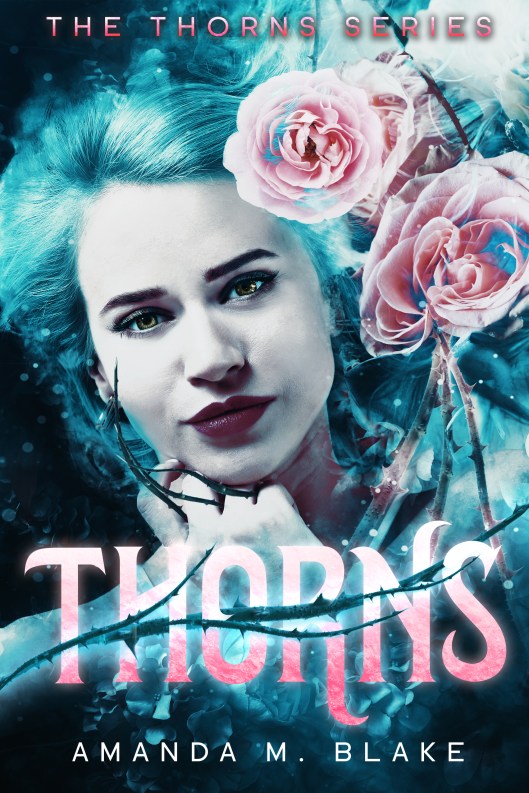
I had set an early 2018 release for THORNS, but that’s just not going to happen, because I have things I’m doing January and February. However, I hope to publish THORNS in October 2018, around the same time I published NOCTURNE in 2017. I need to do another personal edit, send it off to at least one professional editor, possibly two, then do the final personal edit and proofread.

Because I’ve had so much success writing in the company break room after work, I’m hoping to also have time during the extended editing process this Winter/Spring season to write two short horror novels that have been percolating in my head. One or both of them might be something I attempt to sell through traditional routes rather than self-publish, but I’m not sure yet. Both of them are a bit experimental for me, not least because they’d be short, but it’s not entirely unprecedented. WAR HOUSE was a short novel.

And speaking of WAR HOUSE, I’d like to rewrite that this summer. It was a good concept, but a bad plot, and if I had a bit of time to mold a better plot to fit the concept, I could still recycle a great deal of what I wrote in the original draft.

Beyond this summer, I’m not sure whether I have anything I have to write, so maybe I’ll start the fourth Thorns series novel, but I’m not holding myself to that, since NOCTURNE took so long to finalize. However, since I won’t publish ROSE RED (2) until I write PUPPETEER (4), I should probably write PUPPETEER (4) sooner rather than later.

As far as non-fiction-writing creativity goals, I’d like to write an average of one song a month. I think poetry is good for my brain, even if my brain isn’t good for poetry, and sometimes the Thorns series has required something rhyme-y. I may never do anything with my song-writing; it’s just something to try.

I’d also like to get back into jewelry-making, because I have a lot of supply inventory I’d like to eliminate. Who knows? The bug may return. And I’d also like to create a line for the Thorns series that I can sell in tandem with it. I’m partial to rose jewelry as it is. So I’m going to make an average of two necklaces per month.

Also, I set this blog up as a horror review site in addition to discussing writing and sharing my novels, but depression kept me from doing much with that. I’d like to write one full horror movie review per month.

Changing the Rhythm

Tags

, ,

1159420_96550296One of the biggest things I changed about my writing this year that made a huge difference was bringing my personal computer to work with me.

After I sign out from work, I take my computer to the break room and set it up on one of the high tables like a standing desk. I don’t plug in or connect to the wifi, so I’m not using any of their resources, just the empty space that isn’t otherwise being used. And without being able to get on the Internet or make a snack or do any of the other myriad things I distract myself with everywhere else, I literally can’t do anything else but write.

That gives me a good, dependable 700-1000 words in less than an hour before I endure traffic home (traffic is a over-stimulation issue for me—and many others, I’m sure) and start the long wind-down from the day. I also try to write another 700-1000 words at night, but my brain’s shutting down at that point, so it’s more difficult to focus. Plus, I have wifi at home, and other things I want to do, like watch mindless procedurals.

What did you change this year that made a difference in your writing?

Green Thumb

Tags

, , ,

1373911_93509324Just to be clear, I do not have a green thumb. Literally or in the sense most people use the phrase. I kept mint going pretty well back in college, could keep mini roses for a few months, and I grew snapdragons for a while, because those are hardy little buggers I’d totally grow again. I’d probably also do well with succulents. Plants require attention, and plants don’t purr, so I’m much less likely to give them said attention.

However, something happens when I’m in the middle of writing projects, when I’m devoted to the discipline of writing even when I don’t want to.

Other creative places in my brain start waking up. I stayed awake for an hour and a half because my brain wanted me to make jewelry again, and it wasn’t going to stop until it was finished designing, even though I can’t begin to work on jewelry until the new year.

In the middle of work, I’ll jot lyric snippets down on sticky notes when they pass through my head (because I learned a long time ago that if I don’t write The Thing down, it does not stay remembered). Oh yeah, I just decided one day that I wanted to try writing songs, even though poetry was never my forte and I don’t know how to write music. It might be a 2018 project to keep me from ruminating over the apocalypse. Seriously, folks, I’m making this up as I go, and it’s not like I’m certain I’ll ever share the songs with anyone.

I have a miniature notebook where I write down new story ideas, not to mention the notes I write in the margins of my big longhand notebooks or on other sticky notes. That’s the main thing. When I plant a creative tree, that tree keeps growing and putting out new branches, new leaves. It takes all my effort to prune the damn thing so I can get my projects done rather than start on a new story every other week, which would lead to a lot of chasing white rabbits and no finished works to show for it.

But that To Write list keeps getting longer, and I’m a long-form writer who can’t churn finished work out that quickly. The ideas have bottle-necked in my brain, which is a surefire way to make that brain sick. The only solution is to stop being creative, but I can’t stop being creative because it’s all I have at this point. I have my day-job, and I have this. I sacrificed a life for this. It consumes every waking moment. It’s not stopping, and it’s not getting better.

Don’t get me wrong. I’m grateful for the inspiration. But I’m only one artist, and I only have so much time in a day. Never enough time. I’ve written over 250,000 words this year, and there’s still not enough time to move the stories through fast enough for me to keep up. Tell me to get up earlier in the morning to write more, and I will find you, tie you up, and tickle you with a redheaded centipede. Discipline is not the problem. Depression occasionally is—at the moment it’s there, but not an obstacle, so I’ll get as much done as I can while it’s not.

My problem is time. Always time. I could have fifty more years, but I could also only have a week. Even if I have fifty years, would it be enough to get everything down, everything out? If it’s a week, I have so many regrets, I’d rather have something to show for it.


Nocturne Release Day!

Tags

, , , , , , , , ,

coverAppropriately, this Halloween I’m facing my terrible dread at putting out total dreck by publishing my first novel, Nocturne, a beautifully gothic YA horror novel thirteen years in the making.

I just got the proofs in from Createspace, and they’re so beautiful I could spit. Covers by Combs did exceptional work on the cover and formatting design – I can’t recommend her enough. The paperback has been approved, and they should be ready to purchase at Amazon within a week (UPDATE: They are now available at Amazon!). In the meantime, the ebook is now available.

Seventeen-year-old Callie dreams nightmares every night. Now the nightmares want to meet her.

Goodreads: http://bit.ly/2ijOtuJ
Amazon US: http://amzn.to/2xIALI0
Amazon UK: http://amzn.to/2ik21pS
Amazon Canada: http://amzn.to/2xFYt7P
Amazon Australia: http://amzn.to/2lAY1Gr
Barnes & Noble: http://bit.ly/2A4FHJ1
iBooks: http://apple.co/2zVgm3f
Kobo: http://bit.ly/2zVgiAs

Self-Publishing Addict

Tags

, ,

I’ve submitted everything to everywhere it needs to go. I’m just awaiting the paperback proof, which I expedited to hopefully get it on Oct. 31, but it may come on Nov. 1. All the moving parts are in motion. While I was initially dreading it, I think the anxiety has partially transitioned to excitement.

Aside from an embarrassing OCD loop episode during the finalization of the formatted files (how many times can you read over a blurb before losing your mind? do you really want to know?), I really like the self-publishing process. I like controlling the creative vision; I like being the boss of the process, not the employee. And seeing Nocturne in all my distribution bookshelves, all by itself, only makes me want to publish more. I’ve got the bug, y’all, and it’s dangerous.

I keep having to tell myself that while I have plenty of books in my trunk, they’re not near ready for publication yet. I need to be patient. Nocturne‘s just going to have to be by its lonesome for a while. It deserves the spotlight, though. I owe it that.