• About the Author
  • The Thorns Series
  • Short Stories/Poetry
  • Standalone Novels/Novellas
  • Content Warnings
  • Media/Reviews
  • Contact

Amanda M. Blake

~ Of fairy tales and tentacles

Amanda M. Blake

Category Archives: Movie Reviews

No one mourns the Wicked

11 Wednesday Dec 2024

Posted by amandamblake in A Few Thoughts, Movie Reviews

≈ Leave a comment

Tags

defying gravity, election, elphaba, glinda, movie, movie review, no one mourns the wicked, sexuality, the other, trans, wicked

Photo by Pixabay on Pexels.com

Just came back from seeing Wicked in theaters, and I’m pleased to say that I agree with everyone about how wonderful the adaptation from stage to screen is. I forgot to bring tissues, although I always cry for “No One Mourns the Wicked” and “Defying Gravity.” Like a lot of people, I’ve always identified with Elphaba, and like a lot of people, I also have to contend with the Glinda in me.

Chu’s movie and Erivo’s interpretation of her role brought a lot of profound, rich elements to Elphaba’s story. There’s no escaping how much Erivo brings her blackness into her depiction, although the world of Oz itself doesn’t seem to be as concerned with race or size, as shown by prominent depictions of all kinds of people, including those considered less-than, soulless, or cursed in our world (I noticed little people at the Emerald City, an albino student of African descent, and lots of gingers). Nod to Bowen Yang for “I don’t see color.” (Indeed, disability seems to be the notable exception, and that more out of general ignorance rather than a lack of effort on the part of Ozians.) Better people than I have commented on how Elphaba’s clothes and dancing were ridiculed until mimicked by a white girl, comparable to the co-opting of black culture for white consumption. And there was that beautiful moment when pink light showed Cynthia’s own skin tone when Elphaba was imagining no longer being green.

There’s also no escaping the romantic undertones in the friendship between Elphaba and Glinda, although the world of Oz seems to be welcome to various sexualities and, as shown by the universal reaction to Fiyero, runs quite bisexual and gender neutral, as shown through Shiz uniforms (reminiscent of the Next Generation Enterprise in its first episode, when a man wore a mini-skirt on board, although it eventually shifted to what we call unisex today, which considered masculine bodies and clothes a default neutral). This was by design first by Maguire, who made it more over- than undertone, then shifted more to a vibe by Schwartz; both men are gay.

Elphaba is representative of no one thing, because all of our vulnerable groups are just that: groups, communities, umbrellas. Elphaba is truly and utterly alone, though many of us in vulnerable groups still feel alone, isolated, especially if we’re not connected to a community. We can feel like there’s none like us, but we have the benefit of knowing we aren’t the only one of our kind. Elphaba does not. So she becomes the ultimate Other, for those of us alone and hated for what we are to look to and identify with.

Neither Maguire nor Schwartz were prescient; all things old are new again, and ever shall it be. Maguire grew up and through the AIDS crisis as a gay man. It’s no surprise that he referenced it in his novel through a character experiencing a debilitating sexually transmitted illness and being tended to by Elphaba alone—again alone. Schwartz’s musical came out when the gay and lesbian community was only just beginning to get traction in media representation showing that they weren’t predators and were just trying to live their lives in love. The sapphic vibe kept Elphaba and Glinda more palatable, gateway lesbian romance for the time, and left room for the equally important friendship.

What ached so deeply in my heart through “Defying Gravity” during this viewing, though, also seemed very intentional on Chu’s part. Or maybe it didn’t even need to be intentional, because it’s always there: the common enemy made of vulnerable people who are too easy to make hated, not because of what they do but because of who they are. First the Animals (capitalized to differentiate from those who do not speak), who were at one point completely integrated into the Oz world and then gradually discriminated against until they were squashed into silence and loss of their identity. The Animals didn’t do anything. The Wizard just brought his prejudices from our world into Oz, and they were convenient to blame after economic hardship (sound familiar?).

You can’t avoid the parallels Wicked makes with the world we’re in, even though they were post-production well before the election and could not have known who would win. And you can’t avoid who seems to be the Wicked Witch of the Western World now. While watching Erivo run, then take her flying stand as the citizens scream “Kill her!” and Madame Morrible says with such relish, “Her green skin is but an outward manifestorium of her twisted nature. This distortion! This repulsion! This wicked witch!,” it is impossible not to see my trans brothers and sisters in this demonization.

It is impossible not to recall the fear-mongering election ads and articles depicting trans people as repulsive and distortions, as predators, as sick, and how the other side really made no effort to combat the monstrous rhetoric, in an effort to protect themselves and because they truly don’t care. It is impossible not to recall the same viciousness and indifference, with the exact same phrases, used against gays and lesbians less than fifteen years ago (before Obama’s ‘evolving’ opinions). Yet enough gays and lesbians now were willing to throw trans people under the bus, presenting themselves as the ‘good queers,’ assuming incorrectly that they aren’t going to be the next (and present) targets. In addition, it is no coincidence that Elphaba is an analog to trans and intersex in the books, although that element wasn’t included in the musical.

All throughout “Defying Gravity,” my heart broke for my trans brothers and sisters who sit with me under our particular umbrella. As the Wizard says, “The best way to bring folks together is to give them a real good enemy.” This is what the culture war is: Distract from the real villainy that people are doing by pointing them in the direction of a small, vulnerable population and condemning what they are, often through bad-faith misunderstandings and outright lies. It’s also no coincidence, of course, that Dr. Dillamond is a literal scape-Goat.

Part of me wishes that this movie had come out before the election. Another part of me knows that enough people who have loved the musical and movie may not see Glinda in themselves or the Wizard in those they idolize. They may only see in Elphaba the rebel they want to be but not the terribly alone and exiled woman she is. Again, it seems to be no coincidence that people of all races, gender identities, and sexualities at Shiz were afraid of, hated, and bullied Elphaba, and how minorities so rarely seem to rally for each other in solidarity, out of either unconscious or fully conscious fear they’ll be targeted next. Much easier to have them scramble for scraps of approval. If anything, I felt like the fact that races, sizes, and queerness being depicted as acceptable while Animals and Elphaba were discriminated against highlighted the truly arbitrary nature of discrimination. (Which again brings to mind Star Trek, but this time the Original Series, “Let That Be Your Last Battlefield.”)

Wicked has been relevant for much longer than it has existed, and it remains all too relevant today. We’ve still been so easily manipulated into misplaced fears about incredibly vulnerable people, even though they’re far more at risk for the things we’re afraid of them for, and all too often by the people who are afraid of them in the first place.

If your heart aches like mine and brings you to tears during “Defying Gravity,” I hope you can take that pain and recognize who has become the Animals and the Wicked Witch in our world. If this would not have galvanized you into action before, let it galvanize you now. Because the culture war of distraction continues, the Animals are losing their voices with each book ban, court case, and piece of legislation, and there’s no prophesied Witch in sight.
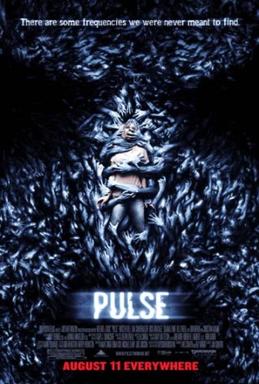
Review: PULSE

07 Sunday Mar 2021

Posted by amandamblake in Movie Reviews

≈ Leave a comment

Tags

computer virus, depression, ghost in the machine, horror, pulse, remake, review, suicide, technology

As always, spoilers ahead.

After the undeniable success of The Ring remake in American theaters, studios couldn’t get enough of Japanese and Korean horror remakes, and in usual movie-studio style trying to take advantage of a good thing until it isn’t good anymore, they wrung that trend for every dollar they could (and continue to the day, with the enraging announcement that the incomparable Korean zombie movie Train to Busan is getting an entirely unnecessary American remake). Also as usual, only the first few entries really had anything to offer. The Grudge was a decent follow-up to The Ring, even if it lacked its own identity. I would put Pulse up there as an entry that really had no right to work the way it did, because on the surface, it feels generic, like something an autobot would create, which may or may not be ironic.

Keep in mind during this review that I haven’t seen Kairo, the original Japanese move that inspired Pulse. It’s on my list of things to watch, but I simply haven’t had the opportunity. So I can’t compare the quality. I can only judge Pulse on its own merits. Also, I’ve only seen the unrated version, so I can’t speak to what elements were in the theatrical release versus what was in the unrated release.

Was Pulse great? No. Was Pulse good? Sometimes, but I wouldn’t call it particularly original. Was Pulse good enough? That’s where I would put it. Moments of interest suggest there was something more that could have been done with this movie, but I don’t think anyone was really trying for interesting. Wouldn’t be the first time I felt like studios took horror audiences for granted. However, it’s worth noting that, like Gothika, Pulse is semi-regular viewing for me.

It’s also worth noting that, unlike Gothika, the suicide trigger warning is high for this movie. Maybe that’s why I connected to it–as a nearly lifelong sufferer of depression, the suicidal impulse isn’t as far away from me as I would like, so the movie ends up reflecting something I find in myself all too often. As a consequence, though, I have to be careful about when I watch it. I don’t let myself watch it when I’m in a deeper depression and suicidal ideation is high. I think trigger warnings on horror can be a bit redundant—I’m not entirely sure what else people expect from a horror movie—but I have a strong enough reaction to Pulse if I watch it at a bad time that I feel compelled to provide the warning. The warning means that the movie works for what it intended to convey, so it’s not a bad thing. Just a preliminary flag, in case you might have the same issue.

Like I said before, Pulse really shouldn’t work as well as it does. For one thing, it presents us with highly CGI monsters–even the fact that they’re from a digital reality doesn’t really fix the way that heavy CGI doesn’t register as real enough for horror work. It’s a big no-no for me and often undercuts the work of legitimate body actors. I’ve lost count of the time that Doug Jones and Javier Botet suffer from the over-digitization of their characters. And frankly, I can’t think of a single digital effect that has scared me.

Even when they minimize the digitization effect, however, the monsters just don’t…do it for me. They’re not frightening, and the sucking the life effect isn’t scary. The closest to effect that we get is Stone’s demise, with his distinctive face distorted as he dissolves into the wall, the bulging of his eyes. The black mold bruising effect is pretty, but I’m not sure it signifies disease quite the way it could have. I guess it just felt a bit mild and underdone, visuals we’ve seen before that don’t stand out in a crowd of monsters. Generic ghosts in the machine. Just…meh. Not the reaction you want from a horror movie.

A lot of the horror movies of the new millennium aughts tended to be heavily filtered with a prevailing color that bleeds into every element of the movie. For Pulse, they chose a Matrix-y green to contrast with the bright red computer tape for a Freddy Krueger combination that was only occasionally effective. I suspect the scenes where the contrast was strongest were taken almost straight from shots in the original, but I can’t speak to that, because I haven’t seen the J-horror version. There was just something about the angle and framing of those shots that reminded me of Japanese horror that I have seen.

Unfortunately, the times it didn’t work were when the scenes were too flooded with the filter of choice, whether red or green. The Ring depended a lot on blue and blue-green filters, but that really fit rainy Seattle and the thematic water element of the movie, especially since it had its moments of color—the green of Shelter Mountain Inn and the light hitting the Japanese maple. A filter works best when it enhances the atmosphere, and I’d say that it worked really well in Josh’s apartment, where we’re given a good sense of the emotional deterioration that has led to real physical decay. But at many points in the movie, the filter becomes more saturated to distraction rather than effect.

The cast manages to take the movie seriously, even if I’m not sure the director does. We have Brad Dourif and Octavia Spencer in notable cameos, and Pulse introduced me to Rick Gonzalez, who’s one of those people who just makes me happy when I see him guest-starring now.

Ian Somerhalder as Dexter is a bit uneven, and I don’t get a good sense of why he’s there, other than Generic Love Interest and looking pretty, but you know, I’m easy and I’ll take it. He’s riding his Lost high but hasn’t entered Vampire Diaries popularity yet, so it’s a nice look at him before that.

Jonathan Tucker pads his horror cred with a memorable turn as Josh, flexing his exceptional skill at setting a mood with his own subtle body work and his quiet intensity.

The real surprise here for me is Kristen Bell as Mattie. At the time of the movie, she’s riding her own TV high from Veronica Mars and had yet to find Forgetting Sarah Marshall, Frozen, or The Good Place fame. With her fair coloring, she’s the least served by the sick green filter, because she ends up seeming like she’s spent too much time in a chlorinated pool. In addition, the makeup artist went rather Avril Lavigne with the smoky eye, but I kind of like it.

Bell usually brings this sort of cheerful snark into her work that she uses really well, but it’s not something that she can really take with her into a horror movie. And she doesn’t. Like Julia Roberts in Mary Reilly, Kristen Bell doesn’t bring any of her trademark sunny hardness to the role, barely even smiles. It’s a story about a suicide epidemic, so there’s precious little to smile about. But as a small, slight woman, Bell uses the vulnerability and persistence in her tool belt instead. It speaks to her skills that she manages to make for an unexpected horror lead. She’s not a Scream Queen, but she holds her own with her grief for the death of her boyfriend and her commitment to fighting what seems inevitable while everything falls apart around her.

The cyber element of the movie seems quite dated at this point, as most technology-based horror does. The Ring played up the obsolescence of videotape, but Pulse presents itself as tech-savvy, which means the tech ages badly, and of course the Hacker Magic element that triggered the release of the computer virus monsters is laughable, even to this profoundly tech-unsavvy viewer, so it’s a good thing they don’t dwell much on the why—because the why doesn’t really matter as much as as the ‘what now?’

What works in Pulse, as is true for most horror movies, is where the horror gets unmistakably human—in Josh’s despair when we first see him post-computer-virus-monster attack; in Mattie’s psych student grief, especially when she visits Josh’s apartment before he dies and after; in Stone’s memorable demise; in Isabelle’s monologue that basically covers how depression feels at its worst; in the way that each infected person speaks as though something’s weighing on the tongue, walks and stands as though carrying a burden on their shoulders, sometimes has trouble just convincing themselves to talk or pick up a phone. It’s a very real representation of depression, and I’m there for it.

Pulse reuses the unsettling video gimmick that implanted The Ring‘s Samara into the horror collective and has been reused many times since without much success (I’m looking at you, Slender Man and Friend Request). However, the virus here shows streams of people’s deepening despair, sometimes the moment of their suicide, with the added Internet uncertainty of whether they’re real or just a sick prank, and it feels more real than any of the other Ring imitators. At the moment that the computer downloads the virus, the images infect the viewer with the same sense of despair.

Scarily enough, suicide is, in fact, contagious, especially when it’s shared in the wrong way or when we dwell in the suicidal moment itself, which is why I do post the trigger warning, because that’s the exact moment that the virus shares, over and over and over again.

Also, although the script is terrible, especially for the light-hearted bits, and written by people who had never heard a college student in the early aughts talk, the quiet moments actually bring up some interesting thoughts about technology and communication.

Sure, the big Ghost in the Machine horror element is that we’re surrounded by technology and have integrated it into our lives so much that something destructive within it would destroy us in a matter of days. That’s pretty much a given and the reason real AI can be a terrifying prospect. It also makes some hackneyed comments on how the Young People These Days are lost in their tech—the same argument being made in Ghost in the Machine horror today, with the same eye-roll from the audience. The truth is, the problem isn’t what technology we use. The problem is in how we communicate and relate with one another—or the ways we don’t communicate or relate. It’s not the tech that’s gotten in the way of our communicating with each other. Tech is just the tool, and like any tool, it’s fairly neutral—what matters is how it’s used. If you think the loners who spend all their time online would be social butterflies if WoW had never been invented and that influencers would be less addicted to what people think of them, maybe you’ve forgotten what it was really like to be in a world without Internet.

In the movie, we see how technology helps forge emotional connections—a phone call between friends, chatrooms to deal with grief. And we see how tech is used in miscommunication or lack of communication, with Mattie ghosting Josh, Josh not calling Mattie back, the phone call between Mattie and Stone when Stone isn’t saying what he’s feeling…for all of these things, the communication issue is because of the people, not the tech. Perhaps the biggest example is in Mattie’s mother trying to call her and Mattie rejecting the call, then Mattie having trouble getting in touch with her mother when she finally needs the emotional connection—with technology allowing Mattie to keep her mother at a distance and the tragedy of missed connection.

The biggest weakness in Pulse, other than the fact that the remake conceit is already tired in 2006, is the ending. Horror endings are notorious for falling short of the build-up. Screenings show that at least part of the reaction to an ending is cultural (see the American v. the British ending of The Descent), but it’s also very much a pitfall of the horror genre in general. It’s such a delicate business, giving horror a satisfying ending, and it doesn’t happen very often, even among the greats.

But the writers (one of whom was Wes Craven, but everyone agrees they just wanted his name on the film to bolster it) wrote themselves into a corner and hit their nose squarely in that corner when they tried to wrap everything up at the climactic scene. And then we’re given an epilogue that feels tacked on as an afterthought—perhaps in response to unfavorable reactions to the original ending in screenings. And it includes a voice-over explanation. Ew.

I don’t think all voice narrations are a bad thing. It can mimic the effect of first-person storytelling when used correctly (on Veronica Mars, for instance). But when it’s used as a prologue or epilogue or throughout the movie or show in order to explain things along the way, congratulations, you just broke the show-don’t-tell rule by Telling Everything. And all it does is scream in neon letters that the studio doesn’t trust the audience to understand what’s going on, so instead of making it clearer, they just Tell Them.

The voice-over epilogue was completely unnecessary. I think the epilogue still would have felt tacked on without it, but it might have been more effective just by removing the voice-over.

Pulse is not good. But Pulse should have been bad. It doesn’t know whether it’s a throwaway young-person horror movie or an interesting, apocalyptic, depression-contagion horror movie that I feel they should have gone with instead. When you strip away the generic horror elements and some bad dialogue, though, it’s surprisingly decent. Just gauge whether your depression meter can handle a suicide epidemic before you nuke the popcorn for this one.

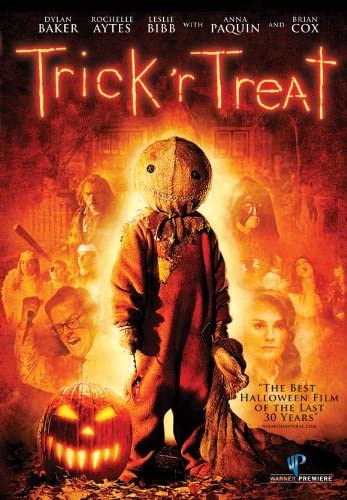
REVIEW: Trick ‘r Treat Watchalong

31 Saturday Oct 2020

Posted by amandamblake in Movie Reviews

≈ 1 Comment

Tags

cult classic, gore, halloween, horror, movie review, review, sam, samhain, trick 'r treat, watchalong

For Halloween, I thought I’d put on a staple and enjoy the heck out of watchalong commentary in lieu of a straight review. Trick ‘r Treat is a perfect watchalong review, because it’s 1) timely, 2) fun as hell, and 3) an anthology, so it’s already broken into pretty little pieces. Like Creepshow, it’s a throwback to the cheesy, joyous, gruesome horror comics like Tales of the Crypt, as evidenced in the comicization of the opening credits and the closing frame. As anthologies go, it’s more interconnected than most, which works much better as a standalone feature film than most anthology shows, which tend to be strung-together shorts like a standard short story collection.

It’s a delightfully gory, gross, scary, charming horror movie that’s developed a sizable cult following (is it a cult following if it’s sizable?) and a place in the Seasonal Watching lineup for Halloween, especially since Carpenter’s Halloween isn’t necessarily my favorite movie (just personal preference) and I have to be in the right headspace to watch Zombie’s Halloween remake.

This watchalong review is designed for those who have already watched the movie, as most of my reviews are, so there will be twisty spoilers here. It’s hard to properly review the movie without addressing the twists, since anthology parts are too short not to mention their endings, and I’ve seen it so many times that I’m not sure how to write as though I haven’t seen it before. I’m just in it for the flaky layers, people–like a bloody croissant.

I may pop in and out of the scene line-up rather than going completely scene by scene, because the movie cuts from one to another story in a way that ramps up the tension really well and feels organic rather than choppy.

1) Don’t Blow Out the Jack-o-lantern, a.k.a. Meet Sam

The introduction to the anthology creates the first side of the bookend that will eventually weave all the stories together. You see characters from all of the stories passing through the frame, although we don’t know that yet, and we’re at the end of the Halloween festivities instead of the beginning. Everything’s winding down, Tahmoh’s character is silly drunk, and Leslie Bibb is done with the whole holiday.

For someone who isn’t crazy about Halloween, Emma certainly went all out for the yard decorations, I must say (as a person who loves Halloween and doesn’t decorate the yard at all… well, I did put out a really adorable Grim Reaper this year).

It’s not the most exciting of the stories, but it packs a hell of a punch at the end, with our first look at Sam and the first gruesome slaying of the one who breaks a Halloween rule, setting the tone for the rest. After Scream, you know that when someone in a horror movie mentions the rules, you gotta sit up and pay attention.

Michael Dougherty and Bryan Singer really pull no punches with their gore and gross-out, applying them with a sense of whimsy and undeniable fun for the genre, which is why I think this movie’s so well-loved in the genre. When the cast and crew are having fun, the audience can tell, and Trick ‘r Treat is just plain fun.

There’s also a nice homage to the movie Halloween in this segment.

I didn’t even know that keeping Jack-o-lanterns lit all night was a rule. Fire hazard much? If you have a plug-in or electric tea light and just keep it lit that way, does it count?

2) Always Wear a Costume, a.k.a. Peeping Tommy

The boy in the adorable bear costume also played Sam–except for the stunt work, of course.

Anna Paquin is one of those actresses I have mixed feelings about. On the one hand, I really like her. I think she’s just interesting to watch on screen. She has a presence and stature, and she’s memorable even when her characters aren’t. On the other hand, she always sounds like she’s not really passing in whatever accent she uses, including her own, and it’s distracting.

We set up the story with all the fairy tale references we can find, from Cinderella to Snow White to the seminal Little Red Riding Hood costume of the reluctant Laurie (Paquin). Could it possibly be relevant to the story? What about Sheep’s Meadow?

I’m awash in references.

Those are some amazing last-minute store-bought costumes, though. I mean, when was the last time Party City had something that fit that well and didn’t look like it was going to fall apart by Day of the Dead?

Cue the endless stream of sexual innuendos. They keep using them because they keep working. Nudge nudge, wink wink. No regrets.

3) Always Check Your Candy and Only Take One Piece on the Honor System, a.k.a. Barf Bag

I have to close my ears on this one every time. Vomit is right on the edge of being a hard limit for me, and this has one of the most graphic vomit scenes I’ve seen. The sounds as much as the visuals do it for me, and thank you, I’m not interested in sympathetic vomiting tonight. (Honorable mentions include the bulimia scene in Tamara and the weight loss scene in Wishmaster 3.)

But Dylan Baker, as always, is phenomenal as the serial killer, because as Wednesday Addams famously said, they look like everyone else, and no one looks more like a serial killer who looks like everyone else than Dylan Baker. He kills it (pun intended, of course) with his comedic timing in dealing with the foibles and pitfalls of being a single father to an adorable moppet who just wants to spend time with his father and trying to successfully bury the bodies without his asshole neighbor finding out. No one has suffered how he suffers.

WHY ARE ALL YOUR KNIVES DULL, PRINCIPAL WILKINS? WHY?

But Wilkins really stabs into the heart of Trick ‘r Treat like the Grinch puts the spirit into Christmas. We have all these traditions, all the rules, to protect us from evil, but no one respects the old traditions anymore and therefore must die. Seems like that escalated quickly, but hey, this is Halloween, this is Halloween, Halloween, Halloween… Wrong movie.

I’m not drunk. It’s just been a long week, and next week is going to be just as long.

Trusty Sam is here to make sure people keep the Sam in Samhain and to remind people why we have these traditions. Sam doesn’t want to carve you up, everyone. He just wants his trick ‘r treat candy.

Is little Billy an homage to Chucky? Because although he’s not wearing a Good Guy costume, his overalls and striped shirt with his mop of ginger hair really harken back to the doll.

4) Halloween Pranks are Fine, but Save Sadism for When You’re Older, a.k.a. Halloween Queen

Those kids really capture the horror of seeing your teachers outside the classroom context. Talk about a rude awakening.

Right up there with the whimsical gore, Trick ‘r Treat doesn’t hold back on child endangerment and death. No one is safe, even if your frontal lobes aren’t fully developed yet. Sam’s just a child, too. An ancient child, but a child nonetheless, and age won’t spare you if you break the rules and disrespect the holiday. No one messes with a Rhonda’s special interest, from which we get that it’s pronounced Sow-en, not Sam-hine, so we all learned something today to lord over everyone else.

Ms. Henderson briefly turns up at Sheep’s Hollow–you see her rolling the horny hot dog toward the fire.

Rhonda’s witch costume and Jack-o-lantern game is strong. I’m still getting serious fire hazard vibes, though.

5) Don’t Wander Off Alone, a.k.a. Watch Out for Monsters

Mysterious dark stranger in a mask and a cloak. The whole scene is sexy as hell, which makes who the stranger is such a twist, because that girl’s he’s got is a total ten.

I want to know where he got his vamp teeth, though, because they’re sharp enough that she didn’t notice she was being bitten and good enough to bite through skin without breaking.

Laurie searches for the man she wants to be her First. She just wants it to be special. But everyone’s already paired up, leaving her to walk through the parade all by her lonesome. Her big sister tries to hook her up with a man dressed in a baby costume–the same guy who played the the Great Child in Th13teen Ghosts!

The mysterious dark stranger intrigues, as mysterious dark strangers do.

6) Halloween Pranks cont.

The story of the kids from the school bus is just sad, sick, cruel, and I don’t know whether it crosses a line or not, because as shown in psych ward horror as well, we as human beings have historically been terrible people to the vulnerable.

Continuing the tradition on Rhonda, the Halloween Queen, is also sad, sick, cruel. Sam ensures that vigilante justice is served with julienne fries.

The vintage masks on those kids are the creepiest, especially the paper bag mask. I love cheap thrills.

Is Rhonda’s pumpkin carving of Freddy Krueger or Tom Waits? I’m thoroughly amused that I can’t tell.

If you’re a nineties girl, you had a pair of shoes like Rhonda’s. You just did.

You made Rhonda cry, and you snuffed out the last Jack-o-lantern. For that–mostly for Rhonda–you must pay.

7) Don’t Wander cont.

Little Red Riding Hood walking alone through the woods. A little on the nose, but shorts don’t really have time for subtlety, and the twist, while somewhat predictable, makes the bludgeon of the fairy tale work, because if there’s anything I love more than a fairy tale trope, it’s a subverted one. Bonus if it’s horror.

The mysterious stranger appears again to prey upon the lost little girl. Then the stranger’s body abruptly drops in Sheep’s Hollow, his leg broken. And the best twist of all, he’s ordinary serial killer Principal Steven Wilkins, who gets to be Laurie’s first.

Her first kill, that is.

Little Red Riding Hood is secretly the wolf. All of the women in Sheep’s Hollow are. Predictable, yes. Delicious, still.

Marilyn Manson’s “Sweet Dreams” cover is a polarizing one. It’s almost definitely overused, but like She Wants Revenge’s “Tear You Apart,” it’s overused because it’s so damn cinematically effective. I could listen to both of them over and over and over again. And “Sweet Dreams” provides the perfect soundtrack for one of the better werewolf transformation sequences in cinema. First the girls take off their clothes, then they take off their skins. It’s bloody fantastic.

8) Always Give Out Candy, a.k.a. Razors in the Chocolate

At my house, we don’t get a lot of trick-or-treaters, and now that we have a dog heavily into guarding, it’s just better for everyone if we turn off the porch lights and don’t give out candy, even when we aren’t in the middle of a pandemic. So I’ve broken many of these rules and I’m still here. Except now I’ve put it out into the world that I break the rules, so maybe my luck won’t hold out.

The candy Kreeg takes from the trick-or-treaters he scares from his house is from Principal Wilkins. The first candy bar he eats is the poisoned one that kills the first kid, which is why he puts it down in disgust. The one Sam uses as a box cutter because of the razor blade inside is also from Wilkins. And the pumpkins Sam conjures to Kreeg’s house are Rhonda’s.

In spite of the best Easter eggs, this is my least favorite story, in spite of the presence of Brian Cox and the longest sequence with Sam in it. It took me a while to realize it was because it feels too familiar.

It’s basically Home Alone, but Halloween.

9) The End

Now we have context for all the interconnections that converge before Emma gets it.

There are lots of other interconnections throughout the movie, of course, but we end where we begin.

Thus ends another Halloween.

Hope you enjoyed yourself!

Time for NaNoWriMo. No rest for the wicked.

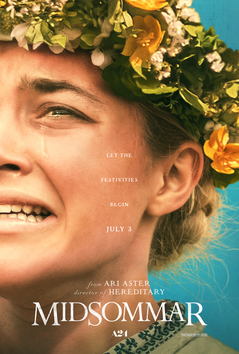
REVIEW: Midsommar

07 Monday Sep 2020

Posted by amandamblake in Movie Reviews

≈ Leave a comment

Tags

ari aster, empathy, folk horror, horror, isolation, midsommar, movie review

I rewatched Midsommar last week for the first time, and it was just as glorious as I remembered.

Ari Aster considers this his first horror movie rather than Hereditary, but I might be inclined to switch that around, if I had to. Hereditary was built almost like a haunted house story within the family home—with the family naturally being more haunted than the house—and a few nice jump scares. Plenty of people responded to Midsommar by saying it wasn’t scary, just because it didn’t have any notable scares, forgetting that not all horror is built that way. I’m a huge fan of slow-burn horror that unsettles more than scares, and if you like slow burn awash in sunlight, Midsommar should please.

If anything, though, Midsommar actually has some nice nods to classic horror, such as playing with slasher tropes in its punishing of young (American) tourists doing what they shouldn’t; the use of the Blood Eagle, which is a Viking method of execution, but Americans might be familiar with it from Silence of the Lambs; even Dani’s blanket, which seems to be a nod to carpet design The Shining, but I might be reading too much into that, which isn’t to dismiss the parallel descent into a kind of madness; and of course, The Wicker Man. Possibly The Serpent and the Rainbow, but I haven’t seen that one yet.

Midsommar took the emerging (re-emerging?) subgenre of folk horror and asked itself whether it could make a horror movie with nothing concealed, in full sunlight for most of the movie, because it takes place during the Midsommar festival of the Halga community. The answer is to whether you can make a horror film in sunlight is yes, but part of the side effect is that the result is trippier than scary. But it’s not the kind of horror that requires darkness, really. Supernatural horror, with monsters of the human and creature variety, depends on darkness to hide the monstrousness, but there are no real monsters in Midsommar. Folk horror, instead, often depends on the in-full-view nature of culture shock. Isolated communities have nothing to hide, but their profound differences from the prevailing culture of the audience causes the disorientation that can be so effective as a horror device—not to mention the literal mushrooms everyone’s taking.

The way that Midsommar ultimately works is in Ari Aster’s commitment to nonjudgment of the Halga community, which is aided by the fact that he wrote the script himself. While there’s a little contempt for the three ‘new blood’ male American visitors to the Halga, there was actually very little external judgment going into the story.

Except Christian. The eventual punishment may not have fit the perceived crime, but everyone agrees that Christian is a grade-A douchebag.

But although the Midsommar ceremony gets more and more horrifying as the movie progresses, Aster is careful to show how seductive the community is in spite of it, what it offers to an outsider like the protagonist, Dani, what void from the audience culture that it fills. It’s not too dissimilar to the intimacy void that most other cults claim to fill, except it goes to a less orgastic extreme, the delightfully odd sex scene notwithstanding.

The movie opens with profound disconnection between Florence Pugh’s Dani and Jack Reynor’s Christian. Within the film’s first act, we’re given every indication that this is a relationship that Does Not Work. They’re not communicating, Dani is minimizing her emotions so much that she feels like she needs to isolate in order to have them, and Christian has apparently been checked out for over a year by the time tragedy strikes Dani and he feels he can’t abandon her at that point. It would seem a kind act, except he was already so passive in the relationship, and it’s a lot easier to keep it going than take a stand and let it go. He’s ghosting her while still her boyfriend, in addition to subtle gaslighting and just outright ignoring her. Dani wants connection; Christian wants out, but not enough to shake a status quo that he understands.

Really, I could write for hours about how Aster sets the stage with the isolation experienced by all the characters:

– Dani’s sister commits suicide because, in her words, ‘everything’s black,’ and murders her parents with her, the ultimate attempt to quell the alienation and isolation that depression can cause.

– About ninety percent of the shots of Christian show him through a mirror, turned away in three-quarters profile from the camera, or parts of him cut off—subtle camera storytelling to indicate how disconnected he is from Dani and his friends but also to distance him from the audience.

– Christian’s friends pretend to be friendly with Dani, but she brings down the whole dynamic of the male bond between the five men—not that the friendships are warm and intimate to begin with, given the stiff way the boys sit with each other and eventually go off to do their own thing while Dani speaks with Pele, the foreign exchange student to the Anthropology Department.

In the beginning, that’s the only real moment of warmth, although it’s broken when Dani has to walk away to deal with her grief alone. Who’s she going to share it with? Her dead family, her sister whose emotional extremes led to the murder-suicide? Her boyfriend, who held her during her initial sobs but who showed the audience his thousand-yard stare of despair at being trapped in the relationship due to Dani’s grief? Every time, she walks away to be alone as she struggles to hold tears back. Which Florence Pugh is really good at, by the way. Kind of like Robin Tunney in The Craft, Pugh spends a good portion of the movie in a near or complete breakdown state, which isn’t emotionally easy at all.

This is something that hits me hard every time it happens in the movie, because I’m sure I’m not the only one to bottle up a powerful emotion until I can get to a place of relative isolation. People don’t know what to do with grief, sadness, frustration, anger, because in an aggressively optimistic culture, these feelings—all of which are quite normal—are seen as aberrations to be hidden and excised as soon as possible, weaknesses that must be shored up with a brittle smile. Our culture (although not ours alone) has no idea what to do with these emotions except scold them into submission, thus enhancing this sense of isolation with others and discouraging empathy or even just sympathy.

Which is why the Halga community offers something so tempting to someone from the outside. They don’t just forge intimacy through sexuality but through extreme empathy for the people they live with and through their connection to nature, which is the entire foundation of the movie. They’re a collectivistic rather than individualistic society, a family of sisters, brothers, fathers, mothers, grandmothers, grandfathers, with defined roles for everyone. Really, aside from the Blood Eagle and human compost, what’s not to like? The way Pele immediately latched onto her as needing the community the most, because she’d lost her family and had no one with whom to share the load of her grief, the way they accepted Dani both in her quiet horror at the suicide ritual and as the community’s May Queen to bless their crops, ultimately to when the girls refuse to let her go off alone in her grief and instead cry with her, not just mockery but making themselves feel her pain… Because in the Halga community, no one has to be alone. The emotional turning point of the movie is when Pele says to Dani about Christian, “He’s my good friend and I like him, but… Dani, do you feel held by him? Does he feel like home to you?”

From what I can tell, Midsommar was Florence Pugh’s breakout role, and well-deserved, although she got another chance in something more mainstream with Gerwig’s Little Women. I’d apparently seen her in two other horror(ish) movies—Malevolent and The Falling—although I didn’t recognize has as someone I’d already seen when I saw her in Midsommar. Pugh is a master at withheld emotion, containing, pushing down behind her unique face, then finally letting it show.

I swear, she got this role on the strength of her almost exaggerated frown, needed to show the transition from her grief and loneliness to the moment she finally feels free and held by the community, laden with wildflowers.

At what cost? Aster doesn’t judge, but although Christian, Josh, and Mark all trespass in some way, the reason for the deaths of the UK couple seems a little less clear. The way I interpreted it was that Ingemar was punishing Connie for choosing Simon over him, which isn’t so much of a trespass as a personal vendetta. Perhaps their trespass was Simon’s far more vocal reaction to the suicide ritual. Or perhaps there wasn’t a slasher trespass at all and they were just bodies for the final ritual, which is far more disturbing and I can sit with that for a while.

Because of how slow-burn Ari Aster is with his movies, I’m a little afraid that executive permissiveness might lead to him making bad editorial choices in the future. But after Hereditary, it was a helluva thing to produce a sophomore movie just as masterfully disturbing as the freshman outing. I have no doubt he’ll be held up with Mike Flanagan and James Wan as one of the great horror directors of this era, and Hereditary and Midsommar remembered for the same artistry as The Shining, but with more heart.

REVIEW: Green Room

10 Monday Aug 2020

Posted by amandamblake in Movie Reviews

≈ Leave a comment

Tags

anton yelchin, green room, horror, indie, patrick stewart, review, thriller

Green_Room_(film)_POSTERIt’s difficult to begin a review of Green Room without mentioning the tragedy of Anton Yelchin’s death. Green Room was Yelchin’s last theatrical release prior to his death. For those, like me, who fell in love with him as the youthful Chekhov on the Star Trek movie reboot or perhaps as the disturbed teen with homicidal OCD on Criminal Minds, we lost a quietly charming, sharp-featured talent far too soon.

What I liked about this movie was that, although Yelchin’s character could be called the protagonist, the story didn’t rest on him, nor did he have to carry it. Yelchin is quite comfortable taking a humbler place, and it’s part of what allows him to blend in wherever he’s cast. He’s not a chameleon, but he’s undemanding, which really lets a story shine through whatever star power he could have if he wanted it.

Imogen Poots has horror cred, but Patrick Stewart was the real name in this movie. Yet not even Stewart overpowers the movie. The director’s use of him was smart, his choices more understated than the usual warmth and gravitas that he brings to a screen. In fact, it’s a completely unexpected choice. It’s hard to believe that we live in a universe in which Stewart plays a neo-Nazi leader, but not making him a scene-chewing villain saved this movie from being something forgettable.

Instead, our actors just play people. The band is completely out of their depth, with the strongest of them among the first to get cut down, because authority issues and a background in school wrestling aren’t that effective against fighting dogs and shotguns. Yelchin is just a pale, skinny cinnamon roll who is woefully out of his depth in a fight situation, which is a point he makes in a really good monologue peptalk about paintball (that was apparently based on a real event that the director experienced). And Stewart and the other neo-Nazis are utterly banal evil, their matter-of-fact racism an armor for greed. The kills are vicious and extreme but without fanfare, and unlike slashers, senseless.

Green Room is a stark, smart, tight, intense, realistic indie horror thriller. Completely recommend.

REVIEW: The Forest

22 Wednesday Jul 2020

Posted by amandamblake in Movie Reviews

≈ Leave a comment

Tags

aokigahara, horror, movie review, natalie dormer, suicide, the forest

the forest movie(Not to be confused with The Woods. Different horror movie entirely.)

Being good can forgive a multitude of sins. Unfortunately, The Forest can never be forgiven. The only virtue in this movie is that I got to spend some time in the company of Natalie Dormer, who is quite pleasant to spend time with. Too bad it was in such a forgettable dud.

The Forest endured some well-deserved controversy for exploiting the real tragedies of the actual Aokigahara forest in Japan. Suicide, especially in highly ritualized places, has context, context that shouldn’t just be transformed into ‘the bad ghosts made them do it’ and that’s the end of it—sort of how ‘because they’re crazy’ shouldn’t be the end of the conversation.

There are a few other horror movies that tread a problematic line but recover—sometimes shakily—because they respect that line yet still tell a good story. If you’re going to exploit real people’s tragedies, you sure as hell better do a good job, or else you wasted everyone’s time and money AND pissed a lot of people off. Congratulations.

The Forest, however, brings absolutely nothing new to the horror table—just twin magic (the movie establishes that the main character is a twin multiple times over in the first thirty minutes, as though the first five times just weren’t emphatic enough), a series of jump scares that we’ve all seen before, getting lost in a forest that was much more unsettling when Blair Witch did it, Japanese demon makeup that we’ve seen done better, (American) tourists making bad choices, and no real understanding for why Aokigahara is a suicide forest in the first place.

I’m not going to belabor the point. The horror elements of this movie failed so hard that it really isn’t worth the effort.

Here’s what they could have done to make it better:

Scrap the Japanese suicide forest idea. The Grudge remake with Sarah Michelle Gellar did a decent job showing the disorientation of being in a different country, but The Forest barely addressed its setting except in the most sweeping, simplistic, inaccurate, and sometimes insulting terms. Why did the twins go to Japan? Because that’s where the forest is. That’s it. So scrap Aokigahara entirely. We have forests aplenty in America, Canada, and Europe that can have just as unsettling backstories (see: the blooming Folk Horror subgenre). You can make shit up and still say it’s ‘inspired by true events’ because Aokigahara was the springboard.

Next, respect the reasons for suicide locales. If you know the reasons why people go to specific places, and if you acknowledge cultural patterns of suicide, you’ll be able to create a richer mythology, because the tragedy will be real rather than exploitative.

Focus less on the supernatural horrors, especially if you don’t know how to do them properly. In movies like this, supernatural horror only exists to enhance the real kind. The most interesting, human part of THE FOREST was the guide who led the journalist (Taylor Kinney, if it matters to you) and Dormer into Aokigahara on his suicide rounds, a job that he does pro bono to help dissuade people from suicide if they’re still alive or mark where the bodies are if they’re not. It’s a thankless, joyless, incredibly poignant task. That’s where the emotion is, which is where the story wants to be.

The heart of horror is often sorrow, and horror should be human before it’s monster. When studios want to make a horror movie, their biggest misstep is usually prioritizing the monster over the humans, meeting the creepy visual and jump-scare quota to justify the genre label over producing a good story, because horror audiences will watch whatever commercialized crap they put out.

I’m not saying we won’t. After all, I didn’t go to the theater for The Forest, but I caught it on Netflix, hoping it would be better than I heard it was. I’m willing to watch a lot of dreck churned out by the horror movie machines, looking for hidden gems among the rubble, but this isn’t one worth repeating. It has no staying power, no potential to become a cult classic, and ultimately needs to be forgotten.

Someone get Natalie Dormer a good horror movie. I’ll wait.

REVIEW: Silent Hill: Revelation

17 Friday Jul 2020

Posted by amandamblake in Movie Reviews

≈ Leave a comment

Tags

alessa, horror, movie review, sequel, silent hill, video game

61123974_SH_6x8_1R1After all this time, there are a number of movies I’ve wanted to write a review for, but for some reason, I went back to a sequel of one I’ve already written about, because I was craving a bit of Silent Hill. Silent Hill is one of my favorite movies, and Silent Hill soundtracks accompanied me a great deal through the editing portion of Deep Down.

Silent Hill: Revelation is not nearly as good, which doesn’t seem to be all that important, because I’ve watched it more times than I should watch bad movies, so there must be something bringing me back, other than familiarity. Like most bad movies I watch regularly, I think what draws me is potential. Underneath all the roughness, there’s a gem, even if the people responsible for mining and shaping it utterly mangled the job.

Part of the problem was the same thing that drew Silent Hill down, which was the shoehorning in of men where they didn’t need to be. Sean Bean once again plays the part of Sharon’s father, and he technically has more screen time, but his role doesn’t really get any more useful. Then we see a young Kit Harington, youthful and a bit too Raphaelite for the setting, intended as a love interest of sorts, but Laurie Holden and Radha Mitchell had more chemistry without actually being love interests. But goshdarnit, we gotta have a man in here. And if Sharon’s going to be eighteen, goshdarnit, she’s gotta have a love interest. (Why it has to be Kit Harington, only the casting director knows.) Then throw in a PI and two cops who seem to belong to other movies altogether and disappear after the first part of the movie, completely irrelevant to the story. Malcolm McDowell has a notable cameo, but he was criminally underused in an attempt to bank on his horror legacy.

Perhaps I’m looking at it all wrong. Perhaps I should be encouraged that, although there’s more testosterone on the soundstage, they’re taking on roles typically saved for women—the husband waiting at home, taking care of the kid; the father getting kidnapped and held hostage; the stale, two-dimensional love interest that doesn’t rise beyond a few flat notes.

But frankly, the women aren’t much better. Whereas the original featured a strong core of complicated, fleshed-out female characters, here we have Deborah Unger reprising her role as Alessa’s mother in a far less necessary expositional cutscene. She literally brings nothing new to the table, and the makeup budget didn’t support putting her in her full original get-up, so I don’t even know why she was brought in at all.

Then we have Carrie-Anne Moss, whose motivations are all over the place and who’s more interesting when she’s the Missionary (i.e. Less Carrie-Anne Moss) (parenthetical #2: Not that the Missionary made much sense). Her brand of underacting doesn’t lend itself to the dramatics that the role required of her. I got strong hints of her channeling Miranda Richardson from Sleepy Hollow, but frankly, Richardson might have been a better fit. The role itself, however, was thankless and criminally under-considered, because an undeveloped villain gives our hero no real foil.

Adelaide Clemens, as grown-up Sharon, does a passable, committed job, although I wouldn’t call it a breakout. Clemens’ vulnerable strength and eerie similarity to Radha Mitchell make her an adequate inheritor of the lead adventurer’s role. (True, Sharon was adopted, but children often grow to look like their family anyway, biological or not.) She and Bean are the anchors in this otherwise churned-out, effects-driven money-grab.

The beginning stumbles, even more awkward than the original, with EX-PO-SI-TION! as tell-y rather than show-y as it gets. It felt like a cutscene from a video game, but the original Silent Hill worked best when it nodded to the games rather than tried too hard to fit into them. If an audience needs that much explanation for things to make sense, your story is in desperate need of some doctoring. Conversations through mirrors, special symbols on a secret box, half an arcane seal… Not even Bean could make this dialogue less cringe-y. You ever get the feeling the script was written in a day and never edited? There’s even a part where we’re EX-PO-SI-TIONED! that Silent Hill was built on ancient Indian burial ground. Seriously? Seriously?!

When a movie goes this spectacularly wrong, in spite of a wealth of potential built by the first movie and a squandered budget, I like to look at what could have been done to make it better. I think, for all the deviations from the story set up in the original (most notably, the ending), a sequel would have been better served by being a completely different story with completely different main characters. Then we wouldn’t need so much freaking explanation to try to fit it into movie- and game-universe at the same time. However, if they absolutely had to bring Sharon and her dad into the story, they would have benefited by not going back to Silent Hill, but instead focusing on how Sharon brings Silent Hill wherever she goes, because (spoiler) Alessa came out with Sharon at the end of the first movie.

The school scenes had some interesting elements and could have been even better with alterations. For instance, I couldn’t tell why Sharon’s outfit was any different than the rest of her classmates enough for the requisite popular kid to deride her for it. I mean, I’m not much into fashion, but Sharon was rocking trendy layers, so I’m not sure where the loss in translation happened. Chalk another one up to the cringe-tastic bad script and a wardrobe mismatch?

But there was something about the school scenes, especially with the disorientation within the windowless halls, as well as the mall scenes that reminded me of Nightmare on Elm Street. They really could have played up her hallucinations to show us how Silent Hill is just beneath the veneer of reality and Sharon/Alessa makes the barrier between them weaker. Rather than the Missionary as the primary antagonist, I would have her be the secondary, trying to destroy Alessa or possess her for her own power, while Alessa herself was Sharon’s primary antagonist—Sharon’s personal reality crumbling and bringing the rest of the world with her. It would have been far more interesting to see Silent Hill bleed into the real world than just go back to the town, which was somehow the same Silent Hill and another version of Silent Hill at the same time. The filmmakers couldn’t agree on that, so it ended up not working as either one.

If they were going to make it the same Silent Hill, they should have made it feel more like the original and less haunted carnival/underground cult/insane asylum. If they were going to make it different, they should have committed to that. Not going one way or the other led to disjointed filtering and a complete annihilation of anything approaching reality rules. Also, with so many versions of Silent Hill represented, the filmmakers never got to focus on any one, so the creepy creatures felt just as throwaway and disjointed as the characters and setting.

The original Silent Hill worked because it knew what its world was and what its rules were. If it had creatures, it focused on ones that had a specific, unsettling purpose to each scene—a kind of burned, decayed, mummified poetic justice, even if we didn’t know what it all meant at the time. Three-dimensional characters had a purpose at every part of the story, and the filmmakers took their time to show rather than tell.

The sequel, on the other hand, tried to be too many things and succeeded at none of them and couldn’t ground itself in any theme or plot line. It lurched from element to element, performing back-breaking gymnastics to try to fit them together, and left me nothing but good music, a few good visuals, and a serious hunger for better.

DOUBLE REVIEW: Cabin Fever/Cabin Fever remake

11 Saturday May 2019

Posted by amandamblake in Movie Reviews

≈ Leave a comment

Tags

body horror, contagion, disease, eli roth, horror, movie review, remake

Cabin Fever 2002[SPOILER ALERT: There isn’t much, but there are a few later scenes referenced.]

I’m going to say it, and everyone is going to hate me.

The remake is better than the original.

Some of the shots are framed the exact same way, except flipped around. Some of the script is exactly the same. They didn’t even do anything new or reimagined with the remake. They literally remade the original CABIN FEVER. And it’s better.

Let me give you some context.

In college, I went a little horror-movie crazy (and I haven’t stopped). I bought all kinds of eighties slashers, cult classics, all the movies I’d wanted to see when I was too young or too high-strung for it. I’d been attracted by the cover for CABIN FEVER a number of times before I finally bought it, because it was a contagion movie, and that’s one of the things I’m legitimately afraid of in real life. When I watch ghost movies and supernatural villain movies, I can go to sleep afterward just fine because I don’t believe in ghosts or the supernatural (open-minded but skeptical). But diseases are real. They happen. And necrotizing fasciitis is a real, terrifying thing. So what a great premise for a horror movie, right?

Then I sit down to watch it.

The necrotizing fasciitis parts were suitably gory and effective. I think the opening credits are one of the best in the business. And that scene where the girl is shaving her legs and starts shaving off her legs is probably in my top twenty-five horror moments.

But that’s it. Those are the only good things I can say about the Eli Roth-directed CABIN FEVER. The man needs to stick with producing, because he’s decent at that. The whole film, though, from script to direction, just felt so…juvenile. The humor wasn’t funny. The weirdness didn’t have a point. And CABIN FEVER is filled with an unsympathetic cast of jerks. We root for precisely no one to survive–except maybe Winston, strangely enough.

A man is killed by a harmonica, and as a white girl in the suburbs, I literally can’t even.

It’s one thing to tell a story about juvenile people. It’s another for the director to be just as juvenile–you can feel it in all his immature choices. I can watch and even enjoy bad horror. I can enjoy campy horror. I can enjoy young people horror. But for Pete’s sake, I only enjoyed about three consecutive minutes of CABIN FEVER, and the rest was trash. I gave the movie away because I hated it so much.

About six months ago, all the CABIN FEVER movies were on Netflix at once, and I thought, Hey, I’m more tolerant of all kinds of horror these days. Maybe the original CABIN FEVER isn’t as bad as I thought it was. Maybe I’ve grown as a horror aficionado and can appreciate CABIN FEVER as the cult classic that it is. So I watched it again.

I still hate it. Totally my opinion. I feel like it was made by an emotionally stunted manchild for other emotionally stunted manchildren, and I have no place in its audience. So maybe it’s just not meant for me, although I seem to enjoy other horror movies obviously made for male audiences (the PIRANHA remake and THE BABYSITTER come to mind).

Seriously, when I get more out of the spectacularly gross, misogynistic, shallow CABIN FEVER: SPRING FEVER (yay, Marc Senter) and CABIN FEVER: PATIENT ZERO (yay, Currie Graham and Sean Astin) than the original movie, maybe the problem isn’t me?

cabin-fever-poster remakeEnter the remake–taking a good concept and bad execution and trying to execute it better.

The characters are still juvenile, but they aren’t as unlikable as the first set. They’re not completely lacking in redeemable qualities. When they make bad decisions, you get why they make them. Even when the least likeable of the group starts to show symptoms, I felt bad for him, because it’s a horrible way to die–unlike Jason, it’s not a villain you can outrun. It’s something that’s already inside of you, and it’s too fast-acting to treat even if they get to a hospital. The rash and the blood are more realistic. The claustrophobia is more intense. It’s as though a grown-ass man took Eli Roth’s original movie and shot it like a grown-ass director would. It’s a more mature film in every way.

The only real misstep they might have made was recasting Winston as a scarred Barbie doll whose obsession with partying seemed more creepy-coy than the original sex, drugs, rock-and-roll simple Winston. It was an interesting direction, but I’m not sure whether it worked with the more coherent tone of the rest of the movie. Sometimes I like it and sometimes I don’t.

My favorite bit of irony about this movie (both of them) was that it turned some of the slasher tropes on their head–probably why it’s a cult classic. In the old eighties slashers, sex, drugs, and drinking would have gotten them killed. But in CABIN FEVER, it’s drinking water instead of beer that gets them sick. It’s eating off of dishes cleaned with the bad water that gets them sick instead of being a dirty slob. Being bad doesn’t get you killed. The villain’s in the safe places, and there’s no saving you after that. I feel they play that up more in the remake.

Even if it’s not necessarily the best horror movie ever, I’d go so far as to call the remake a decent horror film, and I enjoy rewatching it when I need another dose of contagion fear and rereading The Stand just seems like it’ll take too long.

REVIEW: Grave Encounters

14 Sunday Apr 2019

Posted by amandamblake in Movie Reviews

≈ Leave a comment

Tags

found-footage, grave encounters, haunting, horror, movie review, psych ward

grave encounters[Warning: Here there be spoilers.]

I’ve been going in and out of wanting to write a review for this movie. I’m not entirely sure what I’m afraid of. That it’s not as good as I still think it is? That the review won’t do it justice? (Entirely possible. I’m still new at this.) I mean, it’s not perfect or anything, but I do get intimidated by good horror movies more than I do by explaining what’s wrong with the not-so-good ones.

For people with found-footage fatigue, I’m sure movies like GRAVE ENCOUNTERS don’t really help that, but I first saw GRAVE ENCOUNTERS when I opened my Netflix account, so I hadn’t watched nearly enough bad found-footage at the time to make me weary of the subgenre. And frankly, I have a fondness for that kind of low-budget horror, because it usually forces the film-makers to get creative with effects or eliminate them completely.

It’s worth noting that the effects of GRAVE ENCOUNTERS are its weakest points. They reference the obviously computer-generated effects in the sequel (please, miss that one—it offers nothing new, plus a dose of juvenile humor it didn’t need). They’re disappointing on every level, because in video that’s supposed to look real—kind of the whole conceit—the worst thing you can possibly do is show something that doesn’t look real. In the slight fuzziness and filter of movies, you can get away with minor CGI effects that you simply can’t in found-footage. It doesn’t matter how good the cameras are that they’re using. The slightest whiff of CGI ends up reading as fake, which takes a viewer out of the moment. If you’re going to use CGI, you’ve got to be dead careful. And the makers of GRAVE ENCOUNTERS were not. They would have benefited much more from judicious makeup, props, and unsettling acting rather than pay a small fortune on a small budget to get bad CGI.

But when they’re not stumbling in the computer-generated arena, GRAVE ENCOUNTERS is a solid offering in the found-footage arena, and it doesn’t—in my opinion—suffer from the same ending malady as most found-footage. And frankly, most horror.

Before even starting, GRAVE ENCOUNTERS ticks off a number of boxes that guarantee I’m more likely to enjoy it. For one, it got in my queue early, which means more things get compared to it instead of the other way around. I’d already watched a ton of horror movies by this time, between my college-days movie buying and back when FearNet was streaming, so I didn’t approach it in a vacuum. But other than BLAIR WITCH PROJECT and possibly PARANORMAL ACTIVITY (can’t really remember the timing), I hadn’t seen a ton of found-footage at the time. That gives it an automatic leg-up over its competition. But it’s stood up over time in spite of everything I’ve watched since.

Another point in its favor is the setting. I’m a sucker for psych ward horror, even though it’s often bad and ableist as hell. But being a person with mental illness who processes things through fiction, I’m entitled to like what I like. There are a lot of horrifying things about mental illness and a lot of horrifying things about what people have done to people with mental illness. GRAVE ENCOUNTERS has a few problematic moments, but it’s mostly about what was done to the people who were kept there rather than the mentally ill themselves being the monsters, and the movie makes everything more about setting, the building itself more the monster that keeps haunted people.

Abandoned buildings are amazing in general. If you haven’t seen Abandoned America’s photographs, I recommend checking them out. The movie probably only uses about three hallways and changes them just enough to make it seem like the gigantic building we see it is on the outside, but they also manage to convey a sense of claustrophobia and that disorienting feeling when you get lost—or worse, when things aren’t where they should be. Probably one of the more effective scenes is where they break down the front door, and there’s just more hallway. Then when they’re trying to get to the roof, and there’s just a wall halfway up the last set of stairs. This is why I like to emphasize practical effects. All they needed was a freaking wall to creep me the fuck out. If you’ve ever been lost, you know what that panic feels like. It’s one of the worst feelings in the world. Like that feeling you left your wallet or purse somewhere, but it doesn’t go away.

I feel like the movie really used its set to its full advantage, as simple as it was. And at its best, the scares themselves were simple. In found-footage, those work because of the conceit that everything is actually happening. A window opening by itself. Someone you don’t see pushing you down the stairs. A wheelchair rolling by itself. Blood in a bathtub. Waking up to patient ID bracelets on your wrists. Fog rolling in and people disappearing when it rolls out. Keep it simple in found-footage, and you’ll get a lot more mileage than a cheap-looking eye-and-mouth effects.

Like good found-footage, the cast doesn’t actually distinguish itself much. They’re a cast of regular people, the kind you would see on any reality TV show. The only one who feels polished is the lead, and since he’s the lead of a television show and needs a certain amount of charisma, that wouldn’t be unusual. Everyone’s slightly annoying at different times, but again, we’re watching footage of a television show that wouldn’t have actually made it onto the show.

When people get legitimately scared, they do get shrill. When people are legitimately exhausted, they do get emotional and snappish. And when they freak out, they do lash out. There wasn’t a moment in the movie when I felt the reactions weren’t real. They may not have been attractive or cultivated like in most other movies, but they were real, which is the best you can ask from found-footage.

One of my favorite moments is near the end, when Lance and Sasha are trying to look for a way out in the tunnels below the hospital. Sasha was sick, which being constantly scared, not sleeping enough, and not eating enough only exacerbated. She falls to the ground, vomiting blood, and just wails, “I want my mom!” It’s a striking scene in the movie, because the blood wasn’t CGI. You know she’s dying slowly and painfully and she’s scared and miserable, and you feel it. My heart aches every time she cries like that, because come on, if you’re honest with yourself, you’d probably say the exact same thing (unless your mom sucked, in which case I’m sorry—choose your own loved one).

Now, I said that the ending didn’t suffer from the usual dissatisfaction malady of other found-footage and horror movies, and it doesn’t. It’s vague. I’ll say that. But I didn’t find myself wanting more from it. I thought it was exactly the ending it needed. And how often do I say that about horror? (Answer: Rarely.)

So if you’re looking for some good found-footage horror in the midst of an oversaturated subgenre, GRAVE ENCOUNTERS really is worth your time. If you forgive it for the bad CGI and stay for the creepy building, you’ll likely leave satisfied.

REVIEW: The Uninvited

23 Saturday Feb 2019

Posted by amandamblake in Movie Reviews

≈ Leave a comment

Tags

asian horror, horror, movie review, paranoia, remake, the uninvited

the uninvitedTHE UNINVITED is a strange animal in my collection. I saw the South Korean movie it was based on, A TALE OF TWO SISTERS, a few years before it, and I wish I hadn’t. Knowing the twist affects how you view a movie that depends on its twists. I had to watch UNINVITED again with my horror friend to determine whether the twist was sufficiently twisty. He didn’t predict the ending, by the way, which means he really wouldn’t have figured out the twist to TWO SISTERS, because TWO SISTERS is more twisted, which is why I wish I had seen it afterward. Because as a result, THE UNINVITED suffers a bit from comparison.

On the other hand, while I have a handful of Japanese and South Korean horror that I like, I’m afraid most of it leaves me rather cold. While culture shock plays a role, I think the primary reason is that they follow a different kind of storytelling and film making. To this American viewer, it feels disjointed and difficult to follow timelines. Angles and framing are different. Editing doesn’t feel like it has enough segue. The horror stories feel more dreamlike, impressional rather than literal. This isn’t a bad thing, but I don’t respond to it as well as I do American/European structures and standards, which feel less jarring in a hundred little ways. This is why I don’t mind when Hollywood remakes Asian films. When they’re bad, they’re still bad, but I tend to respond better to the method. Hard to apologize for that.

TWO SISTERS was twisted as hell, and it was R-rated for a good reason, while UNINVITED stays a pretty tame PG-13, but TWO SISTERS also had that trippy quality that’s sometimes hard for me to follow, so while I liked the movie, it’s not one that inspired repeated viewing, while I’ve watched UNINVITED multiple times over.

Here’s the thing: THE UNINVITED is perfectly serviceable horror. Do I wish it had gone a little farther and hit the R rating? Yeah, I kind of do. Because I think Emily Browning, Elizabeth Banks, and Arielle Kebbel would have had a field day going all the way with it, and the cast could have killed it, particularly Browning and Banks, on whose performances the movie really rests. I’m big fans of both of them. I think Elizabeth Banks, in particular, tends to get overlooked because she’s so reliable of an actress that she doesn’t stand out. She’s a total ensemble player, and I appreciate her work in everything she’s in because of it.

Emily Browning brought her usual china-doll delicate strength to the screen. Not going to lie, she’s almost painfully pretty, but she brings a lot of soul into her face – like Angelina Jolie with more innocence – and without it, I might not respect her as much as an actress. But even at eighteen, which was her age during filming, she’s a rock-solid, grounded performer. If the movie itself is a little weak, a good cast made it stronger than it had any right to be, because by the nature of the twist, they had to play the movie multiple ways at once – just like any good mystery, multiple possibilities need to be plausible until the ending is inevitable. That’s not an easy game to play, but they all manage to accomplish it.

Moreover, while some of the scares were lifted directly from TWO SISTERS, there were a handful that were legitimately creepy in spite of the rating, and gems like that are valuable in any horror movie. So much goes into a good scare that doesn’t depend on surprise or screeching violins, and even though they only last a little while, if it gets my heart racing, I gotta give them credit.

It’s a solid, respectable movie, good if you’re a fan of the PG-13 Asian horror remakes but also decent even if you aren’t. The psychological thriller/paranoia aspects make up for some of the weaknesses in the horror, and the legitimate scares make up for a somewhat weaker thriller ending than I would have liked. Even if the story gets slightly tired in places, the performances are so emotionally nuanced that you don’t mind. It doesn’t reach the quality of THE RING or even THE GRUDGE, which makes sense, because THE UNINVITED was made to try to profit off their trend, and the staleness shows. But the actors aren’t acting like it’s stale, and if you haven’t seen TWO SISTERS, UNINVITED might be a decent popcorn flick for some Saturday evening alone, and might even make better viewing the second time through. You might also follow it up with TWO SISTERS later – don’t worry, there are more than enough twists to go around.

← Older posts

Enter your email address to follow this blog and receive notifications of new posts by email.

NOW AVAILABLE

WHERE IT ALL BEGINS

TINGLE YOUR SPINE

Website Built with WordPress.com.

  • Subscribe Subscribed
    • Amanda M. Blake
    • Join 146 other subscribers
    • Already have a WordPress.com account? Log in now.
    • Amanda M. Blake
    • Subscribe Subscribed
    • Sign up
    • Log in
    • Report this content
    • View site in Reader
    • Manage subscriptions
    • Collapse this bar
 

Loading Comments...