• About the Author
  • The Thorns Series
  • Short Stories/Poetry
  • Standalone Novels/Novellas
  • Content Warnings
  • Media/Reviews
  • Contact

Amanda M. Blake

~ Of fairy tales and tentacles

Amanda M. Blake

Tag Archives: psych ward

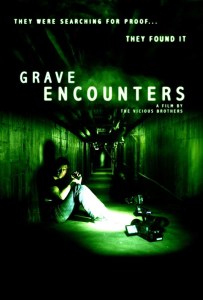
REVIEW: Grave Encounters

14 Sunday Apr 2019

Posted by amandamblake in Movie Reviews

≈ Leave a comment

Tags

found-footage, grave encounters, haunting, horror, movie review, psych ward

grave encounters[Warning: Here there be spoilers.]

I’ve been going in and out of wanting to write a review for this movie. I’m not entirely sure what I’m afraid of. That it’s not as good as I still think it is? That the review won’t do it justice? (Entirely possible. I’m still new at this.) I mean, it’s not perfect or anything, but I do get intimidated by good horror movies more than I do by explaining what’s wrong with the not-so-good ones.

For people with found-footage fatigue, I’m sure movies like GRAVE ENCOUNTERS don’t really help that, but I first saw GRAVE ENCOUNTERS when I opened my Netflix account, so I hadn’t watched nearly enough bad found-footage at the time to make me weary of the subgenre. And frankly, I have a fondness for that kind of low-budget horror, because it usually forces the film-makers to get creative with effects or eliminate them completely.

It’s worth noting that the effects of GRAVE ENCOUNTERS are its weakest points. They reference the obviously computer-generated effects in the sequel (please, miss that one—it offers nothing new, plus a dose of juvenile humor it didn’t need). They’re disappointing on every level, because in video that’s supposed to look real—kind of the whole conceit—the worst thing you can possibly do is show something that doesn’t look real. In the slight fuzziness and filter of movies, you can get away with minor CGI effects that you simply can’t in found-footage. It doesn’t matter how good the cameras are that they’re using. The slightest whiff of CGI ends up reading as fake, which takes a viewer out of the moment. If you’re going to use CGI, you’ve got to be dead careful. And the makers of GRAVE ENCOUNTERS were not. They would have benefited much more from judicious makeup, props, and unsettling acting rather than pay a small fortune on a small budget to get bad CGI.

But when they’re not stumbling in the computer-generated arena, GRAVE ENCOUNTERS is a solid offering in the found-footage arena, and it doesn’t—in my opinion—suffer from the same ending malady as most found-footage. And frankly, most horror.

Before even starting, GRAVE ENCOUNTERS ticks off a number of boxes that guarantee I’m more likely to enjoy it. For one, it got in my queue early, which means more things get compared to it instead of the other way around. I’d already watched a ton of horror movies by this time, between my college-days movie buying and back when FearNet was streaming, so I didn’t approach it in a vacuum. But other than BLAIR WITCH PROJECT and possibly PARANORMAL ACTIVITY (can’t really remember the timing), I hadn’t seen a ton of found-footage at the time. That gives it an automatic leg-up over its competition. But it’s stood up over time in spite of everything I’ve watched since.

Another point in its favor is the setting. I’m a sucker for psych ward horror, even though it’s often bad and ableist as hell. But being a person with mental illness who processes things through fiction, I’m entitled to like what I like. There are a lot of horrifying things about mental illness and a lot of horrifying things about what people have done to people with mental illness. GRAVE ENCOUNTERS has a few problematic moments, but it’s mostly about what was done to the people who were kept there rather than the mentally ill themselves being the monsters, and the movie makes everything more about setting, the building itself more the monster that keeps haunted people.

Abandoned buildings are amazing in general. If you haven’t seen Abandoned America’s photographs, I recommend checking them out. The movie probably only uses about three hallways and changes them just enough to make it seem like the gigantic building we see it is on the outside, but they also manage to convey a sense of claustrophobia and that disorienting feeling when you get lost—or worse, when things aren’t where they should be. Probably one of the more effective scenes is where they break down the front door, and there’s just more hallway. Then when they’re trying to get to the roof, and there’s just a wall halfway up the last set of stairs. This is why I like to emphasize practical effects. All they needed was a freaking wall to creep me the fuck out. If you’ve ever been lost, you know what that panic feels like. It’s one of the worst feelings in the world. Like that feeling you left your wallet or purse somewhere, but it doesn’t go away.

I feel like the movie really used its set to its full advantage, as simple as it was. And at its best, the scares themselves were simple. In found-footage, those work because of the conceit that everything is actually happening. A window opening by itself. Someone you don’t see pushing you down the stairs. A wheelchair rolling by itself. Blood in a bathtub. Waking up to patient ID bracelets on your wrists. Fog rolling in and people disappearing when it rolls out. Keep it simple in found-footage, and you’ll get a lot more mileage than a cheap-looking eye-and-mouth effects.

Like good found-footage, the cast doesn’t actually distinguish itself much. They’re a cast of regular people, the kind you would see on any reality TV show. The only one who feels polished is the lead, and since he’s the lead of a television show and needs a certain amount of charisma, that wouldn’t be unusual. Everyone’s slightly annoying at different times, but again, we’re watching footage of a television show that wouldn’t have actually made it onto the show.

When people get legitimately scared, they do get shrill. When people are legitimately exhausted, they do get emotional and snappish. And when they freak out, they do lash out. There wasn’t a moment in the movie when I felt the reactions weren’t real. They may not have been attractive or cultivated like in most other movies, but they were real, which is the best you can ask from found-footage.

One of my favorite moments is near the end, when Lance and Sasha are trying to look for a way out in the tunnels below the hospital. Sasha was sick, which being constantly scared, not sleeping enough, and not eating enough only exacerbated. She falls to the ground, vomiting blood, and just wails, “I want my mom!” It’s a striking scene in the movie, because the blood wasn’t CGI. You know she’s dying slowly and painfully and she’s scared and miserable, and you feel it. My heart aches every time she cries like that, because come on, if you’re honest with yourself, you’d probably say the exact same thing (unless your mom sucked, in which case I’m sorry—choose your own loved one).

Now, I said that the ending didn’t suffer from the usual dissatisfaction malady of other found-footage and horror movies, and it doesn’t. It’s vague. I’ll say that. But I didn’t find myself wanting more from it. I thought it was exactly the ending it needed. And how often do I say that about horror? (Answer: Rarely.)

So if you’re looking for some good found-footage horror in the midst of an oversaturated subgenre, GRAVE ENCOUNTERS really is worth your time. If you forgive it for the bad CGI and stay for the creepy building, you’ll likely leave satisfied.
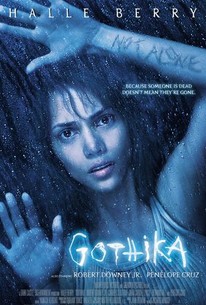
REVIEW: Gothika

14 Saturday Apr 2018

Posted by amandamblake in Movie Reviews

≈ Leave a comment

Tags

crazy, gaslighting, gothika, horror, hysteria, insanity, movie review, psych ward

GothikaThis is one of those movies where I can’t figure out if it’s deceptively good or just a personal pleasure, regular as comfort food.

It pushes one of my major buttons by being set in a psychiatric facility, which forgives a multitude of sins. When you’re crazy, I suspect you either love or hate psych ward suspense. I’m one of the ones who loves ’em. I process a lot of my shit through fiction, and psych ward horror brings up a lot of issues that I can healthily address through it, even when it’s sensationalized and mentally ill people othered for effect. So yeah, it’s problematic, but it still helps me deal with my problems. You just take some things with a grain of salt or a spoonful of sugar.

As horror movies go, this one suffers most in its script, with jarring lines all over the place. Here’s one of the juicier tidbits:

MIRANDA: I’m not deluded, Pete. I’m possessed.

PETE: I don’t believe in ghosts.

MIRANDA: Neither do I. But they believe in me.

Someone just thought they were so clever coming up with some of these lines and wouldn’t give them up for anything. I’m tempted to say they paid Halle Berry so much that they couldn’t afford a good script, but it’s more likely the script was destroyed in production, so I won’t unilaterally blame the writer, who has very little control over what happens when the script is out of their hands.

But a solid cast makes the most of cheap lines. You see Robert Downey, Jr., pre-redemption, which is a treat. With Penelope Cruz, Charles Dutton, and John Carroll Lynch rounding out the cast, it’s hard to go wrong. The only gross miscast would be Bernard Hill, who brings every ounce of gravitas he can to a fundamentally silly film. They really should have stopped with Dutton and Lynch for legitimacy.

And can we talk about the title for a second? A title that has absolutely no connection to the story, but someone thought it might have a Hot Topic baby goth kind of appeal? Sure, the story is pure modern Gothic—a looming psychiatric prison, female madness, a cool, dark palette, gaslighting. But where the hell did the K come from? Considering the motif of NOT ALONE, they should have just gone with that instead.

Okay, now that I’m writing this review, I’m pretty sure the movie is just a guilty pleasure.

But there are things about GOTHIKA that do work and let you see the good the movie could have been. The palette alternates between a gentler gray blue and a sickening green (a common palette for horror in the early 2000s, but it really worked here). Like the contrast between clean institutional rooms and rundown Gothic architecture, it visually disorients in a setting where you think they’d be more interested in soothing its inhabitants (except the place is for the criminally insane, so maybe they kinda want to punish them, too).

The role gives Halle Berry somewhere to use her earnest emotional energy in a place where it fits. Most of the time, I want her to dial it back a click or two, but in a story essentially about the perception of female hysteria, her brand of emotion feeds that question of sanity, and she does small, fierce, and determined very well. The trouble is, when she’s playing the doctor, she’s supposed to be the best, yet her more clinical lines come off as those of a novice (script, again), and she doesn’t seem to even take herself seriously as a doctor. Her demeanor lacks assertiveness or authority. If I thought that was a deliberate choice to highlight female mollification of male ego or a case of Imposter Syndrome, I’d be more forgiving. But because I suspect she’s supposed to seem competent, I can’t be quite so forgiving.

However, once the instigating incident occurs and Berry’s character Miranda is incarcerated among her patients, including Cruz, things become much more interesting, if not exactly consistent. Even allowing for flawed communication between the living and the dead, the ghost makes very little sense, and the story deserved better. However, the motif of NOT ALONE throughout the movie appeals to me, because the meaning changes each time, yet each meaning holds its own weight—and might sound terribly familiar in the midst of the #MeToo movement.

[HERE THERE BE SPOILERS]

When it comes to the suspense payout, though, the farmhouse reveal lost me a bit when it comes to timeline logic. When Dutton’s character is addressing the camera, is he addressing his wife directly, with the anticipation of bringing her down there soon (or again)? Is the woman in the video the one chained down there or Miranda herself? There’s a suggestion that she might have been a victim herself and not known it, connecting her with Cruz’s character and continuing with the theme of repression for the purpose of survival that was introduced through the conservation Dutton’s character had with his wife in the beginning. Was Dutton’s character addressing himself as a continuation of that conversation? Does he say “I love you” to himself, his wife, his victim, or his partner? The malleability of NOT ALONE may point to all of these options as being possible and open to interpretation, but I might be too generous, and in order for all of them to work, there needs to be solid evidence for all like the NOT ALONE motif, but instead, there’s not solid evidence for any.

When I first saw the movie, I wasn’t as aware of Lynch’s reputation, nor had I learned to recognize certain thriller patterns, so I didn’t see the twist coming, but as endings go, it suffered the horror curse of being underwhelming, with amateurish FX, not to mention more jarringly bad lines that did not work. What kind of doped-up villain sees a ghost and goes, “No…this isn’t rational”? Seriously.

The epilogue was similarly ‘why?’ Although it was good to have a reunion between Miranda and Cruz’s character Chloe, since the movie opened with them, I think there could have been a much better way of handling it—perhaps back at the facility, something to reinforce Chloe’s survival to bookend the repression-as-survival concept. Really, they didn’t focus enough on that, and I wish they had. They only really discussed it in terms of doctors using repression as a reason to dismiss women’s stories.

So the ending wasn’t quite satisfying, but the story’s main strength comes in the middle, in the space between the sane and insane, when Miranda grapples with that question herself and the people who knew her as the doctor suddenly start treating her like a child. It’s as Chloe explains, “You are not a doctor in here. And even if you the tell the truth…no one will listen. You know why? Because you’re crazy. And the more you try to prove them wrong, the crazier you’ll appear. You are invisible now. Can you feel it?”

The treatment, infantilization, and utter dismissal of the mentally ill as though we have nothing to offer (in the parts of our brain that are unaffected, but even in the places where our perception is different) is worth shining a light on—as though skewed perception in one area steals credibility from everything else as well. In the case of women, it’s long been used as a way to interpret the slightest bit of emotion as hysteria, rebellion as insanity, and all that as a reason to lock a woman away for her own good. People totally believed that, and sometimes still do. Because once you’re labelled insane, all of a sudden you have no voice. No one listens to what you have to say, only to what a doctor says you mean. (This is a big reason why I sometimes have to listen to Emilie Autumn.)

Some of the best scenes are between Miranda and Chloe, as well as Miranda with Robert Downey, Jr.’s character, Pete. Easily the best scene in the movie is after Miranda wakes up in the institution, when she’s sure she’s sane and doesn’t know what’s happened, but everyone’s treating her as dangerously psychotic, and she’s terrified and vulnerable. When she fights Pete’s hold, the sexual tension established between them becomes so twisted, which it’s clearly supposed to. Then Berry and Downey engage in a clinical back and forth that’s just beautiful in its quiet simplicity. The entire bit has such nuanced performances from each actor, it’s a real gem in an otherwise middling movie.

All in all, it’s a film that could have been better, but I still love it in all its hot mess glory, and it has enough rough gems to mine that it’s worth a watch if you like gaslight horror or are interested in a shameless popcorn movie on a rainy night.

Seriously, though, at least three-quarters of the movie takes place during a downpour, so waiting for a rainy night really helps.

Enter your email address to follow this blog and receive notifications of new posts by email.

NOW AVAILABLE

WHERE IT ALL BEGINS

TINGLE YOUR SPINE

Website Built with WordPress.com.

  • Subscribe Subscribed
    • Amanda M. Blake
    • Join 146 other subscribers
    • Already have a WordPress.com account? Log in now.
    • Amanda M. Blake
    • Subscribe Subscribed
    • Sign up
    • Log in
    • Report this content
    • View site in Reader
    • Manage subscriptions
    • Collapse this bar
 

Loading Comments...