• About the Author
  • The Thorns Series
  • Short Stories/Poetry
  • Standalone Novels/Novellas
  • Content Warnings
  • Media/Reviews
  • Contact

Amanda M. Blake

~ Of fairy tales and tentacles

Amanda M. Blake

Tag Archives: movie review

REVIEW: Slender Man

29 Saturday Sep 2018

Posted by amandamblake in Movie Reviews

≈ 1 Comment

Tags

bogeyman, haunting, horror, movie review, slender man, slenderman

slender man

I went to see SLENDER MAN with a friend, and like most people who saw it, I was extremely disappointed. Of course, it didn’t help that opening night audiences tend to be the most unpredictable. There are always rude people, but you never know where they’re going to sit. The couple sitting next to me were eating complicated food, so in the middle of a movie that’s densely dark most of the time, they had their phone lights on to see what they were eating. Bright lights. Dark theater. Dark screen. The light glared out the darkness, and this little magpie is easily distracted by bright, shiny, moving objects. Did. Not. Work. Who freaking does this?

I’m not somebody to call people on their bullshit, because I’m short and meek and not prepared to follow through if the other people get aggressive. But man, I just kept getting more and more annoyed. Then the guy next to me kept checking his phone even after they finished eating, and when he stopped, he eventually started snoring. Just… *choking gestures*

Even without nightmarish neighbors, SLENDER MAN fell far short of its potential. After the theatrical viewing, I was a bit confused, because I’d had the sense after watching the trailer a few months earlier that the movie would go in a much different direction. I re-watched the trailer again, and it definitely telegraphs a different storyline and some more violent moments.

It makes me think that the backlash to the trailer because of the ‘based on true events’ exploitative nature of the movie caused the showrunners to take their movie in a different direction–changing in edits, perhaps some script rewriting and reshooting. I’m not sure where they were in production at the time of the trailer, and I’m not sure whether the original story would have been more than a decent but forgettable movie. But from what I can tell, if they did significantly change the film, they changed it into something not as good.

Slender Man has been Internet creepypasta for roughly a decade, created out of nothing to become something of a meme. That’s not a long life for a viral monster of this kind, but he’ll probably stick around much longer, because he’s an amalgam of several iconic, creepy images and references similar creatures through history–from the Tall Man who was supposed to be the devil, to the faceless Bogeyman, to the Gentlemen from BUFFY THE VAMPIRE SLAYER, to the Men in Black (not the comics/movie, but the archetype), and perhaps the closest analog for me, the Terrible Trivium from THE PHANTOM TOLLBOOTH. Too-long limbs and facelessness are creepy and there’s really nothing new about him, hence Slender Man will probably stick around the Collective.

He was ripe for a movie of his own eventually. The problem, it seems, is with the timing.

The controversy of this movie comes from the fact that just four years ago, two twelve-year-old girls stabbed their friend (who fortunately survived). They claimed they did so to impress Slender Man and were sentenced to a mental facility. By violent, personal tragedy standpoint, there was probably never a good time to make a movie off of this, but since Hollywood is no stranger to exploiting tragedy for a dollar, I think a general rule of thumb is waiting at least ten years out of respect. But they would have started filming SLENDER MAN within two to three years of the attack, and it was put out four years later, which goes under the heading of Too Soon.

And technically, the concept of SLENDER MAN has been around pretty long in a netscape, so it might have actually been too late to capitalize on the viral nature of this particular creepypasta. Too late for viral, too early for tragedy.

The problem with having to weigh the real tragedy with what they were able to do in the fiction was that something a little closer to actual events, which is what the trailer hinted at, would have been a much better story. What’s creepier, a standard supernatural stalker film where you barely see the haunting? Or Slender Man actually inciting violence, both against the teens’ will and/or in accordance with it, and causing genuine insanity, not some poor imitation? (True, we learn something about one of the characters at the end, but it was a case of too little, too late, and too confusing.) In other words, if SLENDER MAN had been a bit closer to SINISTER or THE PULSE, it might have been salvageable.

As the movie ended up, it’s a mash-up of the supernatural-Bogeyman-stalking-friends element of the NIGHTMARE ON ELM STREET remake and the ghost-in-the-machine element of THE RING, while falling short of both. I’m actually a fan of the NIGHTMARE remake, which is a bit verboten to say, although I don’t like it more than the original. And THE RING is one of the best modern horror films (wasn’t a fan of RINGU, so I probably deserve to be drawn and quartered again).

If you’re going to put a creepy video in your movie that triggers the whole haunting like a net version of THE RING video, maybe you should make it actually, um, creepy. THE RING video benefited from being truly unsettling in its simplicity, with something as plain and stark as a wooden ladder on a wall alone giving a serious American Gothic vibe. The SLENDER MAN video is just a series of subliminal images, none of which are creepy on their own, and some of which go by so fast you don’t have time to get unsettled. If you’re going to invite comparison, you better make sure yours measures up.

As a concept, I feel like they had something that could have been interesting to work with even within the story they created. In their flimsy mythology that expanded upon the creepypasta, SLENDER MAN was an other-dimensional entity so strange to our dimension that to come into contact with him could change your perception, even cause a person to go mad. And they kept hinting at it happening, but aside from a few trippy moments (the library scene stands out as a respectable perception distortion, although I wish they would have done something less trippy and more creepy), they missed so many opportunities to play on paranoia and hallucination and instead got too attached to character denial and ineffectual effects. No madness. Not enough violence. Not enough paranoia. Not enough unsettling. You want an excellent example of slipping into madness that may or may not be real? Look no further than a movie that came out earlier this year, HEREDITARY.

Instead, there were a lot of plot details that padded the middle but never went anywhere. Cuts, edits, and rewrites obscured the original momentum and arc of the story to the point of meandering pointlessness.

There was proof that Annalise Basso’s character was obsessed with SLENDER MAN. And Basso is wonderfully disquieting in an unfortunately brief role. I wish the movie had used that sociopathic gleam and little smile more, perhaps as a proxy that Slender Man used to haunt them and convince them to do things, maybe even as the ultimately primary antagonist, with Slender Man as the instrument of her destruction. I feel like it was a big missed opportunity, especially since being willingly used by Slender Man would have been right up the character’s alley. Nothing ever happened with the revelation of that obsession, except that the Joey King character, Wren, starts researching more. But THE RING’s journalist Rachel, Wren is not. Industrious for a teen, but there’s only so much a girl can do.

There was suggestion that both the girls’ friend Chloe, played by Jaz Sinclair, and the protagonist’s boy toy started experiencing the madness. There was a scene in the trailer where Chloe was supposed to stab herself with a scalpel during science class. The actual science class scenes were dreadfully dull. We saw a burn/bruise of a hand on the boyfriend after he’d promised not to watch the video (another element cribbed from THE RING). But neither of those elements went anywhere. In HEREDITARY, the question you the viewer always asked yourself was “Is this real or just insanity?” If you can tell which one it is in a horror movie about madness, then that horror movie isn’t doing its job. We know Slender Man is doing it, so you’ve got to be creepier about the ‘it’ he’s doing.

Then there’s Slender Man himself, played by Javier Botet. Like Doug Jones, Botet has made a career of being tall, slender, bony, and flexible. But in the movies I’ve seen him in, like CRIMSON PEAK, MAMA, THE CONJURING 2, and here in SLENDER MAN, a heavy hand with CGI renders his physique and performance little more than poor motion capture. There might as well have never been a man there at all. I wish they’d taken a page from Doug Jones’ repertoire, which involves far more prosthetic work (although he’s no stranger to bad CGI, see LEGION). What they created could have been something taken from a video game. As I’ve said before, if I see the CGI-ness of it, I don’t believe it. And if I don’t believe it, you’ve failed. I understand CGI-ing the tentacles, but Slender Man is such a simple, iconic image, there was literally no reason they had to over-CGI the man himself. Isn’t a real man with no face creepier than creating a man with no face?

The really frustrating part is that the central female cast was actually fantastic. Annalise Basso (OCULUS) and Joey King (THE CONJURING, WISH UPON) are no strangers to the genre. Jaz Sinclair was decent. Julia Telles was our protagonist, and she and Joey King carry the movie. Telles has a radiance I remember from her BUNHEAD days that’s just begging for the right vehicle now that she’s grown up. She would be a helluva main girl in a good horror film. She has all of Katie Holmes’ freshness but more charm.

However, with the incoherent plot, the twist at the end that I still don’t quite get (would probably need to rewatch the movie to see if I understand, but I kinda don’t want to see it again), and the movie’s excessive caution that led to too toothless of a story, SLENDER MAN was just such a profound failure that, in my opinion, sinks even beneath ONE MISSED CALL. I’d rather watch THE RING 2. At least it’s pretty, and it has Simon Baker’s smile, one of my favorite horror soundtracks, and Naomi Watts, which forgives a multitude of sins.

Skip SLENDER MAN. See HEREDITARY instead.

REVIEW: As Above, So Below

22 Saturday Sep 2018

Posted by amandamblake in Movie Reviews

≈ Leave a comment

Tags

as above so below, found-footage, horror, movie review

As_Above,_So_Below_Poster[Here there be spoilers]

Because AS ABOVE, SO BELOW showed up unexpectedly on Netflix, I had the pleasure of watching it again to make sure it was as good as I remembered.

The closest analog I can think of is THE DESCENT, which is a tight, conventionally made horror film and one of my favorites, so the fact that AS ABOVE, SO BELOW shares some beats with it in a few conspicuous ways docks a few points, even if the similarities were unintentional and/or unconscious. But THE DESCENT is so good at ramping up the conflict and the obstacles; the similarities between the movies may just have to do with storytelling leading in the same directions. Even so, if I notice, I dock, and THE DESCENT came first.

Other than that, AS ABOVE, SO BELOW is one of the best found-footage horror movies I’ve seen, and other filmmakers should take note. The found-footage subgenre suffers from a few common foibles—too much shaky cam, bad special effects, an improvisational script that sometimes leads to ridiculousness and repetition, and the usual horror problem of an unsatisfying ending. Like most subgenres, once you start watching a whole bunch at once, they start to seem increasingly similar.

For instance, most found-footage depends on the unseen monster, which allows for a lot of simpler practical tricks (see PARANORMAL ACTIVITY) that are nonetheless effective…for a time. The longer the monster remains unseen, the more tension you generally have, but you eventually have to show something (I’m looking at you, BLAIR WITCH, wonderful though you are). It’s a delicate balance, because you eventually need to see something, at which point horror tension tends to plummet. Or the budget limitations mean that the monster isn’t believable. That shifting face effect and blobby eyes and mouth effect are fooling no one.

In the realm of found-footage, even more so than in traditional film, practical effects are king. Found-footage works within a very narrow suspension of disbelief, because the images seem more realistic than traditional film—but it’s totally worth it, because if you operate within that narrow suspension of disbelief, you can create entirely believable magic, and found-footage horror works by capitalizing on that believability and realism. But cameras that make things look more real are completely unforgiving, and so is your audience if they don’t believe what they’re seeing in a medium that looks spontaneously filmed. We’re more programmed to see fake in something that looks more real. Fortunately, AS ABOVE, SO BELOW depends almost entirely upon practical effects. Considering how ambitious they were, the fact they did the almost the entire movie old-school (makeup, set design, prosthetics, and good old-fashioned unsettlement) deserves mad props.

And then there’s the issue that every found-footage film needs to address, and most of them do so poorly: Why are people still filming? The blood and shit has hit the fucking fan. Why are you still lugging around a camera and not running like hell? There’s a point where almost everyone in the audience says, This is where I’d jump ship. I’m out. Even when the horror would have continued, there’s just a point where you’d put down the camera. One of the found-footage movies that addresses the unrealistic tendency of camera people to continue filming well is THE TAKING OF DEBORAH LOGAN.

AS ABOVE, SO BELOW does one better, because it never has to address the continued filming. There’s one camera person and three cams attached to headlamps. The main camera is discarded at one point, but when the protagonist picks it up again, her reasons for doing it at the time make sense without threatening the suspension of disbelief, especially since she doesn’t actually end up using it—keeping it for posterity, but without bogging down a scene. Three personal cameras and a main camera make for all the angles an audience could ask for, and you don’t lose any of the intimacy and immediacy that found-footage is so damn good at.

I love good found-footage because of that intimacy and immediacy, and I’m not the biggest fan of CGI. I don’t think we’re at a place yet where CGI is indistinguishable from reality, at least in my eyes. In animation films when everything moves in the same animated way, I’m fine, but when they’re used for special effects in live-action films, it works much better as an accessory to practical effects than the entirety of the effect itself. The minute I see too much CGI moving the way reality doesn’t and lit the way reality isn’t, I notice, and it takes me out of the immersive moment. I don’t believe it, and that’s the cardinal sin of film-making.

Found-footage is more than old-school. If done right, it feels real, like something that could really happen. You may not open your closet door tonight and see a wriggling tentacle monster, but some of my most unsettling moments at night are when I turn off my bedroom light and the closet light is on…and I don’t remember turning it on. Until I open my closet door and confirm no one’s waiting inside, the tension is incredible. (Despite my thanatophobia and sometimes intrusive thoughts, I’m actually pretty grounded and skeptical in real life, so supernatural forces are not my go-to explanation for things. Makes watching horror at night a little more doable.)

Like I said, AS ABOVE, SO BELOW was ambitious in what it wanted you to believe. It was a bit of INDIANA JONES meets THE DESCENT, with searching for Flamel’s Philosopher’s Stone (Harry Potter fans will thrill at that) in the delightfully macabre Paris catacombs, scenes inside the (implied) Notre Dame clock tower, the elaborate caves beneath the catacombs. I’m reminded also of MR. JONES, another ambitious found-footage film that didn’t quite land with the same conviction but still earned my serious respect for what it was attempting to do. AS ABOVE, SO BELOW makes you question your reality, but you never question the reality of what you’re watching, and that’s not an easy line to walk.

The main characters, played by Perdita Weeks and Ben Feldman aren’t complete unknowns, and that throws off some people’s suspension of disbelief within found-footage, but they weren’t familiar to me. I found them engaging, intelligent, just enough reckless without being totally foolish, and if the rest of the characters don’t feel as fleshed out, they nevertheless feel real. The movie benefits from being more thoroughly scripted, so although you get pockets of improv, you don’t feel like you’re losing time to it. In reality, the brain processes out all the extraneous bits in conversation, but in fiction, written and watched, you don’t, and the repetition and doubling back can become extremely annoying.

I’m a big fan of religious elements in my horror, elements that make you question your own understanding of religion. They tend to leave me shaken in the best kind of way, and they’re usually better than the kind of grandiose efforts you get in action/thriller films (see THE DA VINCI CODE). Nothing’s ever hard-confirmed, but AS ABOVE, SO BELOW takes a decidedly Danteian turn, and I find hell scarier when it feels real. Not overblown or overdone or lots of fire, not a Dore drawing, but real. Like a physical place I could be. And AS ABOVE, SO BELOW disquieted me. Not quite as much as THE DARK SONG, but it also had a different intention than that film.

Fans of alchemical history and INFERNO will probably enjoy AS ABOVE, SO BELOW and recognize all the little references that they don’t make too obvious. I like a film that trusts its audience and doesn’t have to explain everything along the way.

In general, I really like AS ABOVE, SO BELOW as found-footage and a bit of horror-slash-supernatural-slash-adventure. Genre mashups usually do pretty well, because they don’t feel as beholden to trope standards, and there’s more room to be surprised. Based off of the trailer, I found AS ABOVE, SO BELOW entirely unexpected. I was transfixed during the first viewing, and it held up just as well after the second.

DOUBLE REVIEW: Contracted & Starry Eyes

01 Saturday Sep 2018

Posted by amandamblake in Movie Reviews

≈ Leave a comment

Tags

alexandra essoe, body horror, contracted, horror, movie review, najarra townsend, starry eyes, zombie

This is going to be a double feature. Don’t you feel special? [Warning: SPOILERS AHEAD]

Part of the reason I’m doing a simultaneous review of CONTRACTED and STARRY EYES is because both were put out on Netflix around the same time and both have somewhat similar progression of pretty girls deteriorating. So they kind of feel like the same kind of movie, although they each stand out in different ways.

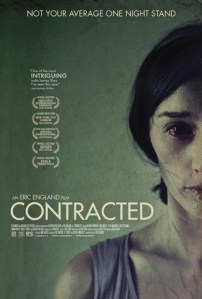
contractedI’ll start with CONTRACTED, because it’s the weaker movie of the two, although not for lack of talent by the main actress, Najarra Townsend. With her delicate brunette features and prominent cheekbones, she reminds me a lot of Rooney Mara, but she’s less introspective and more emotionally available to the audience (no dig against Mara, who I actually love in movies, just different acting style).

Townsend is easily the best part of an otherwise meh cast, and she makes the best of what seems like a somewhat amateur film. She and the gross-out effects make CONTRACTED worth a watch if you get the opportunity. Neflix pulled the film from its line-up, and I miss it already.

If AFFLICTED was a found-footage, up-close-and-personal look at developing vampirism, CONTRACTED is a standard film with an up-close-and-personal look at being infected by a zombie virus – in this case, a necrotic STD. The sequel made an attempt to explain the context of the virus, but the more horror is explained, sometimes the less you care. All that really matters is that a seriously unethical coroner appeared to have had sex with a dead person, then roofied Townsend’s already drunk character to have sex with her, and through that, she contracted the virus. Then everything already fraying in her life begins to completely fall apart in disgusting, spectacular fashion.

CONTRACTED went through a bit of controversy with the Netflix description of the night Samantha contracted the virus as a “one-night stand,” when the fact she was staggering drunk and then given a date-rape drug makes it pretty clear she’s raped. I mean, just look at the tagline on the poster image – implies the description was deliberate on the part of the studio, not a Neflix writer’s error. It doesn’t matter one bit that she gained a little consciousness in the middle of the act and seems to derive some pleasure from the sex, even as she’s telling him they should stop – although it seems like everyone seems to think that makes it okay, and her fault?

The sequel brings up the fact it was rape almost as an apology for the fact no one in the first movie seemed to realize that it was, including Sam, who never framed it as assault even when her lesbian lover accused her of having sex with a man. It’s tone-deaf, for sure, but a hell of a representation of why rape culture still needs to be discussed. (And CONTRACTED wasn’t the only one that seemed to miss the tonal mark with sexual assault.) It would have been one thing if it was clear either from the directorial perspective or someone’s perspective in the movie that what happened was rape, while everyone else didn’t get it, but I never got any impression that anyone was aware it was rape and not a one-night stand mistake.

Let’s move forward from that, though, to the post-contracted phase, which is when the movie and Townsend really start to shine, even though it’s kind of also where what little logic the movie has dissolves into so much goo.

The movie does amazing with the slow burn of the gross-out. It evolves little by little, although the movie takes place in less than three days. The early symptoms are relatively minor, but troubling enough to go to a clinic to test for an STD. She won’t get results back for a while, which is no help to her whatsoever. She’s given some cream for her genital rash and told the massive gout of blood out of her vagina is her period, even though it looks more like a miscarriage. At this point, I can see her wanting to hold her fragile life together and insist nothing’s wrong. I understand denial.

But when she vomits blood, I think that’s about time to go to the hospital, don’t you? She tries, but then somehow her boss ropes her into taking a shift, and instead of saying “No, dude, I’m vomiting blood,” she agrees and shows up looking thoroughly sick, with something that looks at least like raging pink eye, with another eye that’s jaundiced. And somehow, upon looking at her, her boss thinks, “That’s the kind of person I want serving people food.” He really only has himself to blame with that one.

And I know that when my daughter starts looking like an extra in a contagion film, my first thought is “Guess she’s gone back to drugs.” Sam’s bleeding, pussing, and rotting all over the place, and her mother brings a psychiatrist home to talk to her. Townsend’s so ugly-beautiful at this point, but everyone’s still completely clueless, and there’s a point at which it becomes ridiculous.

It’s hard to describe how perfect the gross-out effects are in this movie, though, how carefully spaced out they are, because the rest of the shit going on isn’t doing much to help – kind of like her friends and her indifferent lover, who’s clearly been looking to get off the train for a while, yet latches on to Sam having sex with a man as the final straw. Her body falling apart and her life in ruins, Sam officially jumps onto the crazy-train.

The best montage happens at this point – a pre-zombie girl dolling herself up for comfort sex that sounds like an extremely bad idea and may or may not be a symptom. And much blood and yuck was had.

It’s a silly and disgustingly beautiful movie, worth it for the effects and Townsend alone if you can stomach a wince-worthy script and uneven acting from the rest.

starry eyesWhich brings us to STARRY EYES. At its core, a completely different story – lovely but insecure young woman struggles to make it as an actress in LA, longing for her big break…oh, I’m sure you’ve heard this one before.
The movie opens on her pinching and prodding at her stomach, checking her butt, agonizing over how thin her hair has become. She works at a breastaurant to make ends meet, but she considers it beneath her. She has a supportive friend in her roommate (Amanda Fuller, one of my favorites), but her roommate has other starving artist friends who Sarah clearly thinks are insufferable – especially Erin, who appears to enjoy a touch more success and suffer less neurosis than Sarah, but who’s passive-aggressive in her superiority and played by the wonderful Fabianne Therese. Already, even though STARRY EYES feels like just as much of an indie film, the cast surpasses that of CONTRACTED. There are some undeveloped characters, but no bad actors.

And because there are no bad actors, Alex Essoe doesn’t have to carry the movie on her own shoulders the whole time. But she could. She brings layers to Sarah that most middle-of-the-road horror movies don’t even think about, and it shows. Every time I watch this movie, I read something a little different from her.

It would have been too easy to just make us hate Sarah or just make us love her, but Essoe does a really good job of making us empathize, even when we think she’s being as much of a bitch as Erin under the facade of the nice girl. She has a drive, a yearning for success and fame, and on that level we understand her – but there’s an ugliness underneath it, a desperation, an emptiness, that seems to be kept from the surface by the thinnest of paper. Ambition can be an amazing impetus, but there’s a fine line between good ambition and ambition gone bad. When you don’t have a solid acceptance of who you are as a foundation, ambition that doesn’t reach constant fruition risks turning back on its host, punishing internally as well as externally.

Ultimately, just like Astraeus Pictures’ film SILVER SCREAM, for which Sarah auditions, is supposed to be about the dark side of the ambition for fame, STARRY EYES brings that ugly underbelly up for everyone to see, and it does so with a great deal of self-awareness. It’s not quite meta-horror, because it’s a horror movie about movies rather than a horror movie about horror movies, but it flirts with that subgenre here and there.

We get a glimpse behind Sarah’s facade at the opening of the movie, but the magic really happens at the first audition for SILVER SCREAM, where the bland, creepy casting directors make their move to find something special in one of the girls trying out for their movies in the hopes of that big break. Sarah does a decent but indistinguishable audition. When the casting directors don’t seem all that interested, she reacts in a disproportionately frustrated way, with all of her anger directed at herself, throwing what amounts to a self-hating tantrum in the girls’ bathroom.

It’s a cumulative frustration, I know, but it’s still just one audition, and she puts so much pressure on herself to achieve, then blames herself entirely for being inadequate. She’s a miserable person, with that ugliness under her surface that’s more self-hating than she knows. Everything she hates about her roommate’s friends are things she’s afraid of in herself, a hallmark of narcissism – mediocre, talentless, invisible, poor, and she doesn’t even see how they’re so much happier than her because it’s more about the art for them than the fame. She’s afraid she’s just another one, and she’s desperate for some kind of external validation that she’s got something to offer, that she’s the talented one, that she’s the star. Whenever she doesn’t get that validation, she feels she has to punish herself. (It’s so common in perfectionism to motivate by punishment, but it doesn’t actually work.)

And here’s where it really connects with me, even though I’m not sure whether it’s the same thing. The reason why Sarah’s hair is so thin is because when she’s upset with herself, she pulls it and whole chunks get pulled out and drape between her fingers. I have trichotillomania myself, but I’m not certain whether what Sarah’s doing is supposed to be trich, or whether it’s self-harm punishment. There’s a certain drama to seeing full chunks of hair in a woman’s hand, but most trichsters pull one or a few hairs at a time. The bald spots we get add up over time. Maybe it’s supposed to be a little bit of both? Like, maybe they read about pulling out hair as a symptom of anxiety and depression and thought it meant chunks rather than one by one? Maybe they just wanted hers to be so extreme in comparison with the fastidiousness of most trichsters. Sometimes I watch depictions of hair-pulling disorders in the media (CSI:NY, Criminal Minds, and The Blacklist had other notable depictions), I wonder if that’s really how the world sees people like me, if that’s what I look like to other people when I’m pulling. It’s weird.

Anyway, right after Sarah’s through throwing her tantrum, she leaves the bathroom stall and walks straight into one of the casting directors, the incredibly disturbing Maria Olsen, who tells Sarah she finally has their interest. Thus begins a short series of auditions that go from red flags to fire alarms, designed to weed out only the most desperate and hungry of the bunch. It’s not exactly talent they’re looking for, which is good, because talent is in abundant supply, and talent isn’t even what Sarah wants – she wants acclaim for her talent, which is what Astraeus Pictures wants to give her…if she gives a little of herself in return.

Like CONTRACTED, there’s a tonal problem in the way the movie addresses the most controversial part of the movie, which I saw in a completely new light after the Weinstein scandal. This isn’t the first time the sleazy, boys’-club mentality of the Hollywood movers and shakers has been depicted in a horror movie – Scream 3 brought it up first. It’s no surprise that men in power use that power to get what they want, and I don’t doubt it’s still happening today, even with Weinstein disgraced. Women talk about it years later, if ever, which means what’s happening now won’t even come up until long after the fact. There’s still a few hurdles women have to go through to get somewhere, and the men making the rules and calling the shots are more than willing to take advantage of women’s desperation, to pluck the fruits of women’s ambition in a way that women (mostly) can’t achieve in the same positions.

So while characters in the film are stunned and derisive when they discover Sarah blew a producer for a “break-out” role in a horror film from a struggling production studio, their condemnation is almost completely on Sarah, and the audience is clearly supposed to agree. Extorting sexual favors for roles simply isn’t done anymore, and any self-respecting woman won’t hold for that, right? Well, reality is a tad more complicated. Sure, Sarah could have just walked away, and yes, she has a massively inflated, narcissistic ego to make up for her crippling insecurities, but the entertainment business is often one in which women do have to walk away if they don’t play ball, and that’s not right, either. Because male ambition is expected and encouraged, but female ambition is unseemly and seedy and suspect, and women need to do more to be seen as equally competent. It’s a troubling, tangled issue, this implicit condemnation more for Sarah than for the shady relic producer.

Astraeus Pictures are more than just shady, bringing on a bit of the ROSEMARY’S BABY vibe, and with the sacrifice placed upon the woman yet again. Here it is, ladies and gentlemen, the price for fame. You just have to die slowly and horribly and destroy everything around you. Sarah’s desire for fame and fortune is placed in the context of many early film starlets of the black-and-white era, for good reason. Once you learn some of their stories, you find that’s not much of an exaggeration. And if the SILVER SCREAM is a condemnation of naked ambition, I’m not sure whether STARRY EYES ever quite reaches a critique of the exploitation of that naked ambition so much as adds its voice into condemning the ambition itself.

This is point where STARRY EYES most closely parallels CONTRACTED, making use of Essoe’s thin frame and willingness to put maggots in her mouth (can’t fault a girl for her commitment to the role). Sarah gradually sheds her masks to expose the ugliness within, all inhibitions released, and her true feelings towards her roommate (with a tinge of envy and sexual attraction, am I reading that right?) and her roommates’ friends coming out of the woodwork. The process is faster than in CONTRACTED because it takes up less of the film, but it still follows the ‘pretty girl gone dead’ arc that’s truly fascinating to watch, culminating in a much less logic-twisted, blood-soaked ending.

It’s a more complete, complex, thoughtful film than CONTRACTED, but both are definitely worth the watch for fans of nitty-gritty, intimate body horror.

REVIEW: The Awakening

25 Saturday Aug 2018

Posted by amandamblake in Movie Reviews

≈ Leave a comment

Tags

depression, ghosts, grief, horror, mental illness, movie, movie review, rebecca hall, the awakening

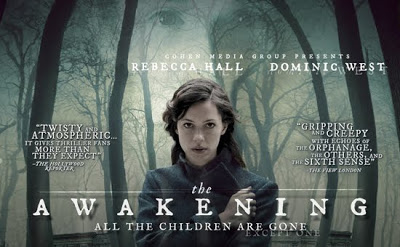
The Awakening

I think ghost stories are particularly difficult to make scary. They’re generally filed under the umbrella of horror monsters, but they’re more often tragic than frightening. That’s why there are so many ghost horror movies that depend on the jump scare—because that’s sometimes the only kinds of scares they offer. Let’s face it – the more you get to know them, the more lost spirits seem sad rather than scary (SIXTH SENSE kind of covers this phenomenon, and I’d consider SIXTH SENSE one of the better ghost horror movies). I think this is the reason a lot of movie hauntings have transitioned from the human spirits to the demonic. Ghost stories are extremely difficult to do well, especially when trying to find the right balance of tragedy and horror.

THE AWAKENING is one of my favorite ghost stories, but it is, without question, a better tragedy than it is a horror movie. I would say the closest comparison to the movie in tone, palette, and time period is THE OTHERS, which is also one of the better ghost horror movies. However, while THE AWAKENING has a few jump scares, it’s really shot as a drama rather than a horror movie most of the way through, which is good, because aside from some good tension here and there, it functions much better as a supernatural period drama.

I love the opening to THE AWAKENING. It begins with a quote from the main character’s book challenging the spiritualism movement prevalent at the beginning of the 20th by placing it in historical context. Between the Spanish flu and World War I, so many had lost people close to them under terrible circumstances. In the midst of survivor’s guilt, lack of closure, and an excess of grief. Florence Cathcart rightly points out, “This is a time for ghosts.”

The opening transitions into a classic seance, with the supernatural element rising higher and higher…only for Florence to interrupt the proceedings by exposing the spiritualist charlatans for what they are. Instead of being outraged at being taken advantage of, a woman who lost her young daughter – presumably to influenza – slaps Florence and asks whether she has any children. “No, of course you haven’t,” she replies with disdain, because a woman with children would know why a false dream was better than nothing. She questions whether Florence’s grief for the young soldier whose photograph she brought to the seance was even real. But as the mother leaves, we see Florence—played by the wonderful Rebecca Hall with arch strength and vulnerability—deflate. Her commanding, energetic presence dissipates. She appears weighed down, barely able to take another step.

In her own words, “This is a time for ghosts.” And it’s clear within the first fifteen minutes that, though Florence devotes herself to disproving hauntings and exposing frauds, she’s desperately seeking ghosts of her own. It gives her no pleasure at all to debunk the supernatural. Quite the contrary.

This entire movie offers some of the best depictions of depression and grief from a number of the characters that I think I’ve ever seen in a movie. The way it weighs you down and you sometimes don’t even want to move. The way it makes people lash out. The way you have to put on a mask, the way you lie to others and yourself, the way it takes over your life and cycles through your thoughts, the guilt, hopelessness, and self-destruction it can cause.

From the wonderful opening, AWAKENING moves into the main plot, with Robert Mallory—played by Dominic West as an attractive but caustic ex-soldier—an instructor from a boy’s boarding school, visiting Cathcart and requesting her help to put to rest rumors of a ghost boy haunting the school, after the death of one of the students. Usually the man would be the skeptic and the woman the believer, but like Mulder and Scully, AWAKENING switches that expectation on its head. Mallory believes in ghosts, but he’s also a firm realist, and he only wants the truth and to keep the kids safe, and the prim but earnest school matron, Maud, is a devotee of Cathcart’s work and recommended her.

At first, Cathcart is reluctant to engage in another investigation, weary as she is with her depression and needing a break, but Mallory throws her own words from her book back into her face, about how she was a fearful child and cannot abide children being made to live in fear – another point that resonates through the movie.

The boys’ school to which Mallory brings Florence is appropriately gothic, a looming, gray structure in the middle of nowhere, gloomy and forbidding, with energetic but somewhat melancholy students and a severe administration. With her, Florence brings the various accoutrements of her trade—a delightful look into the early twentieth century versions of our modern ghost-hunting gizmos, with all the scientific rigor of pre-WWII CSI. The dark manor at night provides some decent spookiness, but it’s pretty clear with the first tripped bell wire and footprints on the floor that the ghost boy traversing through the halls at that late hour is not so dead, and the tension dissipates…until something’s there that shouldn’t be.

And thus begins the slow unraveling of Ms. Cathcart. The most held-together characters of the movie lose their masks, exposing not ghosts but shells, broken survivors of any number of tragedies who must learn how to live with the ghosts of the people who passed on without them, and beyond the fear of mortality so keenly felt at a time that wrought the need for ghosts.

To be honest, the supernatural elements are sometimes the worst parts of the movie – the swirly face ghost is actually the worst effect, which is a shame, because that’s one of the few things you’re supposed to be afraid of.

The human elements – shattering perceptions and confronting fears – are by far the most interesting parts. I feel like I see something new every time I watch it. It’s a beautiful film and a beautiful, tragic story, and I do encourage you to give it a try on that merit rather than the horror.

REVIEW: Gothika

14 Saturday Apr 2018

Posted by amandamblake in Movie Reviews

≈ Leave a comment

Tags

crazy, gaslighting, gothika, horror, hysteria, insanity, movie review, psych ward

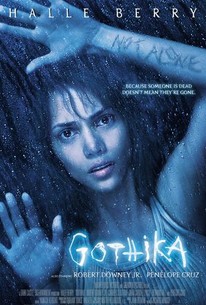
GothikaThis is one of those movies where I can’t figure out if it’s deceptively good or just a personal pleasure, regular as comfort food.

It pushes one of my major buttons by being set in a psychiatric facility, which forgives a multitude of sins. When you’re crazy, I suspect you either love or hate psych ward suspense. I’m one of the ones who loves ’em. I process a lot of my shit through fiction, and psych ward horror brings up a lot of issues that I can healthily address through it, even when it’s sensationalized and mentally ill people othered for effect. So yeah, it’s problematic, but it still helps me deal with my problems. You just take some things with a grain of salt or a spoonful of sugar.

As horror movies go, this one suffers most in its script, with jarring lines all over the place. Here’s one of the juicier tidbits:

MIRANDA: I’m not deluded, Pete. I’m possessed.

PETE: I don’t believe in ghosts.

MIRANDA: Neither do I. But they believe in me.

Someone just thought they were so clever coming up with some of these lines and wouldn’t give them up for anything. I’m tempted to say they paid Halle Berry so much that they couldn’t afford a good script, but it’s more likely the script was destroyed in production, so I won’t unilaterally blame the writer, who has very little control over what happens when the script is out of their hands.

But a solid cast makes the most of cheap lines. You see Robert Downey, Jr., pre-redemption, which is a treat. With Penelope Cruz, Charles Dutton, and John Carroll Lynch rounding out the cast, it’s hard to go wrong. The only gross miscast would be Bernard Hill, who brings every ounce of gravitas he can to a fundamentally silly film. They really should have stopped with Dutton and Lynch for legitimacy.

And can we talk about the title for a second? A title that has absolutely no connection to the story, but someone thought it might have a Hot Topic baby goth kind of appeal? Sure, the story is pure modern Gothic—a looming psychiatric prison, female madness, a cool, dark palette, gaslighting. But where the hell did the K come from? Considering the motif of NOT ALONE, they should have just gone with that instead.

Okay, now that I’m writing this review, I’m pretty sure the movie is just a guilty pleasure.

But there are things about GOTHIKA that do work and let you see the good the movie could have been. The palette alternates between a gentler gray blue and a sickening green (a common palette for horror in the early 2000s, but it really worked here). Like the contrast between clean institutional rooms and rundown Gothic architecture, it visually disorients in a setting where you think they’d be more interested in soothing its inhabitants (except the place is for the criminally insane, so maybe they kinda want to punish them, too).

The role gives Halle Berry somewhere to use her earnest emotional energy in a place where it fits. Most of the time, I want her to dial it back a click or two, but in a story essentially about the perception of female hysteria, her brand of emotion feeds that question of sanity, and she does small, fierce, and determined very well. The trouble is, when she’s playing the doctor, she’s supposed to be the best, yet her more clinical lines come off as those of a novice (script, again), and she doesn’t seem to even take herself seriously as a doctor. Her demeanor lacks assertiveness or authority. If I thought that was a deliberate choice to highlight female mollification of male ego or a case of Imposter Syndrome, I’d be more forgiving. But because I suspect she’s supposed to seem competent, I can’t be quite so forgiving.

However, once the instigating incident occurs and Berry’s character Miranda is incarcerated among her patients, including Cruz, things become much more interesting, if not exactly consistent. Even allowing for flawed communication between the living and the dead, the ghost makes very little sense, and the story deserved better. However, the motif of NOT ALONE throughout the movie appeals to me, because the meaning changes each time, yet each meaning holds its own weight—and might sound terribly familiar in the midst of the #MeToo movement.

[HERE THERE BE SPOILERS]

When it comes to the suspense payout, though, the farmhouse reveal lost me a bit when it comes to timeline logic. When Dutton’s character is addressing the camera, is he addressing his wife directly, with the anticipation of bringing her down there soon (or again)? Is the woman in the video the one chained down there or Miranda herself? There’s a suggestion that she might have been a victim herself and not known it, connecting her with Cruz’s character and continuing with the theme of repression for the purpose of survival that was introduced through the conservation Dutton’s character had with his wife in the beginning. Was Dutton’s character addressing himself as a continuation of that conversation? Does he say “I love you” to himself, his wife, his victim, or his partner? The malleability of NOT ALONE may point to all of these options as being possible and open to interpretation, but I might be too generous, and in order for all of them to work, there needs to be solid evidence for all like the NOT ALONE motif, but instead, there’s not solid evidence for any.

When I first saw the movie, I wasn’t as aware of Lynch’s reputation, nor had I learned to recognize certain thriller patterns, so I didn’t see the twist coming, but as endings go, it suffered the horror curse of being underwhelming, with amateurish FX, not to mention more jarringly bad lines that did not work. What kind of doped-up villain sees a ghost and goes, “No…this isn’t rational”? Seriously.

The epilogue was similarly ‘why?’ Although it was good to have a reunion between Miranda and Cruz’s character Chloe, since the movie opened with them, I think there could have been a much better way of handling it—perhaps back at the facility, something to reinforce Chloe’s survival to bookend the repression-as-survival concept. Really, they didn’t focus enough on that, and I wish they had. They only really discussed it in terms of doctors using repression as a reason to dismiss women’s stories.

So the ending wasn’t quite satisfying, but the story’s main strength comes in the middle, in the space between the sane and insane, when Miranda grapples with that question herself and the people who knew her as the doctor suddenly start treating her like a child. It’s as Chloe explains, “You are not a doctor in here. And even if you the tell the truth…no one will listen. You know why? Because you’re crazy. And the more you try to prove them wrong, the crazier you’ll appear. You are invisible now. Can you feel it?”

The treatment, infantilization, and utter dismissal of the mentally ill as though we have nothing to offer (in the parts of our brain that are unaffected, but even in the places where our perception is different) is worth shining a light on—as though skewed perception in one area steals credibility from everything else as well. In the case of women, it’s long been used as a way to interpret the slightest bit of emotion as hysteria, rebellion as insanity, and all that as a reason to lock a woman away for her own good. People totally believed that, and sometimes still do. Because once you’re labelled insane, all of a sudden you have no voice. No one listens to what you have to say, only to what a doctor says you mean. (This is a big reason why I sometimes have to listen to Emilie Autumn.)

Some of the best scenes are between Miranda and Chloe, as well as Miranda with Robert Downey, Jr.’s character, Pete. Easily the best scene in the movie is after Miranda wakes up in the institution, when she’s sure she’s sane and doesn’t know what’s happened, but everyone’s treating her as dangerously psychotic, and she’s terrified and vulnerable. When she fights Pete’s hold, the sexual tension established between them becomes so twisted, which it’s clearly supposed to. Then Berry and Downey engage in a clinical back and forth that’s just beautiful in its quiet simplicity. The entire bit has such nuanced performances from each actor, it’s a real gem in an otherwise middling movie.

All in all, it’s a film that could have been better, but I still love it in all its hot mess glory, and it has enough rough gems to mine that it’s worth a watch if you like gaslight horror or are interested in a shameless popcorn movie on a rainy night.

Seriously, though, at least three-quarters of the movie takes place during a downpour, so waiting for a rainy night really helps.

REVIEW: Would You Rather

26 Monday Mar 2018

Posted by amandamblake in Movie Reviews

≈ Leave a comment

Tags

body horror, class warfare, dark humanity, horror, locked room, movie, movie review, social commentary, torture, wealth disparity, would you rather

Would-You-Rather-354x525I’ve been wanting to write a review about this movie for a while, but I just didn’t have anything substantive to say about it, other than that it pushed a lot of good buttons. I’m a fan of locked-room horror, because it feels almost like a play. It evokes intimacy, then as things get more intense, claustrophobia. I also have a soft spot for adolescent games turned dark, which is why I liked TRUTH OR DIE and will probably love TRUTH OR DARE when it comes out next month.
The cast is also fantastic and varied, with Brittany Snow, horror alum Jeffrey Combs, Robin Lord Taylor, and Enver Gjokaj, plus a number of other familiar faces. Really, in dinner theater, there’s nothing better than bringing together an amazing cast, because even the small parts are given greater intensity.

(Side note: It also has a wonderful, subtle opening credit sequence that I love. Reminds me of the opening credits of MADHOUSE in terms of beauty and CABIN FEVER in terms of slow-burn subtlety—which was about the only thing in the original CABIN FEVER that was slow-burn subtle, by the way.)

On its surface, WOULD YOU RATHER is a simple sadistic tale in a post-SAW gorescape of bringing a group of flawed people into a space and making them torture each other. For WOULD YOU RATHER, though, a smaller budget makes the situations seem much more realistic in scope and execution and less of a spectacle. As gore goes, it’s minimal, playing off implication and imagination rather than showing the blood. Not that it goes easy on you.

The premise: Wealthy patron invites down-on-their-luck individuals for dinner for a chance to win a substantial amount of money. The exact amount is never specified, but it’s suggested that it will take care of all immediate debt and whatever else an individual needs to get back on their feet, and then some.

It doesn’t go well.

The reason I decided to finally write a review is that this small, scrappy little gem takes on a disturbingly relevant tone these days.

Haves versus have nots is an old conflict. Ever since we’ve had an economy, we’ve had wealth disparity and its resultant tension. But as wealth disparity grows and the poorer get blamed for it, that tension’s only going to get worse. As our present administrations continue to cut safety nets and entitlements, as health care costs soar, as student loans continue to burden the generations entering adulthood, as corporations continue to blame millennials for their own lack of wealth that makes the increasingly more expensive markers of adulthood out of reach, as affordable housing and decent food and other staples rise in price against stagnant wages…the tensions continue to escalate. Between the haves and have nots, of course, but also between each subsection of the have nots, because it’s an insidious strategy to pit the have nots against each other in the blame game so they don’t have enough energy to combat the haves. (See: THE HUNGER GAMES. Also: A BUG’S LIFE, which is unexpectedly political.)

And here we have a wealthy, white psychopath and his lazy, spoiled brat rapist son bringing debt-ridden people together to torture each other for their own entertainment…because they know they can. At the very beginning, we see the signs. In the doctor’s office where he courts Snow’s character to the dinner party, he’s eating either peanuts or sunflower seeds on the couch and discarding the shells on the cushion next to him. Not in a bowl, not in an ashtray, not in a tissue, not in a trashcan. He’s in a doctor’s office, discarding his trash on the furniture without any regard to the impact of his actions. We see where he’s put himself in the hierarchy.

The host laughs as he convinces a vegetarian to eat meat for ten thousand dollars. He laughs as he convinces a recovering alcoholic to drink a bottle of scotch for fifty thousand. In a world where one major illness can wipe out everything, where mental and chronic illness can make functioning to production standards impossible, where addicts are entirely blamed for their addictions when one moment of weakness shouldn’t lead to a lifetime of damnation just because of an exploited trick of brain chemistry, where being poor is so goddamn expensive while rich people get free things handed to them on the platter as though they’re lucky cats…blaming have nots for their own circumstances has become more unconscionable, yet the rhetoric seems to have only increased.

(In the interest of full disclosure, I’m a white millennial with the additional privilege of parental wealth. I’m still angry on behalf of friends who get shit on. And frankly, on behalf of total strangers, too. This doesn’t have to be personal and I don’t have to have stakes in the game for me to care.)

But here we have a self-made man who sees a table full of losers, who feels he’s completely entitled to do anything he wants, because he has the money and they want it and are willing to do anything for it. All they have to do is sacrifice everything. And even then, only the winner gets it. All of them will sacrifice everything, but the winner takes all. So you see, friends, if you just work harder… Never mind that luck plays a significant role in the game as well.

Suffice it to say, the movie feels far more allegorical than the first dozen times I saw it. Even the deaths and how each player relates to each other seems more significant. For instance, it doesn’t seem coincidental that the pretty blonde protagonist gets as far as she does.

Don’t get me wrong. She’s a driven young woman. And though she’s hardly the physically strongest person there, quite slight in stature in comparison with everyone but Sasha Grey’s character, the Lambrick Foundation chose her because she’s fighting for someone else, and that sometimes makes a bigger difference than fighting for yourself. Brittany Snow does a fantastic job leading the ensemble with her vulnerability, and it’s worth watching her reach the point where she changes from a scared, passive victim to someone determined to survive.

But it’s still a stunning lesson in privilege, presided over by a man with a Draco Malfoy-like son who thinks he’s superior because he was born into wealth by no effort of his own and, like his father, is bailed out of his own criminal activity, excused for it supposedly because of the trauma of his mother’s death. Yet somehow, he deserves his wealth more, and everyone else in that room deserves to sing for their supper until they die.

It’s a blistering indictment. It really is. When a dinner party turned slaughterhouse is a rich man’s solution for who deserves his charity (which, when it has strings, isn’t charity at all), when compassion doesn’t even enter the conversation, when dire straits are viewed as just deserts and help something you must earn at the cost of your life or someone else’s, something is seriously wrong. The one percent may not be putting people through such individualized, intimate torture, but it is actually a matter of life and death. People are dying. And on their potter’s field headstones, it might as well read: Should have bootstrapped harder.

In that light, easily the most chilling line: “You know, you agreed to be here. You’re basically asking my family for a handout. The least you could do, pig, is show a little fucking respect.”

Beyond the social horror, though, the low-budget torture goes back to the classics. Really, there’s no need for genius, Inquisition-level engineering. The standards are standards for a reason, and the impact isn’t lower because of the utter, beautiful, sadistic simplicity of it all. As the players submit to the deadly game in their own desperation and will to survive, you’ll be asked the same questions. “Would you rather?” stripped down is just “Under the right circumstances, what are you willing to do?” As countless unethical social experiments have shown, we’ll always be horrified by the answer.

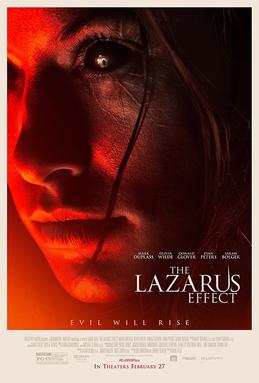
Review: THE LAZARUS EFFECT

31 Wednesday Jan 2018

Posted by amandamblake in Movie Reviews

≈ Leave a comment

Tags

demonic, horror, lazarus effect, life after death, movie review, resurrection

The_Lazarus_Effect_(2015_film)_posterTHE LAZARUS EFFECT is a regular background movie for me. I’ll turn it on a lot when I’m working on something else and just need something to listen to. I know it well enough to visualize the movie as it goes without actually having to watch it, and it’s slick enough to grab my attention now and then. But like LIGHTS OUT, it’s a slick horror mess that suffers from storytelling mistakes rather than talent.

I very much enjoy seeing Olivia Wilde in a role outside HOUSE, and I appreciated being introduced to Sarah Bolger, who reminds me so much of Alyson Hannigan–her face is different, but her expressions, gestures, and timing are eerily similar, though Bolger is obviously drawn to darker stories. The story didn’t do much for the usually charismatic Evan Peters or Donald Glover, though, and leading man Mark Duplass doesn’t quite manage to dig himself out of blandness. However, as I said, most of the sins of the movie have nothing to do with the actors, so although Wilde and Bolger elevate their roles, it’s likely the others can be forgiven for the script’s sins against them.

I keep watching this damn movie, even though it disappoints me every time. I think part of me thinks that, this time, the movie will finally progress the way it should and I’ll finally be satisfied. Or maybe I’m just trying to figure out how it could have been saved in another world.

LAZARUS EFFECT has a not-so-original premise, but it’s one that, with some work, might have yielded something truly terrifying. Certainly more terrifying than the rote scares the movie eventually succumbed to. The thing that gets me is that this movie really could have been better–it had room to stretch, it set up its unsettling questions…then forgot about those questions or didn’t follow them far enough down the rabbit hole. The cast was older, so it didn’t need to suffer the teen-bait fate. But it feels like the movie was supposed to go somewhere else, somewhere more interesting, and then some knucklehead pulled the plug on it like they did for the INVASION remake–maybe they thought Americans audiences wouldn’t get it or care. So we ended up with a moderately interesting first half and a hackneyed, lowest-common-denominator second half–although someone needs to give Wilde another reason to wear those demon eyes, because she rocks the hell out of them.

Let’s examine what LAZARUS EFFECT did well at the beginning and how the end failed it so hard.

The premise is this–two scientists and their research team are testing an experimental serum meant to kick-start neural activity after death. Reanimation, yes, but not in the zombie sense. The way Male Scientist presents it (seriously, I don’t care enough to look up his name), it’s more for recent deaths, to give hospitals longer to save someone. Basically, intended less for reanimation, more for extreme revival. Olivia Wilde, who plays Female Scientist, Zoe, works with her husband, and they are very much equal partners and equally brilliant. Sarah Bolger plays the newcomer comm student they hire to document their research and gives everyone a reason to explain what’s going on. They bring up one of the big questions when it comes to creating a serum that literally brings someone back from the dead: Namely, what happens after death?

Both scientists couch their theories in nutshell scientific terms, which I appreciated–interpreting the facts as we have them. Male Scientist believes there’s nothing afterward, that the near-death or bright light experiences by people who technically die are just euphoric hallucinations as the brain shuts down. Female Scientist, with a small gold cross hanging around her neck, hypothesizes that these hallucinations are part of the process of crossing over, that nothing ever really goes away–which bears with the first law of thermodynamics, conservation of energy, and so on. Both are valid theories (colloquial meaning of theory here) on the subject of existence after death, but Female Scientist rightly emphasizes that we just don’t know.

Then one of their experiments works, and they successfully bring a dog back to life, its cataracts disappearing but the serum not metabolizing out of his system the way it should. Instead, it keeps creating new neural connections, or something of that nature. And he’s exhibiting odd behavior, which brings up the second important question–What happens when you bring something back? (Haven’t any of these people watched BUFFY?) What are the consequences for the subject and what does that mean for the rest of us?

To summarize, here are the questions at stake: Is there life after death? And either way, what happens when you bring the dead back from wherever they’ve been?

As shown in the trailers, Zoe dies through human error, and she’s brought back, because dogs can’t discuss the philosophical ramifications of reanimation.

Where things begin to go off the rails is when she starts manifesting psychokinetic and telepathic abilities. In itself, this isn’t a problem (although that damned 10-percent-of-the-brain myth showed up and annoyed the crap out of me, because these scientists should fucking know better). It became a problem when that became the focus of the second half, eventually to the point of senselessness.

Let me break it down [HERE THERE BE SPOILERS – you can pretty much glean everything from the trailer, though]:

Between the moment of Zoe’s death and her resurrection, she experienced the worst thing she’s ever done on an endless loop for years. Set against her beliefs, it’s clear she believed she was in hell, forced to relive her greatest sin in spite of her religion telling her she’s supposed to be forgiven, that she’s done everything she needed to do. Now, we’re never told whether she was actually in hell or whether, in her brain’s last moments, she experienced time dilation, like in a dream, and perceived years of self-created hell in a matter of moments. This is not a question that needs to be resolved, but I would have appreciated it being, I don’t know, addressed? Because the implications are so much scarier than Resurrection!Carrie.

And again, Resurrection!Carrie itself isn’t a problem in and of itself, but it just kind of…happened. How did this calm, rational, kind scientist end up terrorizing and slaughtering everyone she knows? She’s got power. What’s the point of the killing? Even her feeling like she won’t have any spiritual consequences doesn’t explain it. I think if they’d wanted her power to terrorize everyone, they could have gone the post-traumatic stress route, where her powers extend from panic, distress, nightmares, fears, furies. What happens when a woman is tortured either in real hell or the hell she created for what she perceived as years?

Another idea that they teased but never really did anything with, if she were really in hell, did resurrection bring something back with her? I think giving Wilde’s character more motivation as a villain would have gone a long way toward improving the movie. And in general, going the “weird fiction” route might have done more justice to the question of heaven, hell, or nothing at all–because it’s often these challenges to conventional belief systems, including atheism, that are the most disturbing. Going “demonic hitchhiker” might have been interesting as well.

But we’ll never know, because every time I watch it, the movie still ends the same.

Newer posts →

Enter your email address to follow this blog and receive notifications of new posts by email.

NOW AVAILABLE

WHERE IT ALL BEGINS

TINGLE YOUR SPINE

Website Built with WordPress.com.

  • Subscribe Subscribed
    • Amanda M. Blake
    • Join 146 other subscribers
    • Already have a WordPress.com account? Log in now.
    • Amanda M. Blake
    • Subscribe Subscribed
    • Sign up
    • Log in
    • Report this content
    • View site in Reader
    • Manage subscriptions
    • Collapse this bar
 

Loading Comments...