• About the Author
  • The Thorns Series
  • Short Stories/Poetry
  • Standalone Novels/Novellas
  • Content Warnings
  • Media/Reviews
  • Contact

Amanda M. Blake

~ Of fairy tales and tentacles

Amanda M. Blake

Category Archives: Movie Reviews

Review: THE LAZARUS EFFECT

31 Wednesday Jan 2018

Posted by amandamblake in Movie Reviews

≈ Leave a comment

Tags

demonic, horror, lazarus effect, life after death, movie review, resurrection

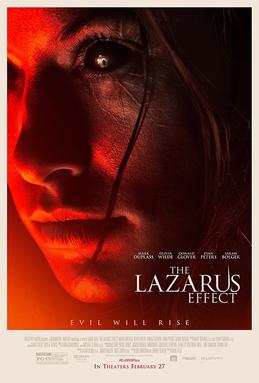
The_Lazarus_Effect_(2015_film)_posterTHE LAZARUS EFFECT is a regular background movie for me. I’ll turn it on a lot when I’m working on something else and just need something to listen to. I know it well enough to visualize the movie as it goes without actually having to watch it, and it’s slick enough to grab my attention now and then. But like LIGHTS OUT, it’s a slick horror mess that suffers from storytelling mistakes rather than talent.

I very much enjoy seeing Olivia Wilde in a role outside HOUSE, and I appreciated being introduced to Sarah Bolger, who reminds me so much of Alyson Hannigan–her face is different, but her expressions, gestures, and timing are eerily similar, though Bolger is obviously drawn to darker stories. The story didn’t do much for the usually charismatic Evan Peters or Donald Glover, though, and leading man Mark Duplass doesn’t quite manage to dig himself out of blandness. However, as I said, most of the sins of the movie have nothing to do with the actors, so although Wilde and Bolger elevate their roles, it’s likely the others can be forgiven for the script’s sins against them.

I keep watching this damn movie, even though it disappoints me every time. I think part of me thinks that, this time, the movie will finally progress the way it should and I’ll finally be satisfied. Or maybe I’m just trying to figure out how it could have been saved in another world.

LAZARUS EFFECT has a not-so-original premise, but it’s one that, with some work, might have yielded something truly terrifying. Certainly more terrifying than the rote scares the movie eventually succumbed to. The thing that gets me is that this movie really could have been better–it had room to stretch, it set up its unsettling questions…then forgot about those questions or didn’t follow them far enough down the rabbit hole. The cast was older, so it didn’t need to suffer the teen-bait fate. But it feels like the movie was supposed to go somewhere else, somewhere more interesting, and then some knucklehead pulled the plug on it like they did for the INVASION remake–maybe they thought Americans audiences wouldn’t get it or care. So we ended up with a moderately interesting first half and a hackneyed, lowest-common-denominator second half–although someone needs to give Wilde another reason to wear those demon eyes, because she rocks the hell out of them.

Let’s examine what LAZARUS EFFECT did well at the beginning and how the end failed it so hard.

The premise is this–two scientists and their research team are testing an experimental serum meant to kick-start neural activity after death. Reanimation, yes, but not in the zombie sense. The way Male Scientist presents it (seriously, I don’t care enough to look up his name), it’s more for recent deaths, to give hospitals longer to save someone. Basically, intended less for reanimation, more for extreme revival. Olivia Wilde, who plays Female Scientist, Zoe, works with her husband, and they are very much equal partners and equally brilliant. Sarah Bolger plays the newcomer comm student they hire to document their research and gives everyone a reason to explain what’s going on. They bring up one of the big questions when it comes to creating a serum that literally brings someone back from the dead: Namely, what happens after death?

Both scientists couch their theories in nutshell scientific terms, which I appreciated–interpreting the facts as we have them. Male Scientist believes there’s nothing afterward, that the near-death or bright light experiences by people who technically die are just euphoric hallucinations as the brain shuts down. Female Scientist, with a small gold cross hanging around her neck, hypothesizes that these hallucinations are part of the process of crossing over, that nothing ever really goes away–which bears with the first law of thermodynamics, conservation of energy, and so on. Both are valid theories (colloquial meaning of theory here) on the subject of existence after death, but Female Scientist rightly emphasizes that we just don’t know.

Then one of their experiments works, and they successfully bring a dog back to life, its cataracts disappearing but the serum not metabolizing out of his system the way it should. Instead, it keeps creating new neural connections, or something of that nature. And he’s exhibiting odd behavior, which brings up the second important question–What happens when you bring something back? (Haven’t any of these people watched BUFFY?) What are the consequences for the subject and what does that mean for the rest of us?

To summarize, here are the questions at stake: Is there life after death? And either way, what happens when you bring the dead back from wherever they’ve been?

As shown in the trailers, Zoe dies through human error, and she’s brought back, because dogs can’t discuss the philosophical ramifications of reanimation.

Where things begin to go off the rails is when she starts manifesting psychokinetic and telepathic abilities. In itself, this isn’t a problem (although that damned 10-percent-of-the-brain myth showed up and annoyed the crap out of me, because these scientists should fucking know better). It became a problem when that became the focus of the second half, eventually to the point of senselessness.

Let me break it down [HERE THERE BE SPOILERS – you can pretty much glean everything from the trailer, though]:

Between the moment of Zoe’s death and her resurrection, she experienced the worst thing she’s ever done on an endless loop for years. Set against her beliefs, it’s clear she believed she was in hell, forced to relive her greatest sin in spite of her religion telling her she’s supposed to be forgiven, that she’s done everything she needed to do. Now, we’re never told whether she was actually in hell or whether, in her brain’s last moments, she experienced time dilation, like in a dream, and perceived years of self-created hell in a matter of moments. This is not a question that needs to be resolved, but I would have appreciated it being, I don’t know, addressed? Because the implications are so much scarier than Resurrection!Carrie.

And again, Resurrection!Carrie itself isn’t a problem in and of itself, but it just kind of…happened. How did this calm, rational, kind scientist end up terrorizing and slaughtering everyone she knows? She’s got power. What’s the point of the killing? Even her feeling like she won’t have any spiritual consequences doesn’t explain it. I think if they’d wanted her power to terrorize everyone, they could have gone the post-traumatic stress route, where her powers extend from panic, distress, nightmares, fears, furies. What happens when a woman is tortured either in real hell or the hell she created for what she perceived as years?

Another idea that they teased but never really did anything with, if she were really in hell, did resurrection bring something back with her? I think giving Wilde’s character more motivation as a villain would have gone a long way toward improving the movie. And in general, going the “weird fiction” route might have done more justice to the question of heaven, hell, or nothing at all–because it’s often these challenges to conventional belief systems, including atheism, that are the most disturbing. Going “demonic hitchhiker” might have been interesting as well.

But we’ll never know, because every time I watch it, the movie still ends the same.

Review: THE RUINS

21 Saturday Oct 2017

Posted by amandamblake in Movie Reviews

≈ Leave a comment

Tags

body horror, carnivorous plants, horror, movie, paranoia, review, the ruins

The RuinsThere were mixed reviews for this movie among friends and critics, but it’s one of my personal favorites, a regular go-to for a bit of character-driven body horror. The more I watch the movie, the more complicated it gets underneath the rather unoriginal, shiny exterior, which is why I feel The Ruins is seriously worth a horror fan’s time. As a shiny movie, it might also appeal to the non-horror fan, if they have the stomach for it.
Plants are a funny thing to make a villain, and I can see how some people might not go for the idea of carnivorous plants as something that can get your skin crawling, but it’s been a bit of a peripheral fear of mine. One of the shorts in the Creepshow anthology, the one featuring Stephen King as a simple-minded farmer baffled by a meteorite with a gooey interior that causes grass to grow on everything like a fungus has stuck with me for years—hits me again every time the parsley gets overgrown and starts trailing onto the porch.

Forests do get nutrients from death of both flora and fauna; creeping vines can infest and infect a whole grove; the fight for sunlight in rainforests is a brutal one; oils on leaves or thorns can cause serious damage or horrible death, all in the name of self-protection, and all without an as-yet demonstrable consciousness, which isn’t to say that plants don’t respond—which is the freakiest thing that I just said. We’re surrounded by plants, but too often, they’re just scenery or accessory to us, and that’s a mistake.

All that to say that, as much as I love my backyard and adore big trees and roses, I still find plants kind of creepy. So I can get into the mentality of villainous plants more quickly than some people. What can I say? I’m an ideal horror audience. (Not so much on board with the villainous vegetarians, but Trolls 2 is still worth a watch as one of the most awesome terrible movies ever made.)

After a cryptic prologue, The Ruins opens on a bunch of young, pretty twenty-somethings on vacation in Mexico—bikinis, alcohol, sun, sex, all pretty much the accoutrements of a typical horror movie, which is why it’s easy to think The Ruins is going to follow the usual, unoriginal punishing formula. Nothing new to see here, folks. Situation normal; all fucked up.

And as a trope, The Ruins definitely falls under the label of Tourists Behaving Badly. Or, more specifically, American Tourists Behaving Badly, although they’re tagging along behind a couple Germans and Greeks. It’s easy to roll your eyes when they flash money to do The Forbidden Thing, when one of the characters takes pictures of the Cute Locals in their Native Environment, and when the emergent leader of the group declares with absolute, desperate certainty, “This doesn’t happen! Four Americans on a vacation don’t just disappear!” People disappear all the fucking time, man, and not just on vacation. Naive affluent illusions, shattered.

However, though The Ruins works within the framework of a fairly typical twenty-somethings-suffer horror movie, it’s what the screenwriter (same as the author of the original novel, which I plan to read one of these days) and the director did within that framework that’s worth a second glance.

I don’t think The Ruins would have done so well without an exceptional cast. Shawn Ashmore is one of my favorite underrated actors (actually, I’m a fan of both Ashmore twins, and they both have feet in the horror genre). Jonathan Tucker is a familiar face in the genre, and he has a quiet, odd-faced, hard-bodied intensity to him that serves him well. Jena Malone is also a surprising force of nature despite her slim build. Sergio Calderon plays the lead Mayan, and he might be a face you recognize, but you don’t know from where. I think he lends some unexpected gravitas in a role where nothing that he says is understood, but his face and tone speaks volumes. There’s no weak link in the cast, although the script has some weak points that don’t do them any service. One of the best things about this film, though, is that whoever you think the characters are at the beginning, they subvert those expectations by the end, which is the marker of good storytelling.

The basic premise of the movie goes something like this: The tourists visit Mayan ruins that aren’t on any of the maps to meet up with a group of archaeologists. They trespass onto forbidden land and touch the strange vine that seems to grow on the ruins and nothing else. A band of Mayans who apparently protect the area around the ruins quarantines them there. As expected, they’re in the middle of nowhere, no cell service, no sat phone, no airplanes, little expectation of rescue. And they quickly discover that the original archaeologist team is dead and that the vine is responsible.

What follows includes unspoken tensions between the members of the group coming to a head, some brutal decisions about how to take care of the wounded in primitive conditions, and what to do about the vine spore that’s entered into those wounds and coated everyone’s clothes and skin. If you’re a fan of body horror, there’s some good, flinching gore for you, but it’s the human element that keeps the movie grounded in something almost paranoid. Some of the best horror, in my opinion, comes from the lengths we’ll go to when we’re desperate to survive.

I won’t spoil anything about the nature of the vines or the fates of the characters, but it doesn’t disappoint, though the unrated ending beats the theatrical (unrated version also has an extraneous scene, but I can forgive it). In a contest between The Ruins and Cabin Fever about horror getting under your skin, The Ruins beats Cabin hands down.

Review: LIGHTS OUT

25 Saturday Feb 2017

Posted by amandamblake in Movie Reviews

≈ Leave a comment

Tags

depression, horror, lights out, mama, mental illness, psychosis, the babadook

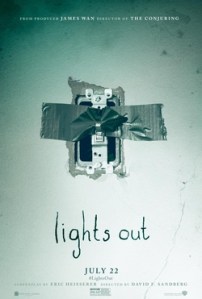
lights_out_2016_posterWhen I saw that David Sandberg’s amazing short was going to be made into a full-length movie, I was wary, especially since the trailers underwhelmed. But horror trailers often do, and the same director of the short would direct the full-length. I heard mixed reviews from friends, but as easy an audience as I am, I thought I’d give it a try.

I’ll start out by saying that the original short film is a hundred times better. WATCH IT. It accomplishes more in two minutes and thirty seconds than the full-length accomplishes in eighty minutes.

The film shares a lot of beats with another short-to-full-length movie that wasn’t as good as I wanted it to be—MAMA (which I’ve grown to like much better as magical realism rather than horror)—but it tries more to compare itself to THE BABADOOK (also short-to-full-length), with its dark, Nosferatu-fingered nemesis and mental illness analogies. However, everywhere BABADOOK succeeds, LIGHTS OUT sadly fails, suffering all the more from the comparison. Maria Bello and especially Billy Burke were poorly used in a movie with such uncertain footing and logic potholes. All actors did their best, but the material proved too shallow and on-the-nose for them to do much.

Let’s begin with the logic potholes: If there’s one thing that writers of magic learn, it’s that you can make up your rules, but there still have to be rules. There has to be an internal logic to the supernatural, or else you’re cheating. There were plenty of problems with the logic to Diana’s character. If she was a manifestation of depression, why introduce us to her life prior to the mental institution to challenge that? SPOILER Given that Diana’s father killing himself didn’t remove Diana’s influence, was it the fact she was a ghost that allowed it to work this time? Which makes no sense whatsoever, since she’s dead and even more likely to go on attaching to people? And if she wasn’t dead and just transfigured, that still doesn’t explain why Maria Bello’s Sophie could shoot herself and destroy Diana in the process when it didn’t work for Diana’s father.

The movie had no clue as to whether Diana was a physical being who couldn’t exist in the light, which hurt her, and could move fast enough to avoid it or whether she was an apparition who disappeared in the light. She was one, then the other, and it just didn’t work. Figure out your rules, people, and work from there.

The best scene in the movie was the opening one, which most closely resembled the original short, and of course it borrowed the original actress, which was a nice nod, plus Billy Burke. After his unfortunate encounter with Diana, the movie deteriorates from there.

We’re introduced to supposedly-wayward-girl Becca and her boy-toy-who-wants-more boyfriend Lucas, plus young-boy-taking-on-too-much-as-child-of-mentally-ill-mother Martin. We don’t get much more than those hyphenations, unfortunately, and while Teresa Palmer tries so hard to play disaffected, troubled teen sister, Jessica Chastain did it much better as an adult in MAMA. The movie rests on Palmer’s back, but that’s not quite sound enough a foundation.

Which brings us to the mental illness analogy, where LIGHTS OUT tries to make lightning strike twice after the resounding success of THE BABADOOK. In both cases, the comparison is at time heavy-handed, but the emotional resonance of THE BABADOOK makes it work whether the analogy is obvious or subtle. LIGHTS OUT works best when the analogy is casual, but the areas where it’s heavy-handed (“Have you been taking your meds?”—words every single person suffering with mental illness absolutely hates) establish the horror mythology as a direct comparison. That left the movie open to explore potentially amazing horror/mental illness analogies, but it made huge missteps and came to outright terrible conclusions.

There were suggestions that our wayward-girl Becca saw and suffered under Diana in her youth, the way that children of people with mental illness can be tormented by their parent’s disease. And it can lead to children of those with mental illness abandoning their parents out of resentment and for their own safety. But while THE BABADOOK aptly made a comparison with depression that shifts into the psychotic, LIGHTS OUT suggests that Sophie’s bipolar or depression led to SPOILER the death of her husbands, which is troubling on its own, especially as a parenthetical. But when Sophie kills herself in order to save her children from Diana, that was downright irresponsible, suggesting that the only way to protect oneself and one’s loved ones from the ravages of mental illness is truly suicide—the way many people suffering already feel. And as I mentioned above, that logic doesn’t even work from the supernatural rules perspective.

There were several ways this movie would have worked much better from a storytelling angle that wouldn’t have been so effing insulting to people with mental illness, and they would have solved the internal logic issues as well. Basically, all Sandberg would have had to do was choose between whether Diana was a human oddity turned haunt or whether she was never human to begin with—angles that allowed MAMA and THE BABADOOK to work where LIGHTS OUT didn’t.

i. Diana as demonic/nonhuman entity: If we hadn’t focused so much on what Diana is and where she came from, she could have simply been a mysterious, malevolent haunt. The only explanation needed would have been that she was there and how to deal with her rather than inadequately trying to explain and humanize her.

Instead of being another inmate at the psych ward who attached to Sophie, with her own backstory and reason for being there, Diana could have just been something that appeared in Sophie’s life before or during the stay at the ward, a parasite that latched onto a tasty host in an ideal hunting ground. The doctors could have believed her to be a dissociative identity or hallucination, but a picture of Sophie at the time could have shown apparitions (i.e. the ghost lady in INSIDIOUS, the shine in THE SIXTH SENSE). And this haunting follows Sophie throughout her life but weakens from medication use. Her presence in Sophie’s house would have to feel less human (with less human motivations), less visible, as with THE BABADOOK.

13932881_1377737638909416_2361490275909957479_n

Depression can truly feel like a demon on your back, like a form of possession. If LIGHTS OUT had shown that aspect of it the way that THE BABADOOK did, it might have worked better.

ii. Diana as a malevolent/pathetic human ghost: This is something that MAMA did well—and oddly enough, so did the American remake of THE RING. The investigation into Diana’s past with Sophie could have led to more concrete answers, more of a sense of Diana’s humanity—perhaps giving more than a passing nod to Diana’s father and her effect on other people in her life. In THE RING, we saw how living Samara poisoned everything around her, right down to the island she lived on. The viewer was deeply unsettled both by both the girl’s effect and by the antagonism toward a defenseless child. Diana’s presence would have to feel more human, with more human motivations.

One of the aspects of MAMA that sticks with me is that MAMA really was a good mother to those children while they were in her care. The children showed love and affection with her, with the smallest girl happily playing with her.

In LIGHTS OUT, instead of the demon possession of depression, we could have seen what Diana did for Sophie. Once you’re in the midst of a deep depressive episode, there can be a kind of comfort in it even while it rips you apart. It’s familiar. It’s dark and looming and embraces you in its cocoon. Artists have captured this tension with terrifying demon-like creatures offering dark comfort that the world does not—because your depression understands you, while the rest of the world just wants you to go away or spontaneously get better. (Have a listen to Delain’s “Chrysalis – The Last Breath” for a good exmaple of this.) It’s best described by that quote: “I used to wrestle with my inner demons. Now we just snuggle.”

14469644_1825251417693370_2229718974619337967_n

Credit unknown

Sophie continually asserts through LIGHTS OUT that Diana doesn’t know any better, that she’s just lonely. We could have seen a bit more of that dynamic, the symbiotic relationship that Diana could have had with Sophie rather than just the parasitic. We could have seen Diana’s face; we could have had more pity for her.

There are two other ways I think LIGHTS OUT could have been improved that have nothing to do with the problematic aspects of Diana.

i. Mental illness is often passed down genetically. There was a suggestion that Becca and Martin’s experience of Diana could have been their own suffering rather than their mother’s. But given that Becca didn’t have a therapist or take pills yet managed to escape from Diana, I feel like Sandberg missed an opportunity, especially since Becca would have been a perfect age for mental illness to really proceed screwing up her life. Wayward she might have been, but she seemed to know her own mind and enjoy herself in her little room above the tattoo parlor.

ii. In my opinion, the solution to the movie giving such an irresponsible message about SPOILER suicide is not letting Diana die with the gunshot. She’s an undead parasite. When her host dies, she has to find another, but she won’t die. If we wanted to connect it to the last suggestion, we could have Diana latch onto Becca or Martin, not to destroy them but to wear them down like she did Sophie.

In conclusion: LIGHTS OUT disappoints on many levels because it doesn’t commit to one idea or another, and the ones it tries to run with both don’t make sense and are incredibly troubling, and not in a horror movie way. The poor script and unfocused vision make it impossible for me to recommend.

Instead, check out MAMA (as magical realism rather than horror—del Toro tends toward MR as a genre, but the US doesn’t really acknowledge MR as a separate genre from fantasy or horror and often promotes it incorrectly as horror) or THE BABADOOK for movies far more satisfying, consistent, and intense.

Review: FINAL GIRL

18 Wednesday Jan 2017

Posted by amandamblake in Movie Reviews

≈ Leave a comment

Tags

abigail breslin, alexander ludwig, final girl, homage, horror, meta, movie, wes bentley

final_girl_updated_posterThe best meta-horror works as both meta and horror (see SCREAM), and it’s hard to say how well FINAL GIRL reads to a viewer who isn’t a horror fan. As a concept – comely blonde teen girl plays vigilante to misogynistic killer teen boys – FINAL GIRL is not necessarily new, and we’ve perhaps seen it done better (see BUFFY THE VAMPIRE SLAYER). But that doesn’t rule FINAL GIRL out as a worthy addition to the female-revenge fantasy subgenre,  of which there will never be enough, in this horror fan’s humble opinion.

The film opens with horror known Wes Bentley (P2) interviewing a little girl after her parents died to determine whether she’s a good candidate for an unspecified Program where he’d train her for an unspecified Mission. The little girl shows minimal emotional distress at the death of her parents, indicating at least borderline anti-social personality tendencies to match the emotional detachment of the trainer in question, whose own state of mind is revealed to have traumatic roots.

Shift to little girl Veronica grown up in the form of another horror favorite Abigail Breslin (a standout in her first film, M. Night Shyamalan’s SIGNS). Taking a disaffected tack, Breslin and Bentley unsettle, but the viewer will eventually realize that the style continues throughout the movie – these detached, damaged loners are no more fully human than the young men they hunt. Takes a maniac to catch a maniac, and all that. But driven by Bentley’s characters compass of righteous violence,  perhaps we are meant to at least be glad they’re fighting for the right ‘side.’

It’s no coincidence that the director chose to film the whole movie in disaffected noir style, set vaguely in the 1950s but with cocktail dresses and suits from more modern times. The brief training sequences are set in a warehouse without a stitch of extraneous furniture – a chair here, a bed, concrete as a bunker and expansive as a warehouse, with a government-issued older man instructing a young woman (age indeterminate, as adept at appearing fourteen as twenty-five, though Breslin was around nineteen when the movie came out) in a black cocktail dress and undeniable and deliberately uncomfortable sexual tension driven not by the man but by the manipulative sociopath who has nonetheless bonded with her captor.

A less than hopping diner in unappetizing yellow/brown tones straight from a Hopper painting. Bright lights through the black forest as though the moon could cast such light and shadow, spotlighting victims in white and pursuers in suits as well as Veronica in predatory red and innocent china face.

Cue, blonde bait to the pack of wolves in 50s dialogue yet modern accent. My favorite part of the whole movie is when we’re introduced to the wolf pack gathering together to fleece the rabbit. We get beautifully noir images homaging Hitchcock and A CLOCKWORK ORANGE, among other notes I couldn’t distinguish. Exquisite use of light and shadow, which is true through the entire movie, but especially stylistic here. The movie might as well be black, white, and sepia except for Veronica’s red dress and lips.

Alexander Ludwig (Cato in THE HUNGER GAMES) plays true to type, and he plays it well, the gleeful sociopath – attractive, also blond, and the clever foil to our homicidal Girl Friday. SPOILER When he lights up at the sight of her in the woods during the hunt, after seeing what she’s done to his other boys, you truly believe he’s found a kindred spirit far worthier than his wolf pack compatriots, a much more appropriate love story than the one between girl and trainer (and still a better love story than TWILIGHT, jk).

I enjoyed the movie much better in my second viewing, perhaps because I could appreciate the style, which is net greater than the substance of the story. But aside from some underwhelming fight scenes (I think Breslin did most of her own stunts, and the lack of perceived power behind the blows shows and doesn’t quite work as choreographed violence like a dance), this little bit of meta-horror pays beautiful, disquieting, trippy tribute to the last girl standing.

Newer posts →

Enter your email address to follow this blog and receive notifications of new posts by email.

NOW AVAILABLE

WHERE IT ALL BEGINS

TINGLE YOUR SPINE

Website Built with WordPress.com.

  • Subscribe Subscribed
    • Amanda M. Blake
    • Join 146 other subscribers
    • Already have a WordPress.com account? Log in now.
    • Amanda M. Blake
    • Subscribe Subscribed
    • Sign up
    • Log in
    • Report this content
    • View site in Reader
    • Manage subscriptions
    • Collapse this bar
 

Loading Comments...